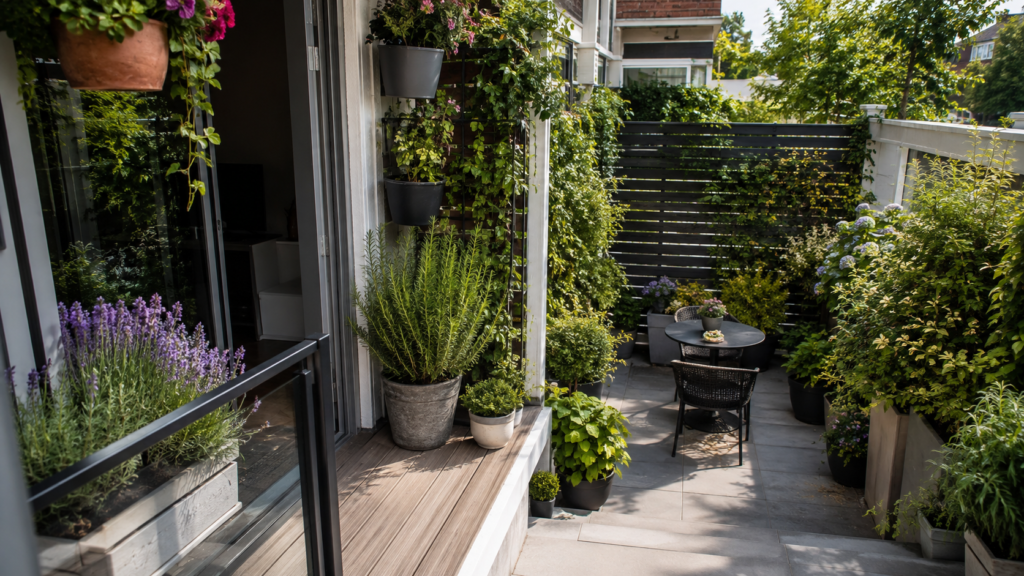
The best outdoor plants for small spaces are compact, container-friendly varieties that fit your available sunlight, climate, and growing conditions. Flowers, herbs, dwarf shrubs, trailing plants, and climbing varieties can transform balconies, patios, terraces, and tiny yards into beautiful green areas without requiring a large garden.
Small-space gardening is about choosing plants that match your environment and arranging them efficiently. The right plants can add color, privacy, fragrance, and even edible harvests while keeping your outdoor area easy to maintain.
What Are the Best Outdoor Plants for Small Spaces?
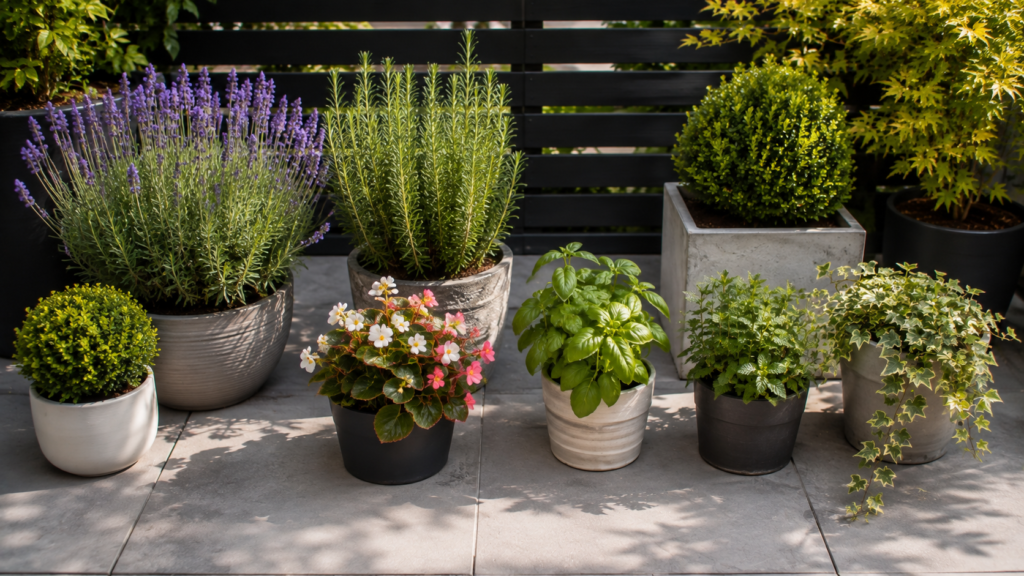
The best outdoor plants for small spaces are varieties that stay manageable, grow well in containers, and provide strong visual or practical benefits. Compact plants help create layers of greenery while keeping balconies, patios, and small gardens functional.
When selecting plants, consider mature size and growth habits rather than only their appearance at purchase time. Many plants look small in nurseries but become much larger after a few growing seasons.
Some of the best outdoor plants for small spaces include:
- Lavender: A compact flowering plant that thrives in sunny locations and adds fragrance, color, and pollinator value.
- Rosemary: An evergreen herb that grows well in containers and provides both decorative and edible benefits.
- Thyme: A low-growing herb ideal for small pots, edges, and compact gardens.
- Dwarf boxwood: A structured evergreen shrub that adds year-round greenery.
- Begonias: A reliable choice for shaded or partially shaded outdoor spaces.
- Petunias: Colorful flowering plants that perform well in sunny containers.
- Trailing plants: Ivy and sweet potato vine add depth by cascading over container edges.
- Jasmine: A vertical-growing plant that provides fragrance and privacy.
The strongest small-space gardens usually combine different plant types. A dwarf shrub can create structure, flowers can add seasonal color, herbs can provide practical value, and trailing plants can soften the overall appearance.
Before choosing plants, consider:
- Available sunlight
- Mature plant size
- Container requirements
- Watering needs
- Maintenance time
A common mistake is filling a small outdoor space with too many young plants. As plants mature, overcrowding can reduce airflow, increase maintenance, and create competition for water and nutrients.
A smaller collection of well-chosen plants will usually create a healthier and more attractive garden than a crowded space with unsuitable varieties.
How Do You Choose Plants for Small Spaces?
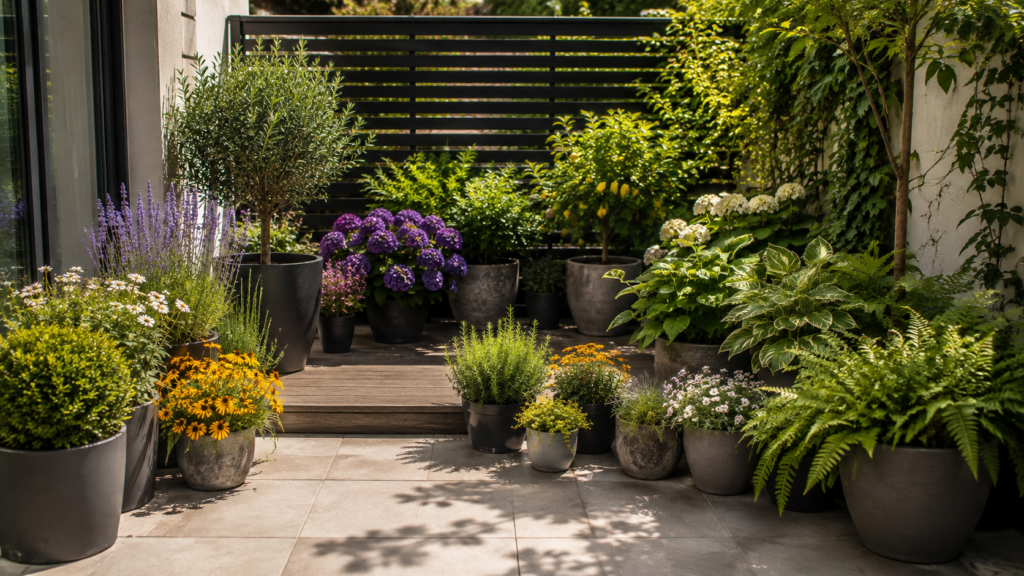
Choosing outdoor plants for a small space starts with understanding your growing conditions. The right plant should match your available area, sunlight, container size, climate, and the purpose you want it to serve.
Before buying plants, measure your space and identify where containers, hanging baskets, or vertical structures can be placed. A balcony, patio corner, and small backyard may all require different plant choices.
Check Your Sunlight Conditions
Light is one of the most important factors when selecting plants.
Identify whether your space receives:
- Full sun: Around six or more hours of direct sunlight
- Partial shade: Some direct sunlight with shaded periods
- Full shade: Very limited direct sunlight
Choose plants according to these conditions:
- Lavender, rosemary, and petunias perform well in sunny areas.
- Begonias, ferns, and hostas are better suited for shaded locations.
Choose Plants Based on Your Goal
Different plants solve different gardening needs.
| Goal | Suitable Plants |
| Add color | Petunias, begonias, marigolds |
| Create privacy | Jasmine, climbers, narrow shrubs |
| Grow herbs | Basil, thyme, rosemary, mint |
| Add structure | Dwarf shrubs and ornamental grasses |
| Reduce maintenance | Succulents and hardy herbs |
Check Mature Size Before Planting
One of the biggest small-space gardening mistakes is choosing plants based on their current size.
Always check:
- Mature height
- Mature width
- Root requirements
- Growth speed
A plant that fits perfectly today may become difficult to manage after one or two seasons.
Match Plants With Your Lifestyle
Your available time should influence your plant choices.
For low-maintenance gardens, choose:
- Lavender
- Rosemary
- Succulents
- Dwarf shrubs
For gardeners who enjoy regular care, choose:
- Seasonal flowers
- Vegetables
- Larger container displays
The best outdoor plants for small spaces are not only attractive. They are plants that fit your environment and the amount of care you can provide.
Which Plants Stay Small Outdoors?
Plants that naturally maintain a compact size are ideal for balconies, patios, and tiny gardens because they require less pruning and are easier to manage in containers.
When selecting small outdoor plants, consider both height and width. A plant may stay short but still spread widely, creating problems in a limited area.
Some excellent outdoor plants that stay small include:
| Plant | Mature Size | Best Use |
| Thyme | 6–12 inches | Small herb containers |
| Lavender | 1–3 feet | Sunny patios |
| Dwarf boxwood | 1–3 feet | Evergreen structure |
| Begonia | 8–24 inches | Shade containers |
| Rosemary | 1–3 feet | Edible gardens |
| Compact ornamental grass | 1–2 feet | Texture and movement |
Use the future-space rule when choosing plants:
- Buy based on mature size
- Leave room between containers
- Avoid overcrowding
- Consider seasonal growth
Compact plants work especially well when combined together. For example, a dwarf shrub provides structure, flowers add color, and trailing plants create a fuller appearance without taking extra floor space.
A successful small garden does not require large plants. The right combination of compact varieties can create depth, beauty, and function while remaining easy to maintain.
Best Outdoor Potted Plants for Small Spaces
Outdoor potted plants are one of the easiest ways to create a garden when ground space is limited. Containers allow you to grow plants on balconies, patios, terraces, porches, and small yards while giving you more control over soil quality, placement, and design.
The best outdoor potted plants for small spaces are varieties that adapt well to limited root space and remain healthy in containers. Herbs, flowers, dwarf shrubs, trailing plants, and compact vegetables are excellent choices.
Some of the best container-friendly plants include:
- Basil: A productive herb that grows well in sunny containers.
- Rosemary: A hardy evergreen herb that adds fragrance and works well in pots.
- Thyme: A compact herb suitable for small containers.
- Petunias: Flowering plants that add seasonal color.
- Begonias: A good option for partially shaded containers.
- Dwarf boxwood: Provides structure and evergreen foliage.
- Cherry tomatoes: A practical choice for small edible gardens.
Choosing the correct container size is essential because plants depend on enough soil volume for healthy roots, moisture control, and nutrients.
| Plant Type | Recommended Container Size |
| Herbs | 6–12 inches |
| Flowers | 8–12 inches |
| Small vegetables | 1–3 gallons |
| Tomatoes and peppers | 5+ gallons |
| Small shrubs | 18–24 inches |
| Climbers | Large containers with support |
Important container factors include:
- Drainage: Prevents waterlogged soil and root problems.
- Soil quality: A quality potting mix improves airflow and moisture control.
- Container material: Lightweight pots work well for balconies, while heavier containers provide stability.
- Placement: Position containers according to sunlight needs.
Container gardening also gives you flexibility. Plants can be moved when seasons change, sunlight patterns shift, or you want to redesign your outdoor space.
For small areas, combine containers of different heights. Tall pots add structure, medium containers provide color, and hanging baskets or trailing plants create vertical interest.
The best outdoor potted plants for small spaces balance appearance, practicality, and long-term growing success.
Best Balcony Plants for Small Spaces
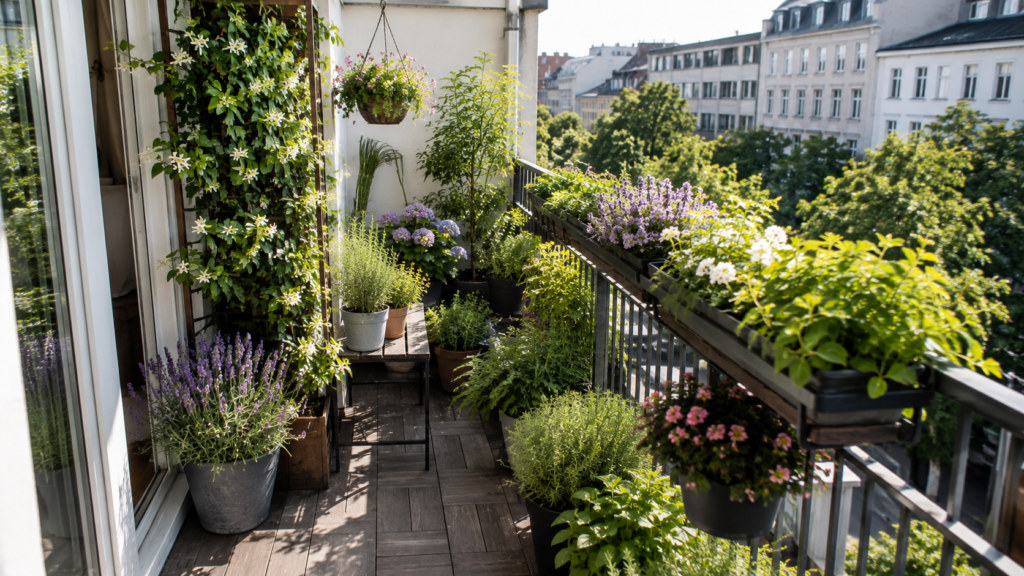
Balconies are one of the most common places for small-space gardening, especially in apartments and urban homes. However, balcony conditions are different from traditional gardens because plants must handle limited floor space, stronger winds, changing sunlight, and container restrictions.
The best balcony plants for small spaces are compact, lightweight, and adaptable to container growing. Instead of filling every available area, choose plants that provide maximum impact while keeping the balcony comfortable and functional.
Recommended balcony plants include:
- Lavender: Ideal for sunny balconies and adds fragrance with colorful flowers.
- Rosemary: Provides evergreen foliage and can be harvested for cooking.
- Begonias: Suitable for balconies with partial shade.
- Petunias: Add bright flowers to sunny areas.
- Basil and herbs: Perfect for small edible gardens.
- Trailing plants: Ivy and cascading varieties work well in railing planters and hanging baskets.
- Jasmine: Creates vertical greenery and natural fragrance.
Before choosing balcony plants, evaluate your growing conditions.
Check Balcony Sunlight
Different balcony directions receive different levels of light:
- South-facing balconies: Usually receive strong sunlight and suit sun-loving plants.
- East-facing balconies: Provide gentle morning light and suit many flowering plants.
- West-facing balconies: Can experience intense afternoon heat and may need heat-tolerant plants.
- North-facing balconies: Often require shade-tolerant varieties.
Consider Wind Exposure
Higher balconies often experience stronger airflow. Wind can dry containers faster and damage delicate plants.
Helpful solutions include:
- Choosing sturdy plants with flexible growth
- Grouping containers together
- Placing plants near protective walls
- Using stable containers
Think About Container Weight
Wet soil becomes much heavier after watering, so large containers may not always be suitable for balconies.
Space-saving options include:
- Hanging baskets
- Vertical plant shelves
- Narrow containers
- Railing planters
A practical balcony arrangement could include:
- A climbing plant on a trellis for height
- Flowering containers for color
- Herbs placed near easy access
- Trailing plants to soften edges
A successful balcony garden does not require dozens of plants. A few carefully selected varieties can create a comfortable outdoor space that feels larger and remains easy to maintain.
How Do You Design a Small Garden Space?
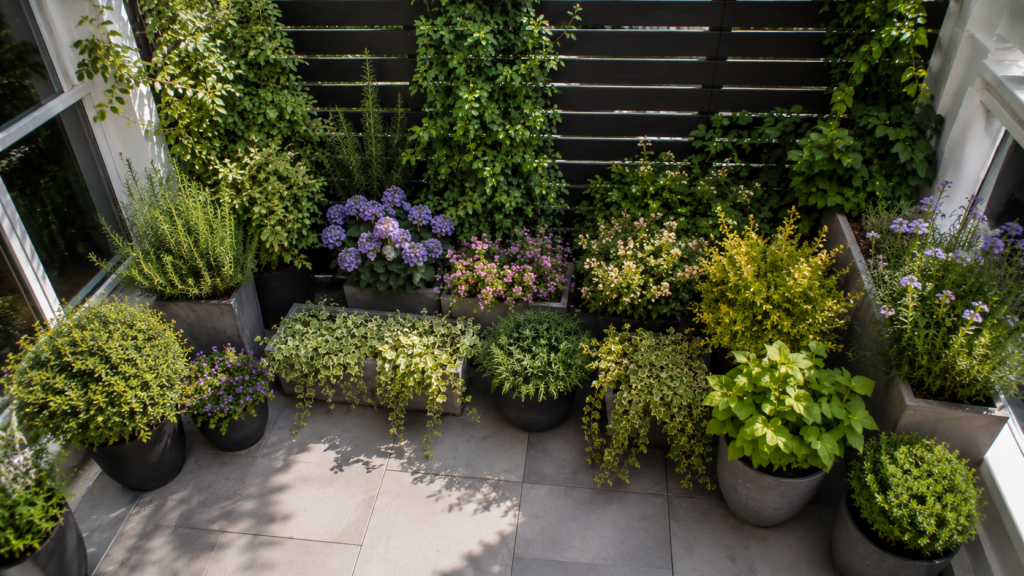
Designing a small garden space requires careful planning because every plant and container affects the overall appearance. Unlike large gardens, small areas depend on smart placement, vertical layers, and balanced plant choices.
The goal is to create depth and interest without making the space feel crowded.
A good small-space garden design follows these principles:
Create Plant Layers
Layering makes a small garden appear larger by creating different heights.
A simple arrangement:
Back layer:
- Tall plants
- Climbers
- Privacy plants
Middle layer:
- Medium shrubs
- Flowering plants
- Decorative foliage
Front layer:
- Herbs
- Ground covers
- Trailing plants
This arrangement allows every plant to contribute visually without blocking others.
Use Vertical Space
Walls, fences, shelves, and railings provide valuable growing areas in small gardens.
Space-saving options include:
- Hanging baskets
- Wall planters
- Trellises
- Vertical plant towers
- Tiered shelves
Vertical gardening increases planting capacity without reducing walking space.
Create Visual Balance
Small gardens look better when plants work together instead of appearing randomly placed.
Useful design techniques:
- Repeat similar colors
- Combine different leaf textures
- Use matching containers
- Create one focal plant
For example, a small patio could include:
- Jasmine climbing on a trellis
- Lavender and rosemary containers
- Flowering plants near seating areas
- Trailing plants around container edges
Leaving empty space is also important. Overcrowding can make a garden appear smaller and can create maintenance problems.
A well-designed small garden should allow:
- Easy movement
- Good airflow
- Simple watering
- Healthy plant growth
The best small-space designs focus on quality rather than quantity. A few well-positioned plants can create a more attractive and functional outdoor area than a crowded collection of unsuitable varieties.
How Do You Create a Vertical Garden?
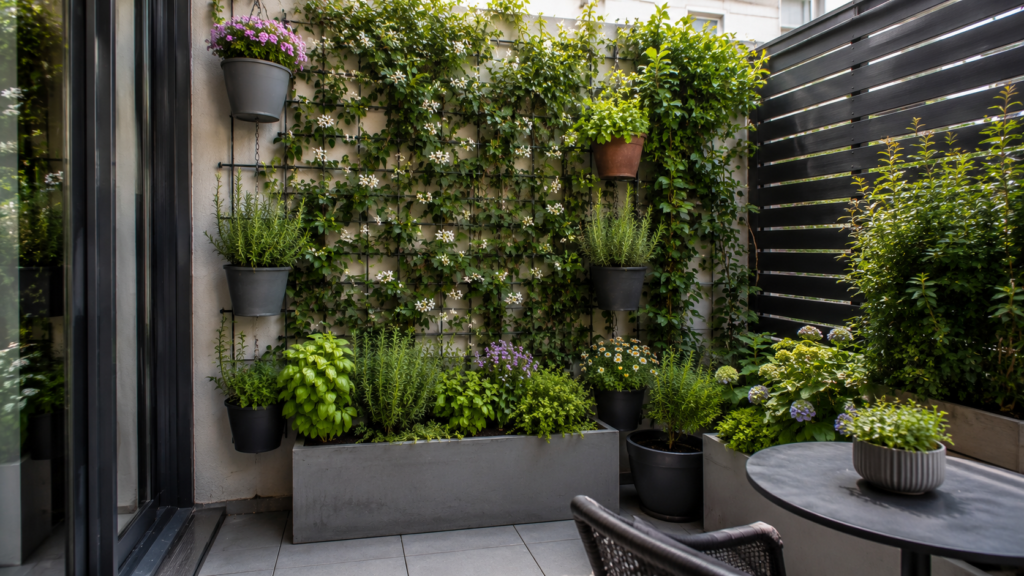
Vertical gardening is one of the best solutions for growing outdoor plants in small spaces because it uses upward areas instead of valuable floor space. Walls, fences, balconies, and patios can become productive growing areas with the right plants and support systems.
A vertical garden can help you:
- Increase planting space
- Add privacy
- Improve outdoor appearance
- Grow herbs and flowers in limited areas
- Create a natural green wall
The best plants for vertical gardens are those with climbing or trailing growth habits.
Good options include:
- Jasmine: Adds fragrance and grows well on supports.
- Star jasmine: Creates dense vertical coverage.
- Clematis: Provides colorful flowers while climbing.
- Climbing roses: Add dramatic vertical interest.
- Trailing plants: Work well in hanging systems.
Choosing the correct support system is important because different plants need different structures.
Common options include:
- Trellises
- Wall-mounted planters
- Hanging baskets
- Vertical pocket gardens
- Plant shelves
The support should match the plant. A climbing plant without proper support can become difficult to manage and may not grow effectively.
Before installing a vertical garden, consider:
- Available sunlight
- Water access
- Wall strength
- Maintenance convenience
A simple small-space vertical garden setup could include:
- Upper section: Trailing plants
- Middle section: Herbs and flowers
- Lower section: Larger containers
Vertical gardening is especially useful for apartment gardeners and renters because it creates more growing opportunities without requiring permanent landscaping changes.
When planned correctly, a vertical garden transforms unused walls and corners into attractive plant displays while solving one of the biggest challenges of small-space gardening: limited ground area.
Best Low Maintenance Outdoor Plants
Low-maintenance outdoor plants are ideal for gardeners who want an attractive outdoor space without spending excessive time on watering, pruning, and regular care. In small areas, easy-care plants are especially valuable because demanding plants can quickly become difficult to manage.
The best low-maintenance outdoor plants are usually varieties that naturally adapt to their environment and maintain their appearance with minimal attention.
Some excellent choices include:
- Lavender: A drought-tolerant flowering plant that performs well in sunny areas with good drainage.
- Rosemary: A hardy evergreen herb that provides year-round greenery.
- Thyme: A compact herb that handles dry conditions.
- Succulents: Store water and need less frequent watering.
- Dwarf shrubs: Provide structure without regular pruning.
- Ornamental grasses: Add texture and movement with simple maintenance.
Low maintenance does not mean completely care-free. Every plant still needs suitable conditions.
To reduce maintenance:
- Choose plants suited to your sunlight
- Use containers with proper drainage
- Group plants with similar water needs
- Select compact varieties that do not require frequent trimming
For example, a sunny balcony with lavender, rosemary, and thyme will usually require less maintenance than tropical flowering plants that need frequent watering.
Beginners often choose plants based only on appearance. A plant may look attractive but become difficult if it requires more care than the gardener can provide.
The easiest approach is selecting plants that naturally match your environment and lifestyle. A well-planned low-maintenance garden saves time while still providing beauty, fragrance, and greenery throughout the year.
Best Outdoor Plants for Shade
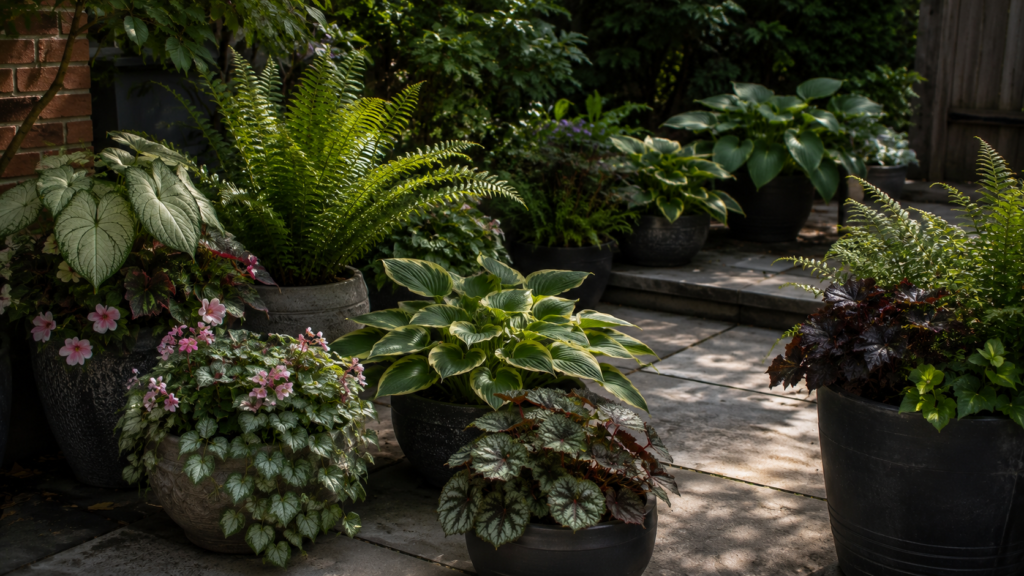
Many small outdoor spaces, especially balconies, patios, and courtyards, do not receive full sunlight. Nearby buildings, walls, fences, and trees can create shaded areas where many popular plants struggle.
The best outdoor plants for shade are varieties that naturally adapt to lower light conditions. Instead of forcing sun-loving plants into darker areas, choose plants that perform well with limited direct sunlight.
Excellent shade-friendly options include:
- Begonias: Provide colorful flowers and perform well in partial shade.
- Ferns: Add texture and lush greenery to darker outdoor areas.
- Hostas: Known for attractive foliage and shade tolerance.
- Impatiens: Reliable flowering plants for shaded containers.
- Foliage plants: Add structure and visual interest without requiring strong sunlight.
Before selecting shade plants, identify what type of shade your outdoor space receives.
Partial Shade
Receives some direct sunlight, often during morning or late afternoon.
Suitable plants:
- Begonias
- Some herbs
- Shade-tolerant flowering plants
Filtered Shade
Receives indirect sunlight through trees, structures, or light barriers.
Suitable plants:
- Ferns
- Hostas
- Decorative foliage plants
Full Shade
Receives very little direct sunlight.
Suitable plants:
- Fern varieties
- Shade-loving foliage plants
A common mistake is assuming every shaded area has the same conditions. A balcony with morning sunlight may support more plants than a dark courtyard with almost no direct light.
For a small shaded garden, focus on:
- Different leaf textures
- Layered container placement
- Attractive foliage
- Seasonal color where possible
Shade gardens can actually be easier to maintain because they often lose less water compared with hot, sunny areas.
The key is choosing plants that match your available light instead of trying to adapt unsuitable varieties.
Best Privacy Plants for Small Spaces
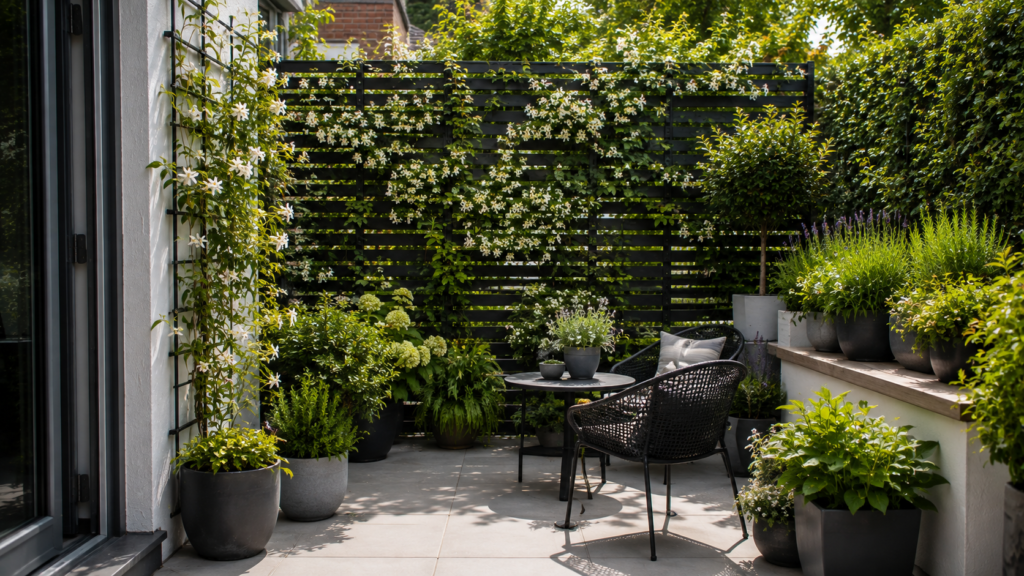
Creating privacy in a small outdoor area can be challenging because traditional hedges often require large planting spaces. The best privacy plants for small spaces are varieties that grow vertically, create dense foliage, or can be trained on supports.
Vertical privacy solutions are especially useful for balconies, patios, and compact yards because they provide screening without taking up valuable floor space.
Some excellent privacy plants include:
- Jasmine: A climbing plant that provides fragrance and attractive coverage.
- Star jasmine: A popular choice for trellises and walls.
- Clematis: Adds colorful flowers while growing vertically.
- Climbing roses: Create decorative privacy screens.
- Compact evergreen shrubs: Provide year-round structure.
When selecting privacy plants, consider:
Growth Pattern
A narrow, upright plant is usually better for a small space than a wide spreading shrub.
Maintenance Needs
Fast-growing plants create privacy quickly but may require more pruning. Slower-growing plants usually need less maintenance.
Support Requirements
Many privacy plants perform best with:
- Trellises
- Garden frames
- Wall supports
- Fences
A small patio privacy design could include a trellis against a wall, jasmine growing upward, and smaller containers placed below to create a layered appearance.
Privacy plants provide more than screening. They soften hard surfaces, reduce the feeling of exposed outdoor areas, and make balconies and patios feel more comfortable.
For small spaces, the goal is not creating a large hedge. It is using vertical growth intelligently to create privacy while keeping the area functional.
What Mistakes Should You Avoid?
Small-space gardening can be successful with proper planning, but several mistakes can limit plant growth and make maintenance more difficult. Because small areas have fewer resources, incorrect choices become noticeable quickly.
Avoid these common mistakes:
Choosing Plants Only for Appearance
A plant may look attractive in a store but fail if it does not match your outdoor conditions.
Always check:
- Sunlight requirements
- Mature size
- Water needs
- Climate suitability
Ignoring Mature Plant Size
One of the biggest mistakes is forgetting that plants grow.
A plant that looks small today may become overcrowded later, causing:
- Poor airflow
- Root competition
- Increased maintenance
Using Poor Containers
Containers without drainage can create water problems and damage roots.
Always choose pots with:
- Drainage holes
- Suitable depth
- Enough space for root growth
Overcrowding Plants
Adding too many plants may make a small garden appear fuller initially, but overcrowding often creates problems.
Issues include:
- Less airflow
- More pests and diseases
- Higher watering needs
- Weak plant growth
Choosing Wrong Light Conditions
A shade plant placed in direct sun may become stressed, while a sun-loving plant in deep shade may grow poorly.
Observe your outdoor area before selecting plants.
Forgetting Seasonal Changes
Sunlight patterns change throughout the year. A location that receives sun in one season may become shaded in another.
Successful gardeners observe their space over time and adjust plant choices accordingly.
Starting with a few suitable plants is usually better than creating a crowded garden immediately. Once you understand your space, you can expand gradually.
Final Tips for Small Space Gardening
Creating a successful garden with limited space depends on smart choices rather than having a large collection of plants. Even a small balcony, patio, or courtyard can become attractive when plants are selected and arranged correctly.
Keep these principles in mind:
- Choose plants based on mature size, not nursery appearance.
- Match plants with available sunlight.
- Use containers to create flexibility.
- Take advantage of vertical space.
- Combine different plant heights for depth.
- Leave enough room for airflow and growth.
- Select plants that match your available maintenance time.
A simple small-space garden can begin with:
- One structural plant
- A few flowering plants
- Some useful herbs
- One or two trailing varieties
This creates balance without making the space difficult to manage.
The goal of small-space gardening is not to recreate a large landscape in a smaller area. It is to design a space where every plant has a purpose.
With the right outdoor plants for small spaces, balconies, patios, and tiny gardens can become comfortable, beautiful, and functional outdoor areas.
Plantsaholic recommends focusing on long-term plant health rather than temporary decoration. The best garden is one that fits your lifestyle, remains easy to care for, and continues to improve over time.
FAQs About Outdoor Plants for Small Spaces
What Are the Best Outdoor Plants for Small Spaces?
The best outdoor plants for small spaces include lavender, rosemary, dwarf shrubs, begonias, herbs, and trailing plants. Choose varieties based on sunlight, container size, and your gardening goals.
Which Outdoor Plants Stay Small?
Compact plants such as thyme, lavender, dwarf boxwood, rosemary, and small ornamental grasses stay manageable and work well in limited areas.
What Outdoor Plants Grow Best in Containers?
Herbs, flowers, dwarf shrubs, succulents, and compact vegetables grow well in containers when they have proper drainage, suitable soil, and enough root space.
What Are the Best Balcony Plants for Small Spaces?
Lavender, rosemary, begonias, petunias, herbs, and climbing plants are excellent balcony choices because they adapt well to containers and limited space.
What Outdoor Plants Are Best for Shade?
Ferns, begonias, hostas, and impatiens perform well in shaded outdoor areas where direct sunlight is limited.
How Can I Make a Small Outdoor Space Look Bigger?
Use vertical gardening, layered plant arrangements, hanging baskets, and balanced container placement to create more depth and make the space feel larger.
What Plants Provide Privacy in Small Spaces?
Jasmine, star jasmine, clematis, climbing roses, and compact shrubs can provide privacy while using minimal floor space.
Are Outdoor Plants for Small Spaces Good for Beginners?
Yes. Herbs, lavender, rosemary, begonias, and succulents are beginner-friendly choices that are easy to grow in containers.
Myra is the founder and lead writer of Plantsaholic. She shares practical, research-backed advice on indoor plants, outdoor gardening, flowers, herbs, succulents, and everyday plant care. Her goal is to help gardeners of all experience levels grow healthier plants through simple, easy-to-follow gardening guides.