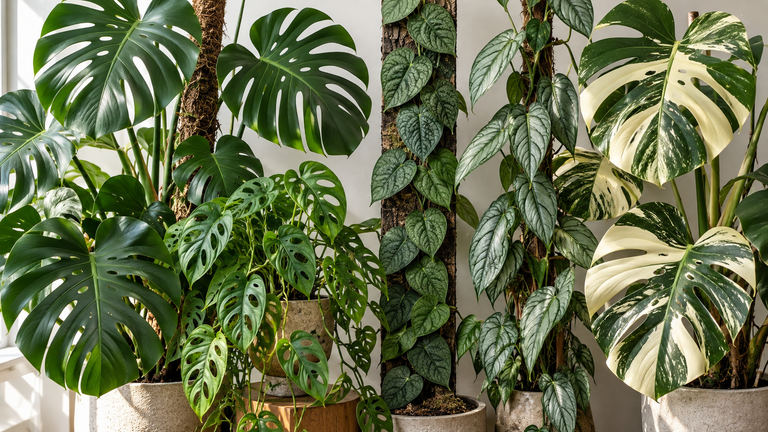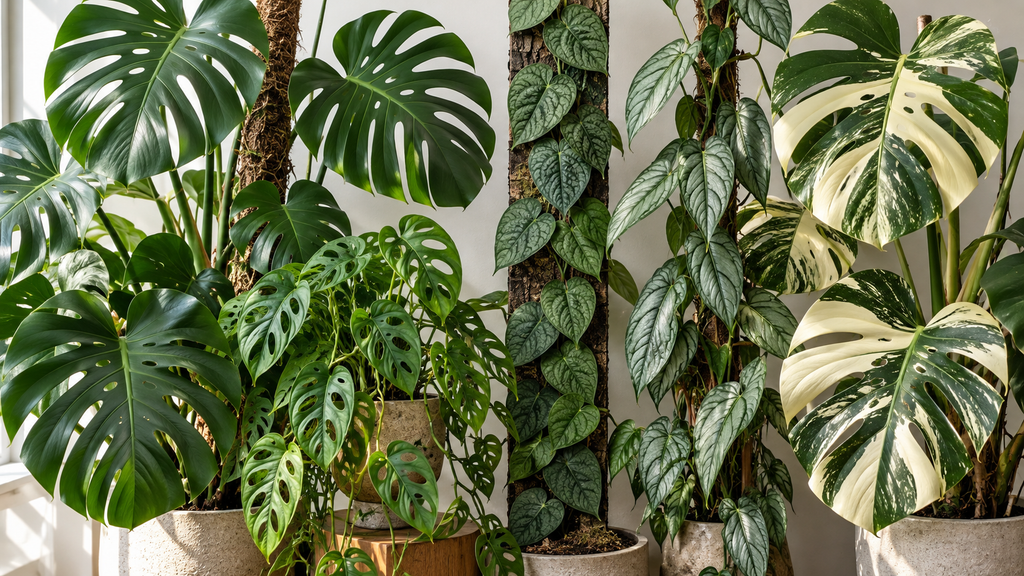
There are currently 73 accepted Monstera species, according to Kew’s Plants of the World Online, but only a relatively small number are commonly grown as houseplants. The names seen in nurseries also include cultivars, variegated forms, synonyms, and trade names, which is why “Monstera varieties” can appear to number far beyond the true species count.
Monstera belongs to the Araceae family and is native from Mexico through tropical America. Most species are evergreen climbers, and their foliage can change dramatically with age. Depending on the species, mature leaves may stay entire, develop enclosed holes, split toward the margins, or become deeply divided. Some species also pass through a juvenile shingling stage in which leaves lie flat against a climbing surface.
This guide focuses on the Monstera varieties that are most useful for houseplant growers to recognize. It separates accepted species from cultivars and trade names, explains how to identify common types, and helps you choose a plant that fits your space, experience level, and buying goals.
How Plantsaholic verified this guide: Species and synonym status were checked against Kew Plants of the World Online. Cultivar information was cross-checked against recognized horticultural references where available, while safety information was checked against university extension sources. Taxonomy checked: October 2026.
How Many Monstera Varieties Are There?
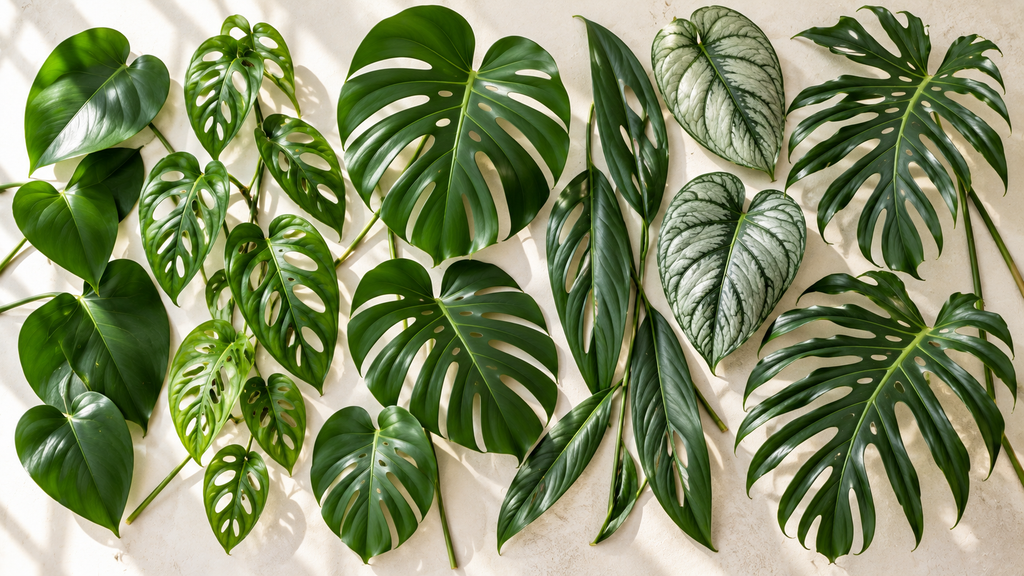
Kew currently recognizes 73 accepted species in the genus Monstera. That is the best answer if you are asking how many botanical Monstera species exist. It is different from asking how many Monstera names appear in nurseries or collector markets.
A true species such as Monstera deliciosa is not the same as a cultivar such as ‘Thai Constellation’. Likewise, an old synonym or commercial trade name should not automatically be counted as another species.
| Label | Meaning | Example |
|---|---|---|
| Species | Accepted botanical entity | Monstera deliciosa |
| Cultivar | Selected cultivated form | ‘Thai Constellation’ |
| Trade name | Commercial or horticultural label | Monstera Peru |
| Synonym | Older or non-accepted botanical name | borsigiana |
| Look-alike | Similar plant in another genus | Mini Monstera |
| Different websites may give lower species counts because older taxonomy remains online for years, or because some lists mix species with cultivars and trade names. For this guide, Plantsaholic uses Kew’s current accepted taxonomy. |
Which Monstera Variety Is Best?
The best Monstera depends on what you actually want from the plant. Mature size, leaf style, climbing habit, variegation, and identification certainty matter more than rarity alone.
| If you want… | Start with… |
|---|---|
| Best beginner choice | M. deliciosa |
| Smaller perforated leaves | M. adansonii |
| Silver juvenile foliage | M. siltepecana |
| Shingling growth | M. dubia |
| Narrow foliage | M. standleyana |
| Cream-speckled variegation | Thai Constellation |
| Bold white variegation | Variegata / Albo |
| Feather-like mature foliage | M. subpinnata |
| Collector challenge | M. obliqua |
| Small true Monstera species | M. minima |
| Before buying, ask five questions: Is the identity clear? Will the mature plant fit your room? Can you provide climbing support? Is the plant accessible to chewing pets? Are you paying for appearance or for verified botanical rarity? | |
| If a rare plant is identified from only one juvenile leaf or a vague label, do not pay a large collector premium until you have stronger evidence. |
Popular Monstera Varieties
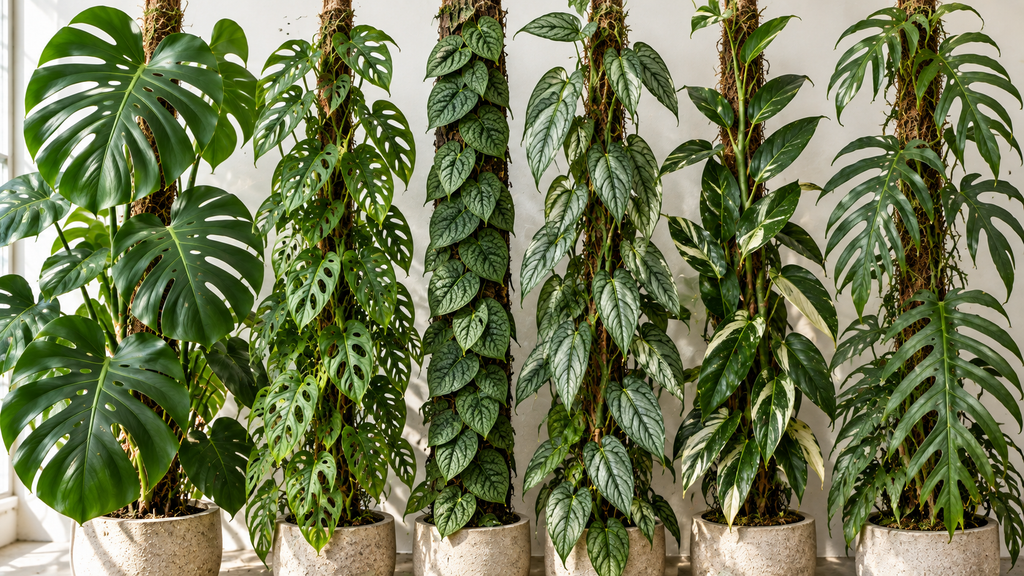
Monstera deliciosa
Monstera deliciosa is the classic Swiss cheese plant and the best-known species in the genus. Young plants often begin with solid, heart-shaped leaves, while mature plants develop much larger foliage with internal holes and deep marginal splits. Kew accepts it as a species native from parts of Mexico to Guatemala.
It is one of the strongest beginner choices because it is widely available and easy to recognize, but mature size is the main limitation. A small nursery plant can eventually develop long petioles, heavy stems, aerial roots, and broad leaves.
Best for: beginners, large statement plants, mature fenestration.
Monstera adansonii
Monstera adansonii has smaller leaves than M. deliciosa and is known for numerous enclosed perforations. It is a useful choice when you want the Swiss-cheese effect without the same mature leaf size.
It is still a climber, so trailing from a shelf is decorative rather than its only natural form. Vertical support can help produce more structured growth.
Best for: smaller spaces, visible fenestration, climbing shelves or poles.
Monstera dubia
Monstera dubia is most distinctive in its juvenile stage, when the leaves lie flat against a vertical surface in a shingling pattern. As the plant matures, the foliage becomes much larger and projects away from the support.
A flat board or plank often displays this species better than a hanging basket because its growth behavior is part of its appeal.
Best for: shingling displays and growers interested in dramatic maturity changes.
Monstera acuminata
Kew recognizes Monstera acuminata as an accepted species native from Mexico through Central America and describes its juvenile stage as shingling.
It is useful to compare with M. dubia because both demonstrate why one juvenile leaf is often insufficient for confident identification.
Best for: collectors interested in developmental changes and shingling growth.
Monstera siltepecana
Monstera siltepecana is valued for silver-toned juvenile leaves with darker venation. It provides a very different look from the broad green foliage associated with M. deliciosa.
As the plant matures, its leaves become larger and the juvenile silver appearance may become less dominant.
Best for: silver foliage and manageable climbing displays.
Monstera standleyana
Monstera standleyana has narrower foliage and may remain mostly entire rather than becoming heavily perforated. It is a useful reminder that not every true Monstera has large holes.
Best for: narrow-leaf collections and growers wanting a less conventional Monstera appearance.
Monstera obliqua
Monstera obliqua is a genuine accepted species and is famous because some forms develop extremely perforated, delicate foliage. That reputation also makes it one of the most frequently misidentified collector Monsteras.
Do not identify it by hole count alone. When the price is high, look for mature foliage, whole-plant photographs, stem and petiole details, and credible provenance.
Best for: experienced collectors.
Monstera pinnatipartita
Monstera pinnatipartita is valued for the transformation of its leaves. Juvenile foliage can look relatively simple, while mature climbing growth becomes deeply divided.
Best for: growers who want dramatic leaf change over time.
Monstera subpinnata
Kew recognizes Monstera subpinnata as a climbing species native from southeastern Colombia to Bolivia. Its mature leaves become deeply divided into narrow sections, creating a feather-like appearance.
Best for: architectural foliage and collectors who want something visibly different from common Swiss-cheese leaves.
Monstera epipremnoides
Monstera epipremnoides is an accepted species from Costa Rica and Panama. Mature leaves can become both perforated and deeply divided, producing a highly dissected appearance.
Because this name has been confused in cultivation with plants sold as Esqueleto, provenance matters more when the price is high.
Best for: advanced collectors.
Monstera minima
Monstera minima is a real accepted Monstera species and should not be confused with the plant commonly sold as “Mini Monstera.”
True M. minima has relatively small foliage, while Mini Monstera usually refers to Rhaphidophora tetrasperma, which belongs to a different genus.
Best for: collectors seeking a genuinely small-leaved Monstera species.
Variegated Monstera Varieties
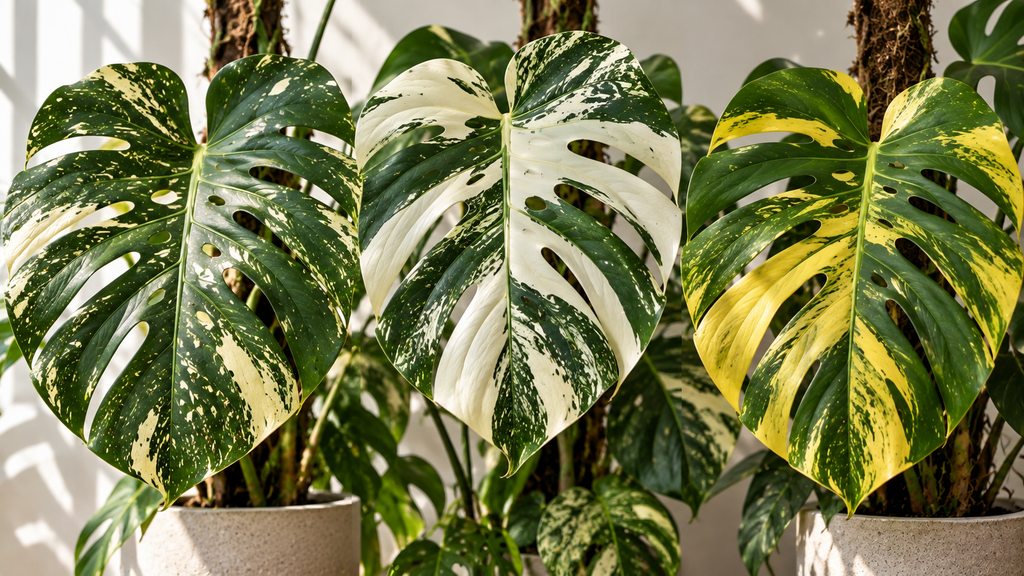
Variegated Monsteras should be separated from accepted species because popular names such as Thai Constellation and Albo refer to cultivated forms of Monstera deliciosa, not separate species.
Monstera deliciosa ‘Thai Constellation’
‘Thai Constellation’ is a cultivated form of M. deliciosa with green foliage marked by creamy-white splashes and flecks. RHS lists it as Monstera deliciosa ‘Thai Constellation’ and notes that mature leaves can become divided and perforated.
It still becomes a substantial climber, so do not assume the small plant you buy will remain compact.
Best for: cream-speckled variegation with classic deliciosa foliage.
Monstera deliciosa ‘Variegata’ / Albo
RHS recognizes Monstera deliciosa ‘Variegata’ as a vigorous climber with green leaves marbled and splashed with creamy white.
“Albo” is widely used for white-variegated M. deliciosa material, although seller terminology can vary. When buying, prioritize healthy roots, viable nodes, and sustainable green tissue rather than choosing the plant with the most white.
Best for: bold white-and-green contrast.
What Is Monstera Aurea?
“Aurea” is horticultural terminology used for M. deliciosa selections with yellow-to-golden variegation. It should not be treated as another accepted Monstera species.
Because naming can vary between sellers, judge the actual plant: look at stem variegation, new growth, roots, and overall vigor rather than paying for the label alone.
Best for: warm yellow variegation.
How to Identify Monstera Varieties
Identification confidence should increase with the amount of evidence available. A single juvenile leaf provides much less certainty than mature foliage, visible stems, several leaves, and known provenance.
Low confidence: one juvenile leaf, cropped marketplace photo, no stem view, no mature foliage, no source history.
Moderate confidence: several leaves, visible stem and nodes, clear growth habit, and morphology that broadly matches the expected species.
High confidence: mature foliage, multiple diagnostic structures, credible source history, and a name that matches an authoritative botanical reference.
Before paying for a rare Monstera, try to see the leaves, stem, nodes, petioles, internodes, growth point, whole-plant habit, roots, and a mother-plant image where available.
The higher the price attached to the name, the stronger the evidence should be.
How Monstera Leaves Change With Age
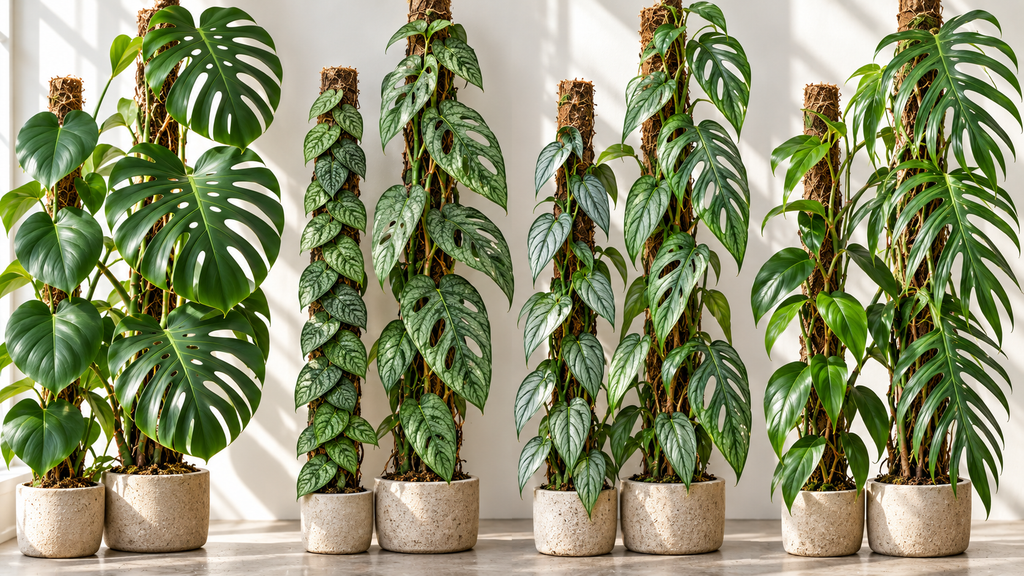
Monstera leaves can change dramatically as plants mature. Kew notes that juvenile plants in the genus may have shingling leaves, while adult foliage can be entire, perforated, or deeply divided.
| Monstera | Juvenile Appearance | Mature Appearance |
|---|---|---|
| M. deliciosa | Smaller, often solid leaves | Large leaves with holes and splits |
| M. dubia | Flat shingling leaves | Larger projecting foliage |
| M. acuminata | Shingling juvenile growth | Larger adult climbing foliage |
| M. siltepecana | Silver-patterned leaves | Larger, more mature foliage |
| M. pinnatipartita | Relatively simple leaves | Deeply divided blades |
| This is why one juvenile leaf should rarely be treated as final proof of identity, especially for expensive collector plants. |
Monstera Varieties by Leaf Shape
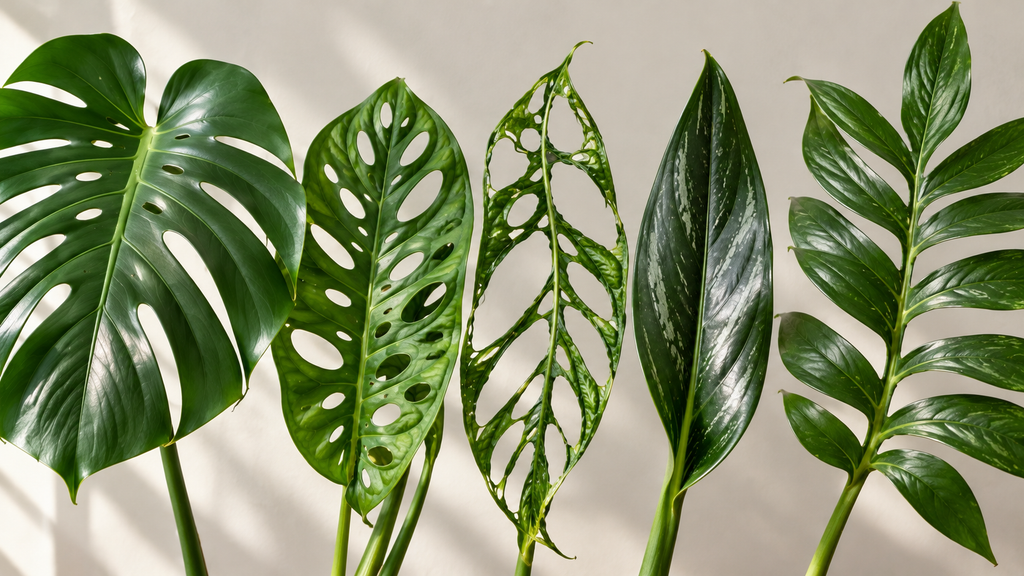
Leaves are the fastest starting point for identification, but not the final step. Look at the overall outline, type of fenestration, texture, color, venation, petiole structure, internodes, growth habit, and maturity.
| Feature | Likely Direction |
|---|---|
| Huge leaf with holes and deep splits | M. deliciosa |
| Smaller leaf with many enclosed holes | Often M. adansonii |
| Flat juvenile shingling growth | M. dubia or another shingling species |
| Silver juvenile foliage | M. siltepecana |
| Narrow mostly entire leaves | M. standleyana |
| Feather-like mature divisions | M. subpinnata |
| Extremely delicate perforated foliage | Investigate M. obliqua carefully |
| Cream-speckled deliciosa foliage | Thai Constellation |
| Bold white/cream variegation | Variegata / Albo |
| For high-value plants, whole-plant morphology and provenance matter more than one dramatic leaf. |
Monstera Names to Verify
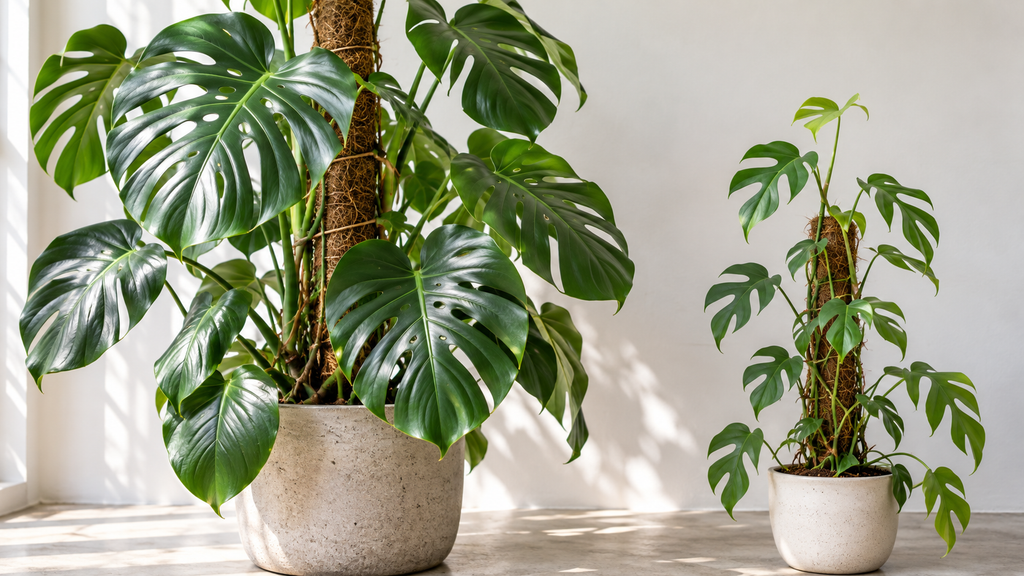
Some Monstera labels are more likely to cause confusion because common names, old synonyms, and trade terminology do not always match accepted botanical taxonomy.
Is Mini Monstera Really a Monstera?
Usually not. Mini Monstera commonly refers to Rhaphidophora tetrasperma, a split-leaved aroid in a different genus.
There is also a true species called Monstera minima, so “Mini Monstera” and Monstera minima should never be treated as interchangeable.
Is Borsigiana a Separate Monstera Species?
The borsigiana name remains common in horticulture, but it should not automatically be counted as a separate accepted Monstera species. Treat it as historical or horticultural terminology rather than proof of another species.
Is Monstera Peru Actually a Monstera?
“Monstera Peru” is a widely used houseplant trade name, often sold under labels such as Monstera karstenianum or Monstera sp. ‘Peru’.
The taxonomy is complicated: Kew currently treats the published name Monstera karstenianum as a synonym of Philodendron opacum.
For buyers, the practical rule is simple: do not pay a premium solely because a seller has attached a formal-looking scientific name to the plant.
Is Monstera Esqueleto the Same as Monstera epipremnoides?
Do not automatically treat them as the same. Kew recognizes M. epipremnoides as an accepted species, while Esqueleto is a horticultural name associated with cultivated material that has been confused with it.
If botanical accuracy matters, keep the names separate unless provenance supports the identification.
Small Monstera Varieties
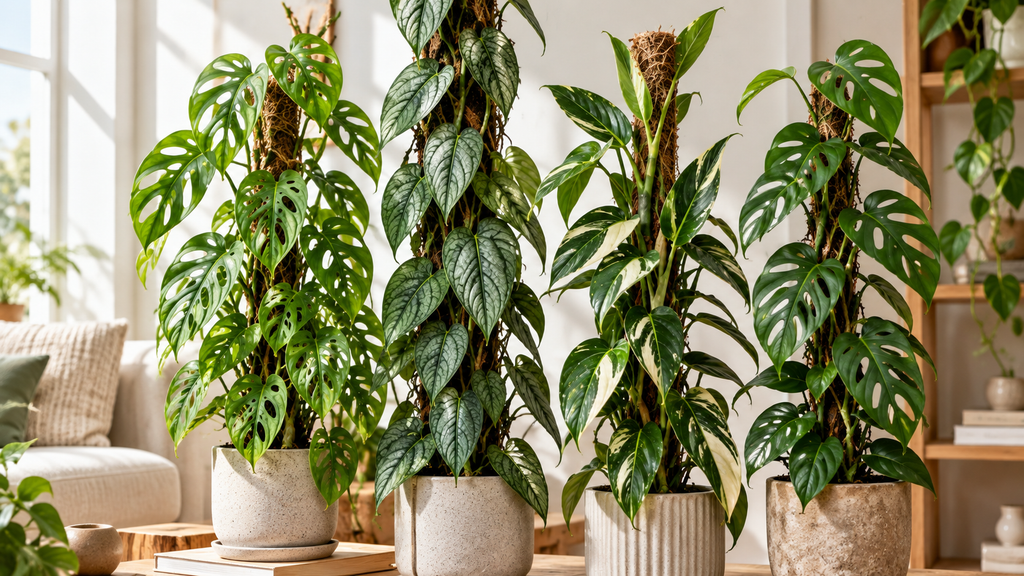
Small-leaved, dwarf, and juvenile are not the same thing. A small-leaved species naturally produces smaller foliage; a juvenile plant may simply become much larger later.
| Plant | Why It Works | Limitation |
|---|---|---|
| M. minima | True small-leaved Monstera | Less common |
| M. adansonii | Smaller foliage than deliciosa | Long vines |
| M. siltepecana | Manageable juvenile foliage | Changes with maturity |
| M. standleyana | Narrow leaves | Still climbs |
| For most ordinary homes, M. adansonii is one of the easiest compromises between recognizable Monstera foliage and manageable leaf size. |
What Is the Prettiest Monstera?
There is no objectively prettiest Monstera. The better question is which leaf characteristic you prefer.
| If beauty means… | Consider… |
|---|---|
| Huge tropical foliage | M. deliciosa |
| Lots of holes | M. adansonii |
| Cream-speckled variegation | Thai Constellation |
| Bold white contrast | Variegata / Albo |
| Silver foliage | M. siltepecana |
| Shingling pattern | M. dubia |
| Feather-like mature leaves | M. subpinnata |
| A healthy common Monstera that suits your space will usually look better than a rare plant struggling with inadequate light, support, or room. |
What Is the Most Expensive Monstera?
There is no permanently most expensive Monstera. Prices change with plant size, variegation, rooting, regional availability, propagation supply, and collector demand.
Before paying a premium, ask what the price actually reflects: verified rarity, mature size, established roots, unusual variegation, limited supply, or temporary hype.
Treat any exact “most expensive Monstera” claim as a dated market snapshot rather than a permanent botanical fact.
Do Monsteras Climb or Hang?
Monsteras naturally climb. Kew describes the genus as evergreen climbing plants, with some species also developing shingling juvenile growth.
Trailing a young M. adansonii from a shelf can still be decorative, but vertical support is better suited to natural growth and mature leaf development.
| Goal | Better Approach |
|---|---|
| Larger mature foliage | Climb |
| Shingling M. dubia | Flat vertical support |
| Cascading display | Trail |
| Height control | Prune and train |
How Long Do Monsteras Live?
Monsteras are perennial plants and do not have a reliable fixed lifespan such as exactly 20, 30, or 40 years.
Healthy plants can persist for many years when root health, light, watering, temperature, pest management, and physical support are suitable. They can also be rejuvenated through vegetative propagation from healthy nodes or top cuttings.
It is more useful to think about long-term healthy growth than a specific lifespan number.
What Should You Avoid With Monstera?
| Problem | Check First | Decision |
|---|---|---|
| New leaves have no holes | Maturity and light | Do not assume wrong species |
| Yellow leaves with wet mix | Root-zone moisture | Check watering and roots |
| “Rare” plant identified by one leaf | Provenance | Do not pay premium yet |
| Heavy vine falling outward | Support | Add climbing structure |
| Mostly-white weak growth | Green tissue and vigor | Prioritize plant health |
| Pet chewing foliage | Accessibility | Move plant out of reach |
| The important point is not to diagnose every unusual leaf as a species problem. Check maturity and growing conditions first. |
Are Monsteras Safe for Pets?
No. UF/IFAS states that Monstera species contain irritating insoluble calcium oxalate crystals and can be toxic to dogs, cats, and humans when plant tissues are chewed or ingested.
If a pet regularly chews houseplants, keep Monstera foliage inaccessible rather than searching for a “pet-safe Monstera variety.”
Growing Monsteras outside? This guide primarily assumes indoor or container cultivation. Outdoor suitability varies by climate and region. Check local invasive-species guidance before planting Monstera outdoors in tropical or subtropical areas.
Monstera Varieties FAQs
How many Monstera species are there?
Kew currently recognizes 73 accepted Monstera species. Nursery lists can look longer because cultivars, synonyms, and trade names are often included.
Are Monstera varieties and species the same thing?
No. A species is a botanical taxon, while a cultivar is a cultivated selection. “Variety” is often used informally for both.
Do all Monsteras develop holes?
No. Leaf structure varies by species and maturity. Some develop enclosed holes, some deep divisions, and others remain comparatively entire.
Why does my Monstera have no holes?
Young plants can naturally have solid leaves. Species, maturity, light, and climbing conditions all influence fenestration.
Can you identify a Monstera from one juvenile leaf?
Usually not with high confidence. Check multiple leaves, stems, nodes, growth habit, and provenance when accurate identification matters.
Is Thai Constellation a separate species?
No. ‘Thai Constellation’ is a cultivated form of Monstera deliciosa.
Is Mini Monstera a true Monstera?
Usually no. Mini Monstera commonly refers to Rhaphidophora tetrasperma, which belongs to another genus.
Is Monstera adansonii the same as Monstera obliqua?
No. They are separate species. Whole-plant morphology is more useful than hole count alone.
Does an expensive Monstera automatically mean it is rare?
No. Price can reflect demand, size, variegation, supply, and regional availability. Market price and botanical rarity are not identical.
Are Monsteras safe for cats and dogs?
No. Monstera tissues contain irritating calcium oxalate crystals and should be kept away from pets that chew plants.
Choosing Between Monstera Varieties
Kew currently recognizes 73 accepted Monstera species, but most houseplant growers only need to learn a much smaller group to make confident choices.
Choose M. deliciosa for the classic large-leaf plant, M. adansonii for smaller perforated foliage, M. siltepecana for silver juvenile leaves, M. dubia for shingling growth, and M. subpinnata for deeply divided mature foliage. Choose Thai Constellation or Variegata when variegation is your priority.
For rare or expensive plants, verify the name before paying for it. The best Monstera is not automatically the rarest or most expensive one; it is the plant whose identity, mature size, growth habit, and appearance fit the conditions you can realistically provide.

Myra is the founder and lead writer of Plantsaholic. She shares practical, research-backed advice on indoor plants, outdoor gardening, flowers, herbs, succulents, and everyday plant care. Her goal is to help gardeners of all experience levels grow healthier plants through simple, easy-to-follow gardening guides.