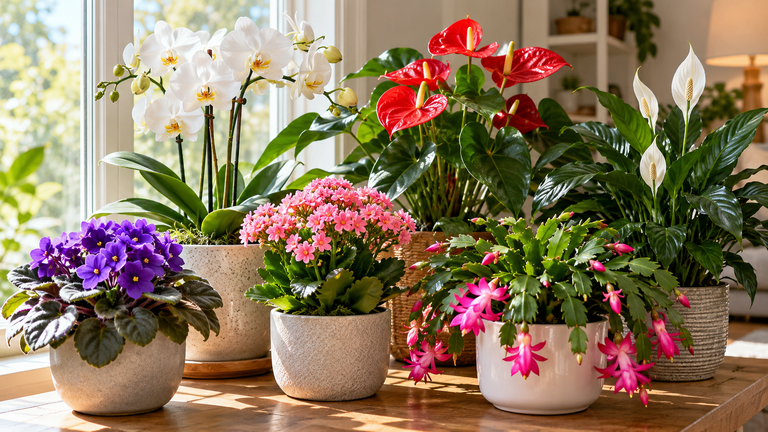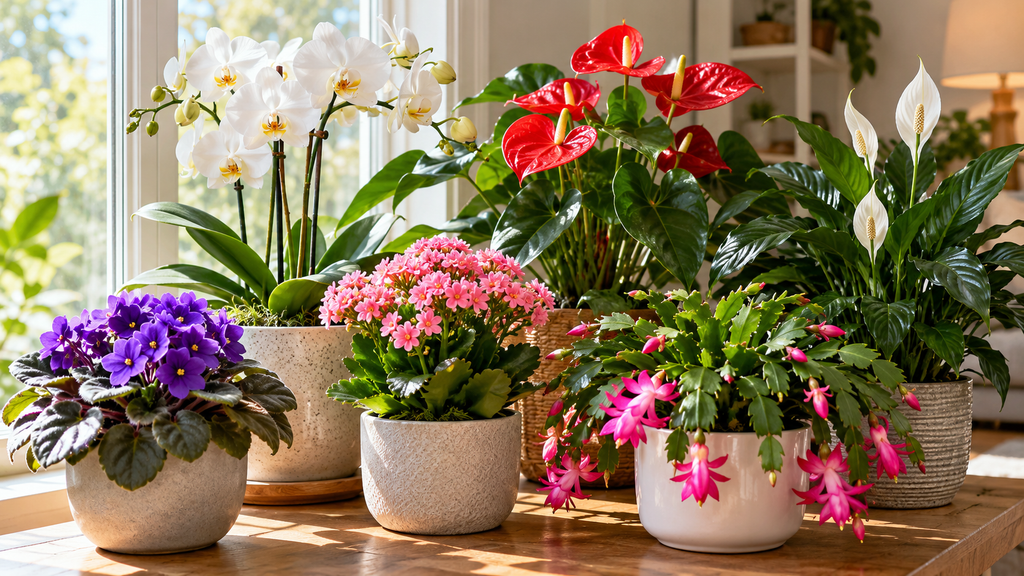
Indoor flowering plants bring color into living rooms, kitchens, and small spaces, but their blooms depend on more than regular watering. African violets and Cape primroses can flower repeatedly, orchids offer long-lasting displays, and kalanchoes or holiday cacti need seasonal cues. The best choice is a plant whose lighting, temperature, and reblooming needs match your home.
This Plantsaholic guide compares 15 flowering houseplants, explains how to care for each, and helps you distinguish normal rest from a genuine problem.
How Do You Choose the Best Indoor Flowering Plants?
Start with the light reaching the plant’s leaves, not how bright the room looks. A peace lily can tolerate modest light but may produce few flowers there. A kalanchoe needs much brighter exposure; a cool-growing cyclamen may struggle in a warm room despite excellent light.
Also consider whether you want repeat blooms, one long display, or flowers during a particular season. Check the plant’s mature size, watering requirements, and whether pets can reach it. Finally, decide whether you can provide special flowering triggers. A plant that is easy to keep alive is not necessarily easy to make bloom again.
Which Indoor Flowering Plants Are Best for Your Home?
Rebloom effort describes the level of care often needed after flowering; it is not a success guarantee.
| Plant | Best light | Flowering pattern | Rebloom effort |
|---|---|---|---|
| African violet | Bright filtered | Repeated flushes | Relatively easy |
| Cape primrose | Bright indirect | Repeated flushes | Relatively easy |
| Anthurium | Bright indirect | Recurring spathes | Moderate |
| Wax begonia | Bright | Repeated flowers | Relatively easy |
| Hoya | Strong indirect | Clusters on mature vines | Variable |
| Peace lily | Medium to bright indirect | Periodic | Moderate |
| Lipstick plant | Bright filtered | Intermittent | Moderate |
| Phalaenopsis orchid | Bright filtered | Long-lasting display | Moderate |
| Guzmania bromeliad | Bright indirect | Once per rosette | New rosette required |
| Kalanchoe | Very bright | Seasonal | More involved |
| Holiday cactus | Bright filtered | Seasonal | Moderate |
| Cyclamen | Bright and cool | Seasonal, then rest | More involved |
| Clivia | Bright indirect | Seasonal | More involved |
| Gloxinia | Bright indirect | Seasonal, then dormancy | More involved |
| Amaryllis | Bright | Seasonal bulb | Moderate |
What Is the Difference Between Repeat, Seasonal, and Long-Lasting Flowers?
Repeat bloomers such as African violets may flower in successive flushes when conditions remain suitable. Phalaenopsis orchids can hold one display for weeks or months, but usually need a growing interval before the next spike. Seasonal plants, including holiday cactus, respond to shorter days or cooler conditions. Guzmania bromeliads are different: the original rosette flowers once, and future displays come from mature offsets.
What Are the Best Repeat-Blooming Indoor Plants?
These plants can produce new flowers without prolonged dormancy when conditions are suitable.
1. African Violet
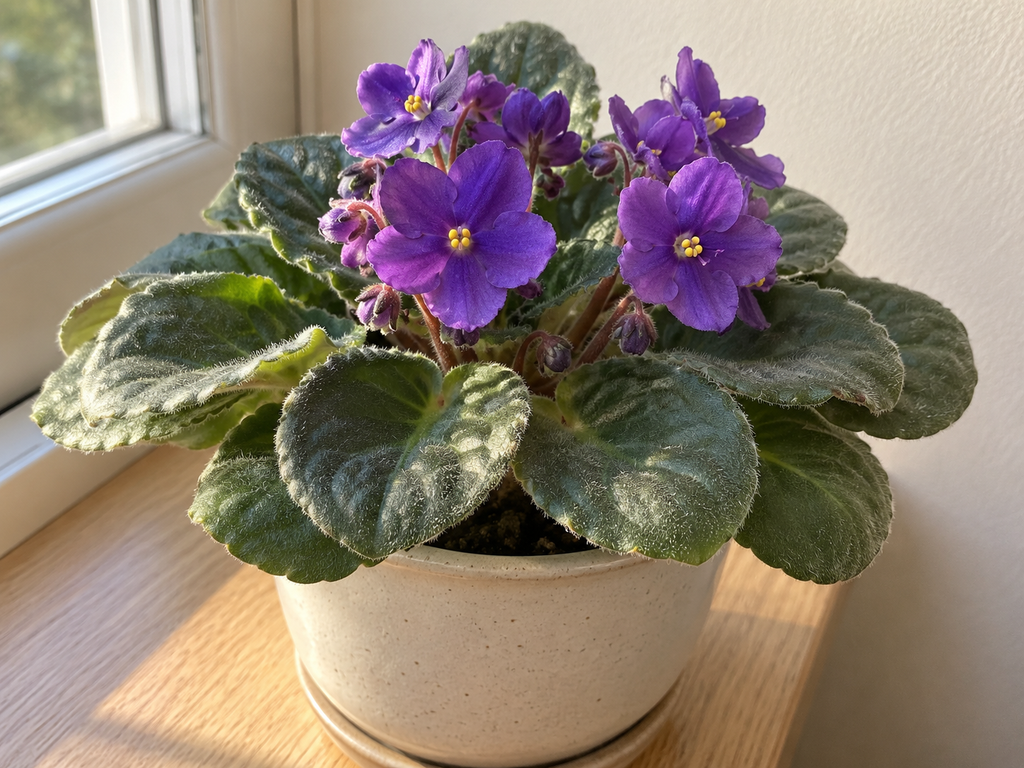
African violets (formerly Saintpaulia, now included in Streptocarpus) have fuzzy leaves and compact clusters of purple, pink, white, or patterned flowers.
Care: Use a porous African violet mix. Water when the surface begins to dry, then drain the pot thoroughly; avoid leaving water in the crown. Remove exhausted flower stalks without damaging new leaves.
Rebloom checkpoint: Healthy foliage but no buds usually calls for a light assessment before extra fertilizer. A consistent grow-light schedule can help in darker rooms.
2. Cape Primrose
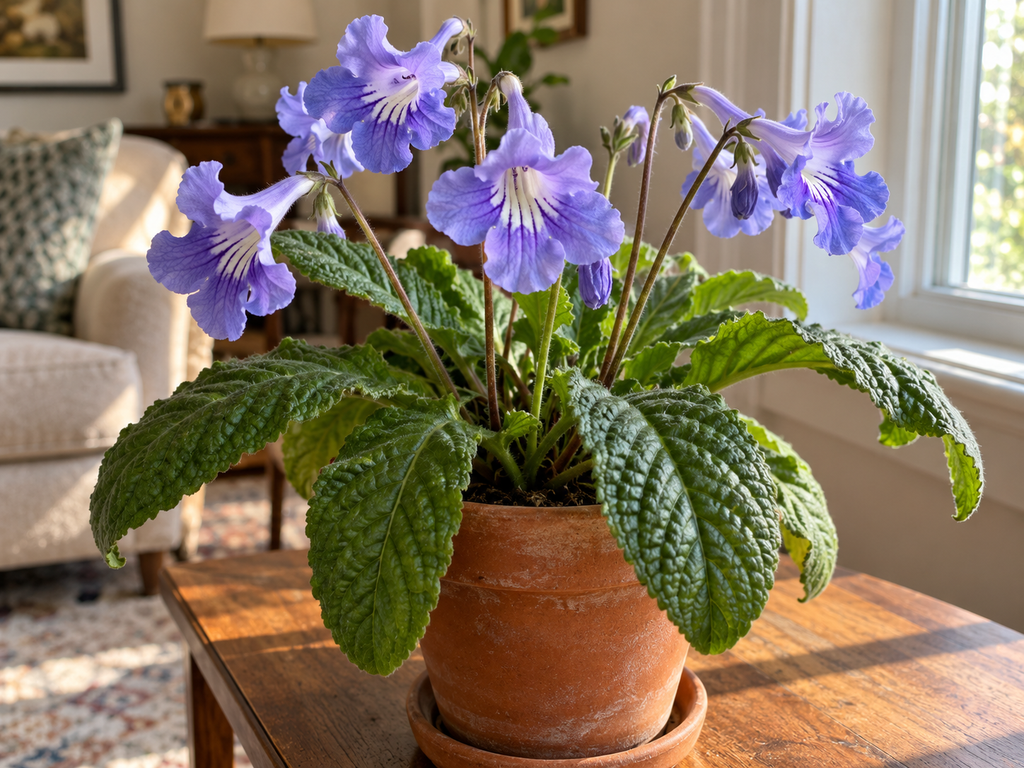
Cape primrose (Streptocarpus hybrids) carries trumpet-shaped flowers above a rosette of textured leaves.
Care: Provide bright indirect light and a draining mix that stays lightly moist during active growth. Avoid both prolonged sogginess and repeated severe drying. Keep it away from harsh afternoon sunlight.
Rebloom checkpoint: Remove old flower stems and observe whether new buds appear as the plant grows. Flowering may slow naturally in darker months; improve usable light before making large feeding changes.
3. Anthurium
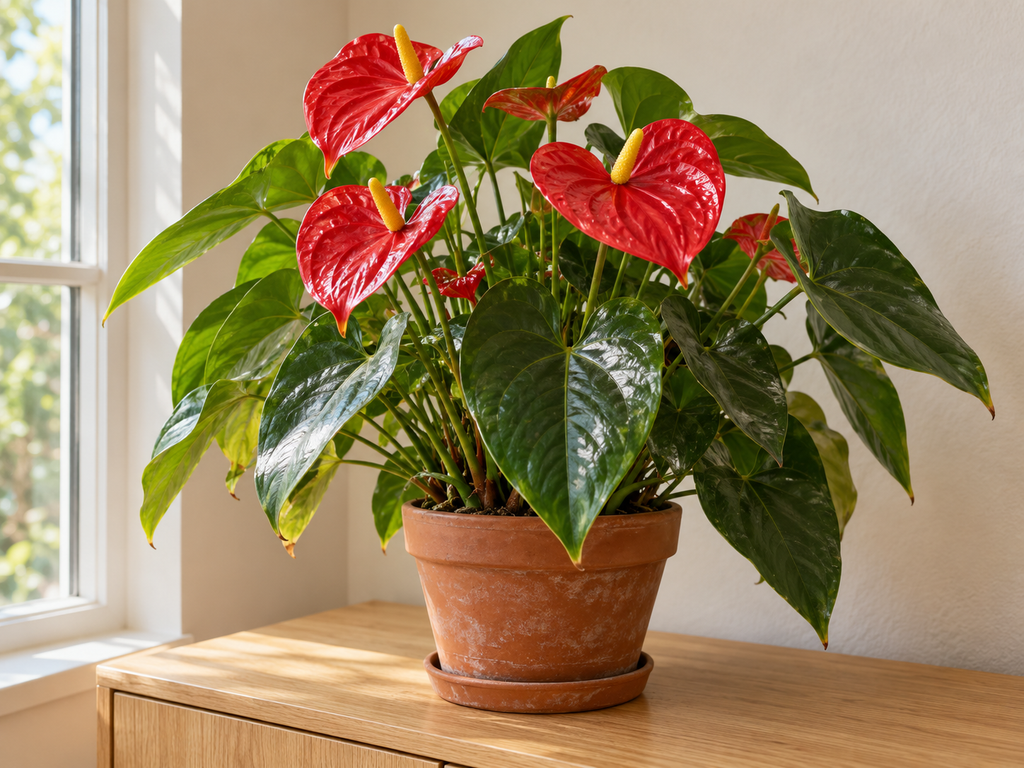
Flowering anthuriums, especially Anthurium andraeanum hybrids, have glossy leaves and colorful red, pink, or white spathes. The small true flowers sit on the central spadix; the spathe provides most of the visible color.
Care: Give bright indirect light, warmth, and an airy growing medium. Water when the mix begins to dry rather than keeping roots constantly saturated. Protect leaves from cold drafts and scorching sun.
Rebloom checkpoint: If glossy new leaves appear without spathes, review light intensity and root health. Anthuriums are best for warm rooms with bright windows. Keep them beyond the reach of chewing pets.
4. Wax Begonia
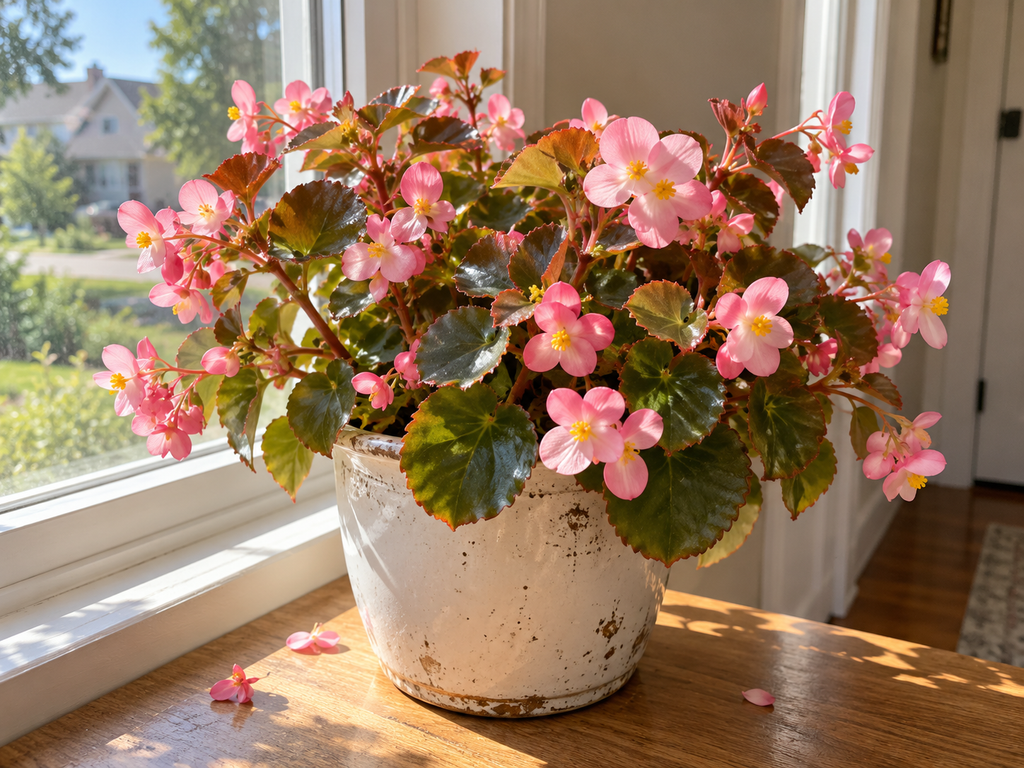
Wax begonias (Begonia Semperflorens-Cultorum Group) combine rounded green or bronze leaves with small pink, red, or white flowers. Although usually sold as bedding plants, they can grow indoors with sufficient light.
Care: Place near a bright window or suitable grow light. Keep the medium moderately moist with good drainage and remove flowers as they fade. Trim leggy growth when needed to encourage a fuller shape.
Rebloom checkpoint: Stretching stems and fewer flowers often indicate that the plant needs stronger light.
5. Hoya
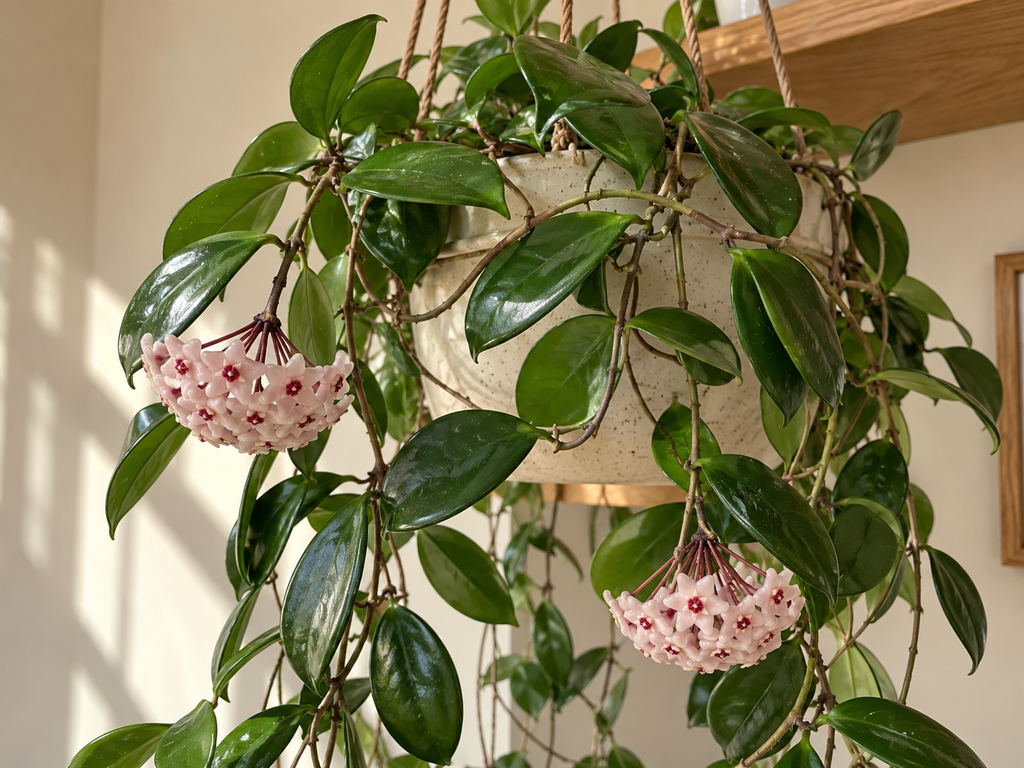
Hoyas, particularly Hoya carnosa, are climbing or trailing vines with waxy foliage and star-shaped flower clusters. Some varieties are fragrant, but maturity and flowering frequency differ considerably.
Care: Provide strong indirect light and a loose, airy mix. Allow some drying between waterings, avoiding long periods of saturated roots. Support climbing stems or let them trail freely.
Rebloom checkpoint: Keep the short flower spurs, called peduncles, when flowers fall. Many hoyas bloom again from the same points. A young cutting may need considerable time to mature.
6. Peace Lily
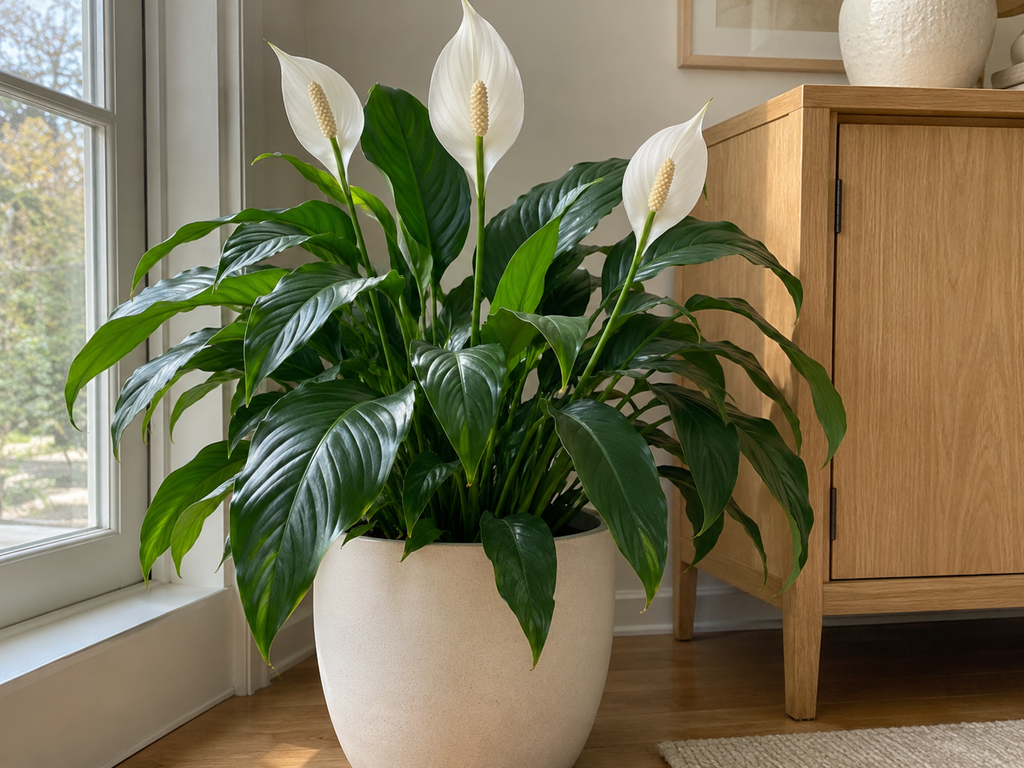
Peace lilies (Spathiphyllum species and hybrids) produce glossy foliage and elegant white spathes around a central spadix.
Care: Supply medium to bright indirect light and keep the mix moderately moist without waterlogging. Avoid repeated severe wilting. Remove faded stems near their bases when they decline.
Rebloom checkpoint: A peace lily in shade may remain green but rarely flower. Moving it gradually into brighter indirect light is often more useful than adding fertilizer.
7. Lipstick Plant
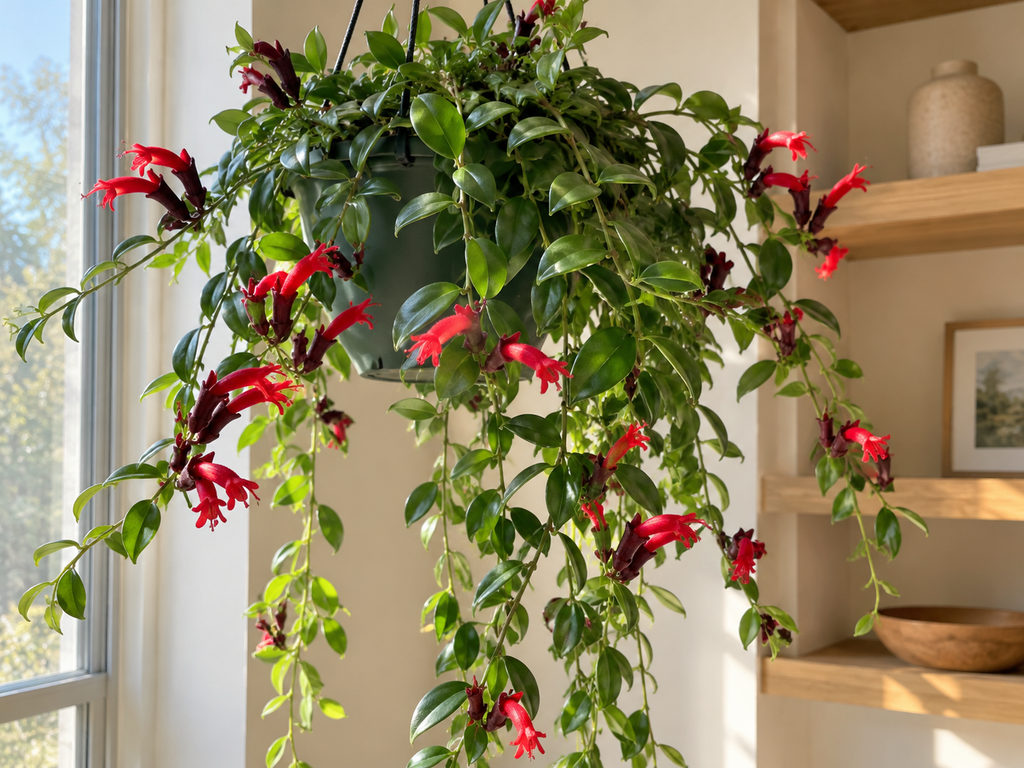
Lipstick plants (Aeschynanthus radicans and related cultivars) produce trailing stems and tubular red or orange-red flowers emerging from darker calyces.
Care: Offer bright filtered light and a well-drained medium. Water more regularly during active growth while avoiding saturated roots. Trim overlong stems selectively, preferably away from active budding periods.
Rebloom checkpoint: Dense foliage without flowers may mean the plant needs more light. Excessive pruning when buds are forming can also reduce a display.
Which Indoor Flowering Plants Have Long-Lasting Flowers?
These plants offer an extended decorative display, although one may grow quietly for months and the other follows a one-rosette flowering cycle.
8. Phalaenopsis Orchid
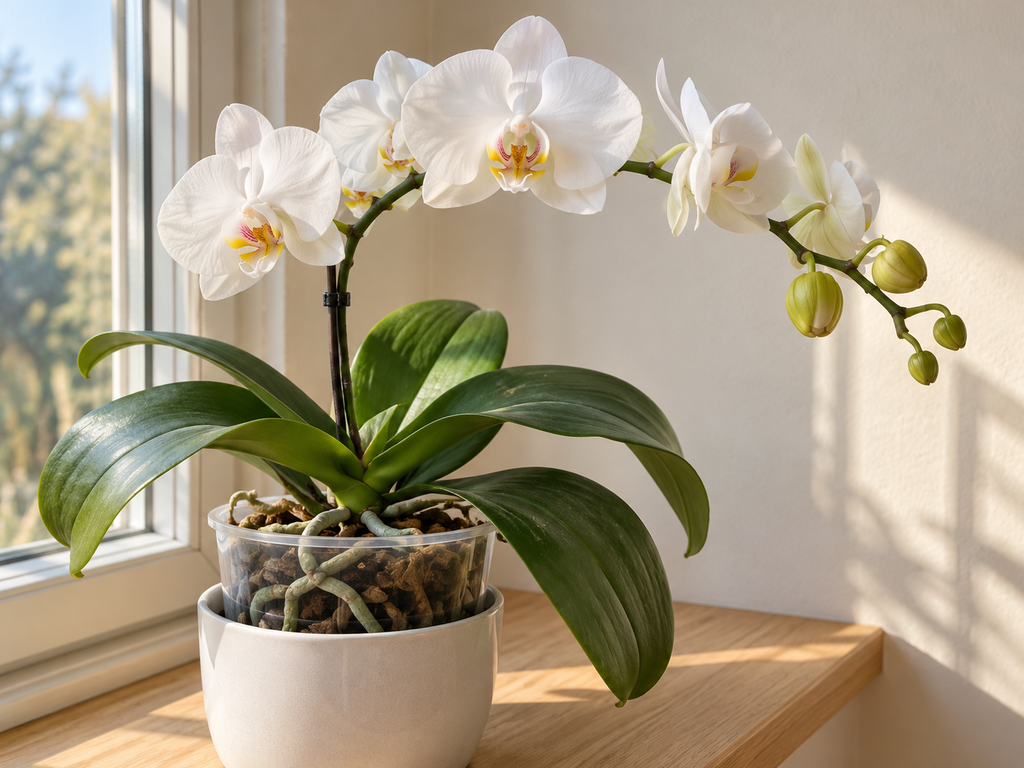
Phalaenopsis, or moth orchid, produces arching stems with white, pink, purple, yellow, or patterned blooms. Individual displays can last for many weeks, making this a useful plant for decorative indoor color.
Care: Grow in orchid bark or an appropriately managed orchid medium, not dense garden soil. Provide bright filtered light, water according to root and medium conditions, and allow thorough drainage.
Rebloom checkpoint: Many hybrids respond to sufficient light and suitable seasonal temperature changes. After flowering, a green spike may branch again; remove a spike that has turned completely brown and dry. Healthy new roots and leaves between blooms are normal.
9. Guzmania Bromeliad
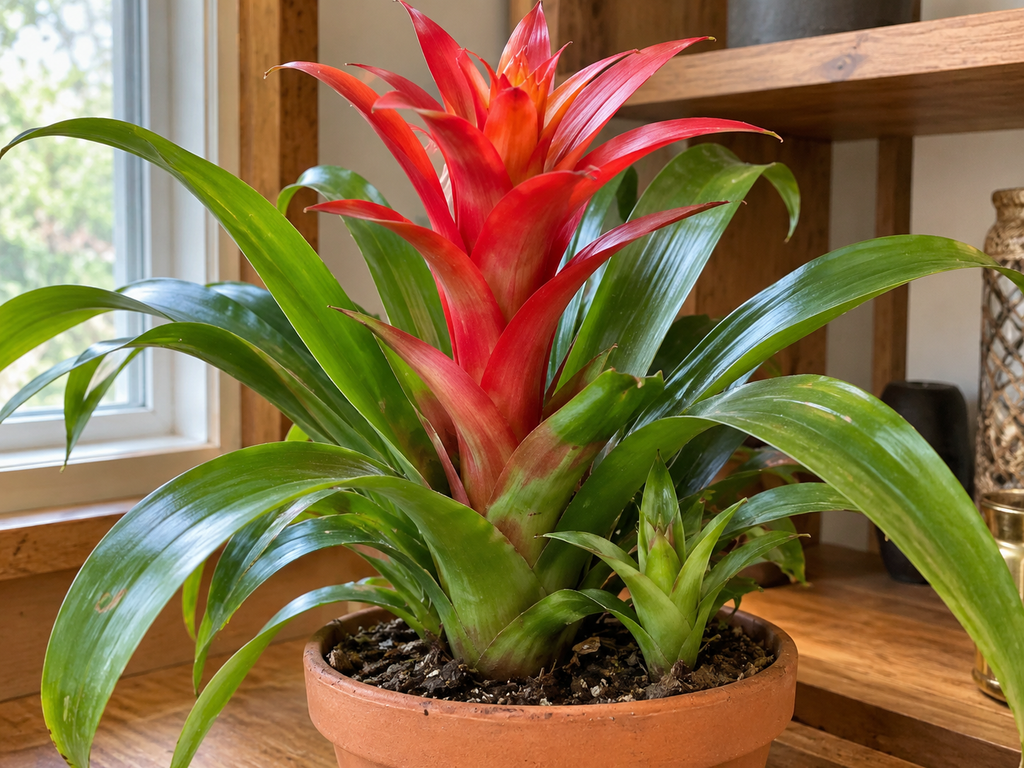
Guzmania bromeliads grow as rosettes with upright, brightly colored bracts. The decorative color often lasts far longer than the tiny true flowers.
Care: Provide bright indirect light and a suitable well-drained medium. Watering practices differ among bromeliad types, so follow guidance for the plant you own instead of treating every bromeliad identically.
Rebloom checkpoint: A mature Guzmania rosette generally flowers once. The parent gradually declines while producing pups that can become new flowering rosettes after maturity. Do not discard healthy offsets.
Which Indoor Flowering Plants Bloom Seasonally?
Seasonal plants may need long nights, lower temperatures, dormancy, or time to rebuild stored energy. Knowing the trigger is more helpful than applying extra fertilizer when the display ends.
10. Kalanchoe
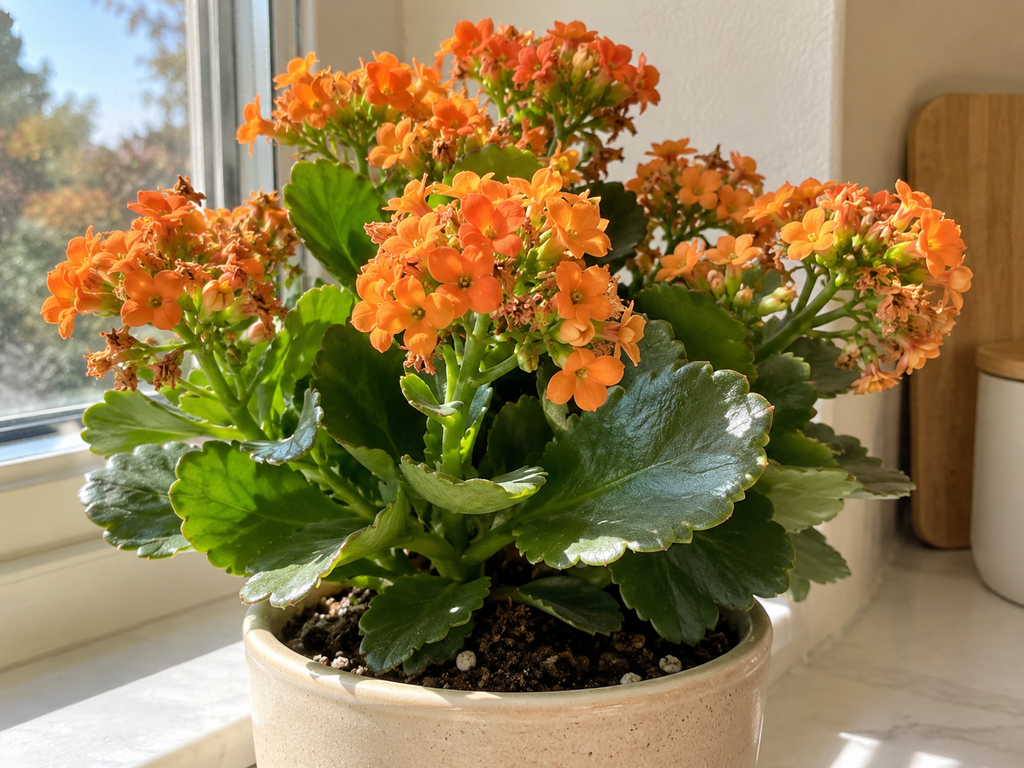
Florist kalanchoe (Kalanchoe blossfeldiana) is a succulent with fleshy leaves and dense clusters of red, yellow, orange, pink, or white flowers.
Care: Give very bright light and a freely draining medium. Allow the mix to dry between waterings; prolonged wetness encourages root problems.
Rebloom checkpoint: Flower buds develop in response to long nights. About 14 hours of uninterrupted darkness daily for roughly six weeks, alongside bright days and suitable temperatures, can encourage a new cycle. Even a room lamp switched on during the dark period may disrupt the response.
11. Holiday Cactus
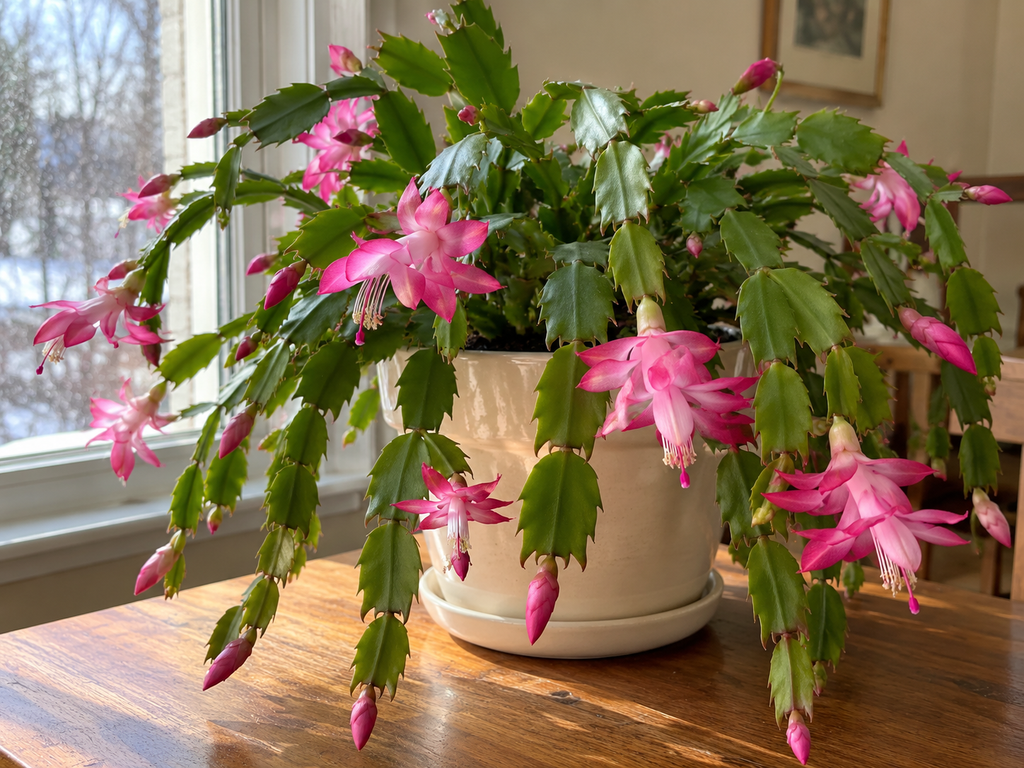
Holiday cacti (Schlumbergera species and hybrids) have flattened, jointed stems and tubular flowers. Thanksgiving cactus and Christmas cactus are related but not identical; stem shapes and flowering times differ.
Care: Unlike desert cacti, they prefer bright filtered light and a moderately moisture-retentive but draining medium. Water according to drying conditions and avoid prolonged saturation.
Rebloom checkpoint: Shorter days and/or cooler nights encourage budding. Keep night conditions consistent and minimize temperature swings after buds appear. Sudden drafts or major watering changes can cause bud drop.
12. Cyclamen
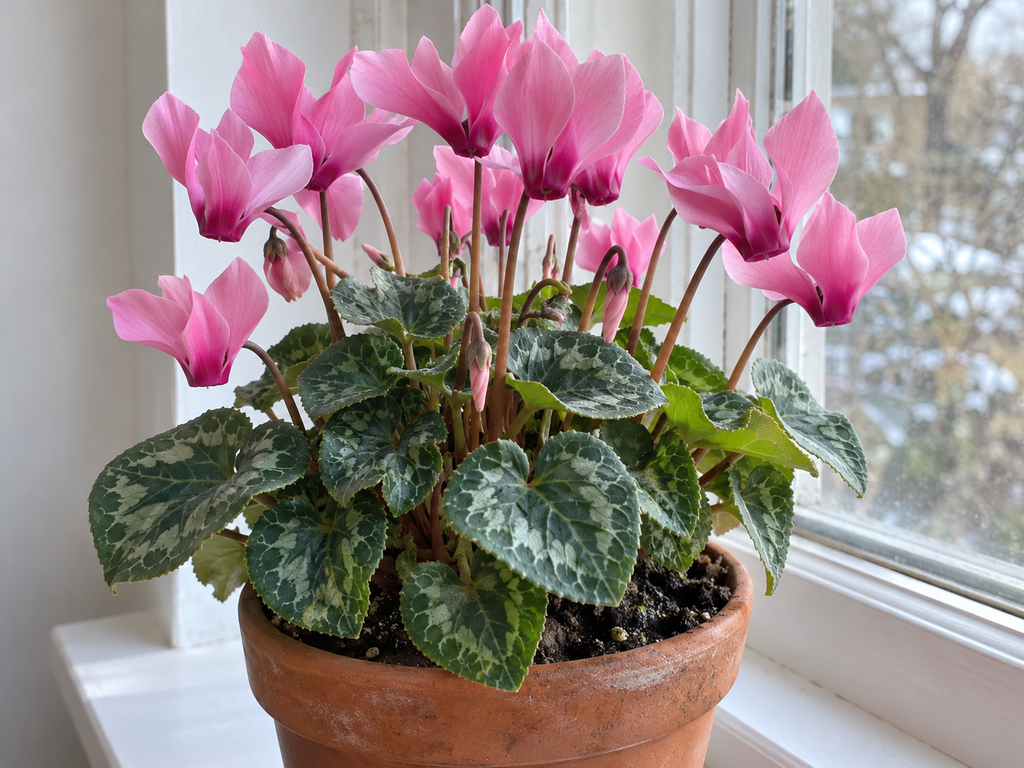
Florist cyclamen (Cyclamen persicum) has patterned, heart-shaped leaves and upward-curving flowers. It is most comfortable in cool, bright rooms rather than warm spaces near heaters.
Care: Aim for cool flowering conditions, roughly 55–65°F (13–18°C), and bright indirect light. Keep the medium moderately moist while avoiding water around the crown.
Rebloom checkpoint: Yellowing leaves after flowering may signal normal dormancy. Gradually reduce watering as foliage declines, then resume when new growth emerges.
13. Clivia
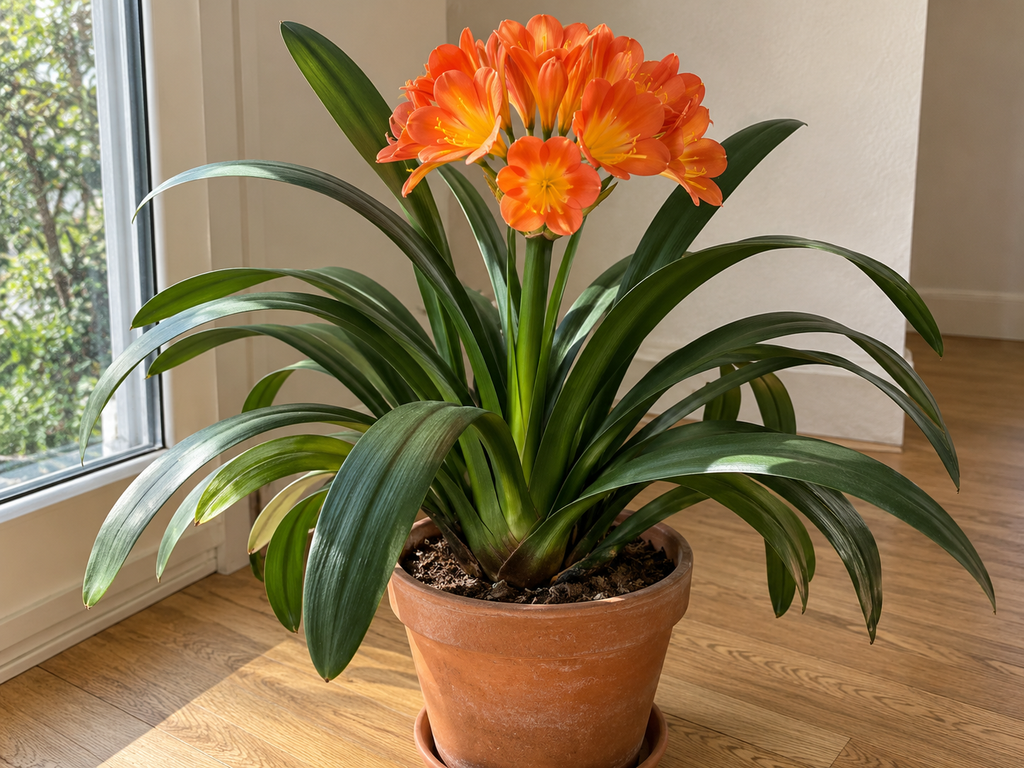
Clivia (Clivia miniata) has broad strap-like leaves and clusters of orange, yellow, or reddish trumpet flowers.
Care: Use bright indirect light and good drainage. Let the upper inch or two of medium dry before watering, and avoid frequently moving the plant into harsh sun.
Rebloom checkpoint: Mature plants benefit from a cool, relatively dry rest. Approximately six to eight weeks near 50°F (10°C), with only enough water to prevent severe wilting, may promote flowering.
14. Gloxinia
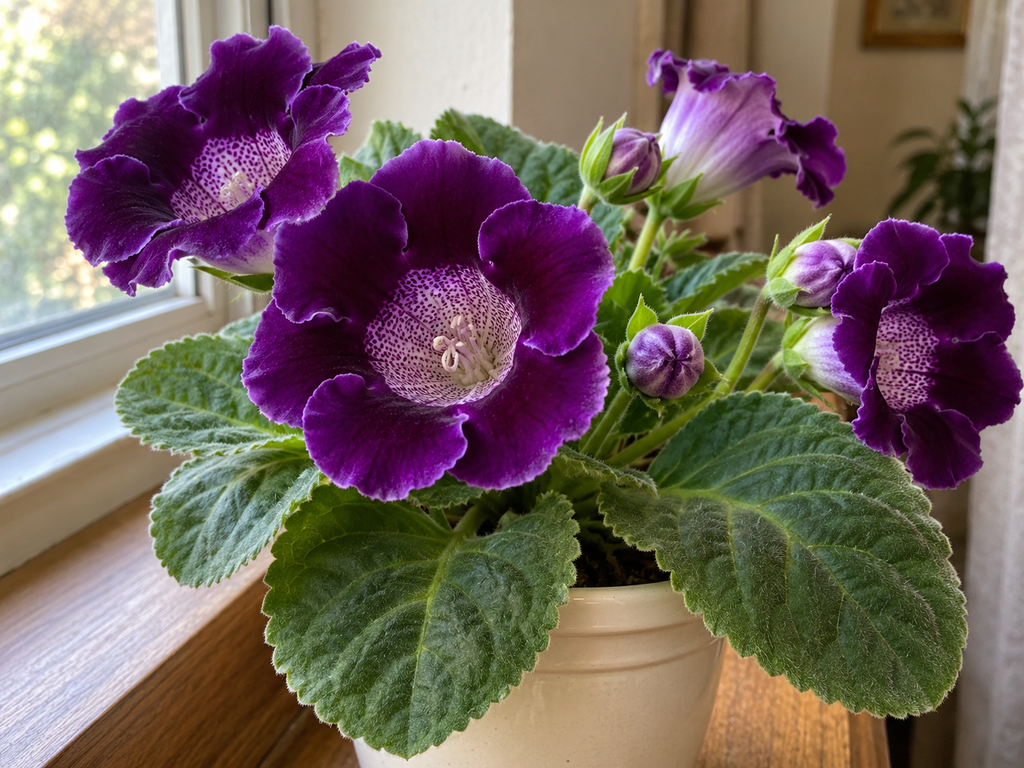
Florist gloxinia (Sinningia speciosa) produces velvety bell-shaped flowers above soft foliage. Its underground tuber allows the plant to rest between growing cycles.
Care: Supply bright indirect light and moderately even moisture during active growth. Keep the medium draining freely and avoid harsh sun on delicate leaves.
Rebloom checkpoint: When leaves naturally decline after flowering, decrease watering rather than forcing new growth. Rest the dormant tuber in suitably cool conditions for about two to three months, checking that it remains sound. Resume gentle watering when new shoots emerge.
15. Amaryllis
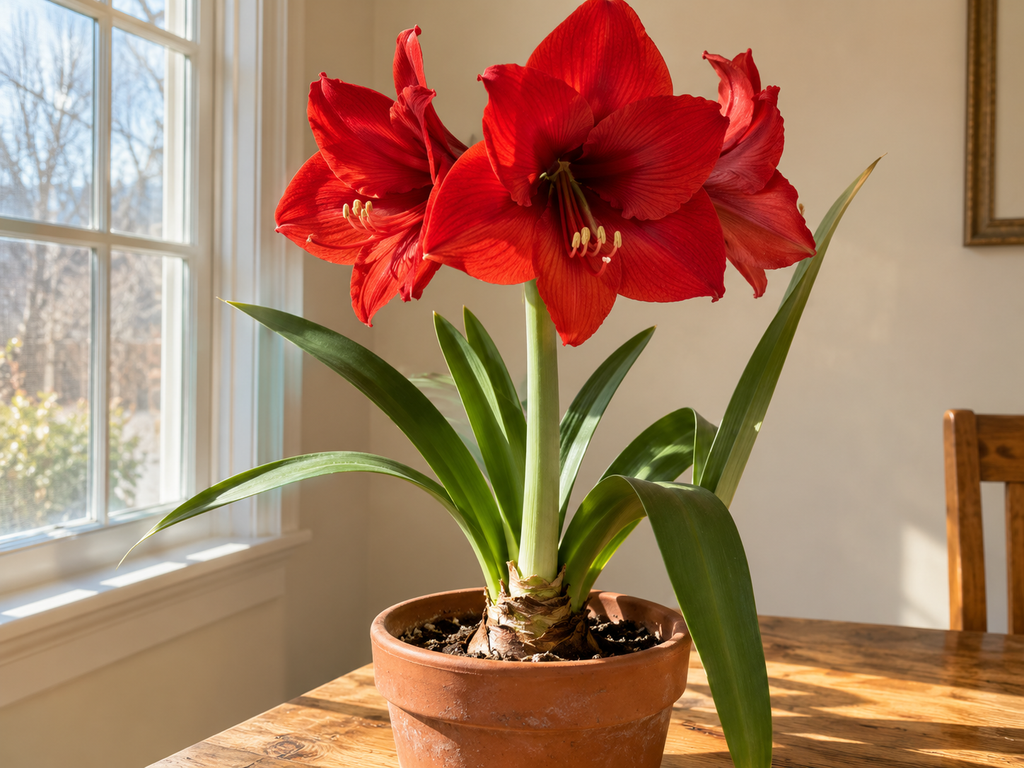
Indoor amaryllis is usually a Hippeastrum hybrid, a bulb producing large trumpet-shaped flowers. Its leaf growth after flowering matters as much as the spectacular display.
Care: Provide bright light, good drainage, and appropriate moisture during active growth. After the flowers fade, remove the spent blooms but retain all healthy green leaves.
Rebloom checkpoint: Leaves replenish the bulb’s energy reserves for another flowering cycle. Continue suitable care rather than cutting them off immediately. A well-grown mature bulb can flower again, sometimes following a managed rest.
Where Should You Place Indoor Flowering Plants?
Choose the actual plant position, not just the room. Daylight changes with seasons, curtains, neighboring buildings, and distance from glass. South- and north-facing exposures reverse between hemispheres.
Which Window Is Best for Flowering Houseplants?
| Window | Good starting choices | Caution |
|---|---|---|
| East | African violet, Cape primrose, Phalaenopsis | Check exposure behind glass |
| West | Hoya, lipstick plant, wax begonia | Filter harsh afternoon sun |
| South (Northern Hemisphere) | Kalanchoe, wax begonia | Protect shade-sensitive leaves |
| North (Northern Hemisphere) | Peace lily, African violet where bright enough | Flowering may be limited |
How Can You Check Whether a Room Has Enough Light?
Observe the chosen location in morning and afternoon, noting direct sun, curtains, and shadows. Watch subsequent growth: stretched stems, weak buds, or no flowers can suggest inadequate light. A light meter can compare positions at leaf level. For practical guidance, see how much light indoor plants need and bright indirect light explained.
Which Flowering Indoor Plants Work in Lower Light?
Peace lilies tolerate moderate light, but their flowering often improves in brighter indirect conditions. A room with almost no usable daylight is unsuitable for reliable blooms without supplemental lighting. Consider grow lights for indoor plants when natural light is insufficient.
How Do You Make Indoor Flowering Plants Rebloom?
Start with healthy roots and enough light, then identify the plant’s particular flowering trigger. Additional fertilizer cannot replace short days, cool rest, or a dormant season.
1. Check Flowering Light First
Healthy leaves without buds may mean light is adequate for survival but insufficient for flowering. Increase light gradually and protect sensitive foliage from sudden direct sun.
2. Water According to Root Conditions
Check the medium rather than watering on a fixed day. A kalanchoe needs more drying than a wax begonia; an orchid growing in bark behaves differently from a peat-grown African violet. See how to water indoor plants properly.
3. Respect Seasonal Flowering Signals
Use species-specific night, temperature, and rest requirements. Do not impose the same treatment on every plant.
4. Fertilize Only When Appropriate
Feed healthy plants during active growth using a suitable fertilizer and label instructions. Avoid excessive feeding or treating fertilizer as a cure for inadequate light. Consult our indoor plant fertilizing guide.
5. Protect Developing Flower Buds
Avoid abrupt changes to position, temperature, or moisture once buds form. Drafts, severe drying, and saturated roots can cause sensitive plants to drop flowers before opening.
What Should You Do After Indoor Plant Flowers Fade?
The correct response depends on the flowering cycle. Remove spent flowers when appropriate, but preserve living structures that support future blooms.
| Plant or group | Best next action |
|---|---|
| African violet, Cape primrose, begonia | Remove spent flowers; maintain active growth |
| Anthurium, peace lily, lipstick plant | Remove faded stems; maintain suitable light and roots |
| Hoya | Keep peduncles; continue normal care |
| Phalaenopsis | Inspect spike; maintain root and leaf growth |
| Guzmania | Protect growing offsets as parent declines |
| Kalanchoe, holiday cactus | Prepare for species-specific seasonal cues |
| Cyclamen, gloxinia | Allow normal rest when foliage declines |
| Clivia | Maintain leaves; plan appropriate cool rest |
| Amaryllis | Keep green leaves to replenish the bulb |
Avoid repotting simply because flowers have faded. Repot when root health, medium condition, or plant growth actually calls for it.
Why Is My Indoor Flowering Plant Healthy but Not Blooming?
A plant may be between natural flowering cycles, or it may lack the light, maturity, or seasonal conditions required to form buds. Diagnose what you see before making several changes.
| Symptom | Likely explanation | First check |
|---|---|---|
| Healthy leaves, no flowers | Insufficient light or normal rest | Location and bloom cycle |
| Long, weak stems | Low light | Brighter suitable position |
| Buds appear then drop | Environmental stress | Drafts, water, temperature |
| Yellow leaves in wet mix | Root stress | Drainage and roots |
| Hoya vines without flowers | Immaturity or low light | Maturity and exposure |
| Holiday cactus without buds | Missing seasonal cues | Nights and temperatures |
| Bromeliad parent declining | Normal post-bloom lifecycle | Healthy pups |
| Cyclamen leaves dying back | Possible dormancy | Season and tuber condition |
What Should You Check First?
Follow this order: light, natural flowering season, flowering cue, root health, watering, maturity, then fertilizer. Change one likely factor at a time and observe the response. A resting plant does not necessarily need rescue.
How Can You Track Your Plant’s Next Flowering Cycle?
Record the plant’s name, window orientation, last bloom date, watering observations, new leaves or roots, and first new buds. This simple log helps distinguish seasonal patterns from care problems. Photograph the same plant over time if possible; genuine dated observations are more useful than guessing how quickly it should rebloom.
How Do You Buy Healthy Indoor Flowering Plants?
Check more than flower color. Choose a correctly identified plant with sound leaves, healthy growth, and no obvious pests beneath leaves or around stems. Inspect the growing medium for persistent saturation, bad odors, or severe dryness. Some unopened buds may extend the display, but avoid plants already stressed by heat or damage.
Check mature size and ask about reblooming conditions before purchasing. A shop’s greenhouse conditions may be very different from your home.
When Should You Avoid Flowering Indoor Plants?
Avoid plants whose essential needs you cannot meet. A hot room is a poor match for cool-growing cyclamen, and a deeply shaded shelf is unlikely to support many flowers. Seasonal varieties can disappoint if you expect permanent color. Where light is extremely limited, consider decorative foliage indoor plants instead.
Are Indoor Flowering Plants Safe for Cats and Dogs?
Safety differs by species. Verify the plant’s botanical name against the ASPCA toxic and non-toxic plant database, particularly if pets chew foliage.
| Plant | ASPCA classification for cats and dogs |
|---|---|
| African violet, Phalaenopsis, Hoya carnosa, Christmas cactus | Non-toxic |
| Anthurium, peace lily, kalanchoe, begonia, cyclamen | Toxic |
Peace lily and anthurium contain irritating calcium oxalate crystals. Cyclamen and kalanchoe can cause more serious problems if eaten. Even plants classified non-toxic may cause gastrointestinal upset, and fertilizer or pesticide residues present separate risks. Contact a veterinarian promptly after suspected toxic-plant ingestion.
Frequently Asked Questions About Indoor Flowering Plants
What Is the Easiest Indoor Flowering Plant to Grow?
An African violet can be straightforward with steady bright filtered light and careful watering. A kalanchoe is easy to maintain in strong light, although encouraging another bloom takes more effort.
Can Indoor Flowering Plants Grow in Low Light?
Some survive in lower light, particularly peace lilies, but flowering may become sparse. For reliable blooms, provide suitable brighter indirect light or supplemental lighting.
Can Grow Lights Help Indoor Plants Flower?
Yes, suitable grow lights can make up for inadequate daylight. Plants requiring long nights must still receive an uninterrupted dark period.
Why Does My Indoor Plant Grow Leaves but No Flowers?
Possible reasons include insufficient light, plant immaturity, missing seasonal cues, unhealthy roots, or a normal interval between blooms. Diagnose before fertilizing.
Will a Store-Bought Flowering Plant Bloom Again?
Many will, provided their particular requirements are met. Guzmania is an exception: its original rosette does not rebloom, but mature offsets can flower.
Why Won’t My Holiday Cactus Bloom?
It may lack appropriate long nights, cooler conditions, or sufficient daytime light. Nighttime household lighting can interfere with bud initiation.
How Can I Encourage More Flowers Indoors?
Provide adequate light and healthy roots, then meet any species-specific temperature, day-length, or rest requirement. Consistent care works better than indiscriminate fertilizer increases.
Myra is the founder and lead writer of Plantsaholic. She shares practical, research-backed advice on indoor plants, outdoor gardening, flowers, herbs, succulents, and everyday plant care. Her goal is to help gardeners of all experience levels grow healthier plants through simple, easy-to-follow gardening guides.