Silver leaf plants are ornamental plants with grey, white-silver, blue-grey, metallic, or silver-patterned foliage. Popular examples include lamb’s ear, Artemisia, Russian sage, Santolina, Brunnera, dusty miller, Scindapsus pictus, and Rex begonia.
Silver foliage adds contrast and texture to both gardens and indoor plant collections. Pale leaves can brighten shady areas, soften vivid flower colors, break up large areas of green, and remain visually interesting even when plants are not in bloom.
However, “silver leaf plant” is not a single species or care category. Some silver plants thrive in hot, dry sun, while others prefer woodland shade or bright filtered indoor light. The best choice depends on light, soil moisture, climate, mature size, and whether the plant will grow indoors or outdoors.
What Are Silver Leaf Plants?
Silver leaf plants are plants whose foliage appears silver, grey, metallic, white-grey, blue-grey, or partly silver.
The term describes appearance rather than botanical classification, which means silver foliage can occur in perennials, shrubs, trees, ground covers, ferns, herbs, bedding plants, container plants, and tropical houseplants.
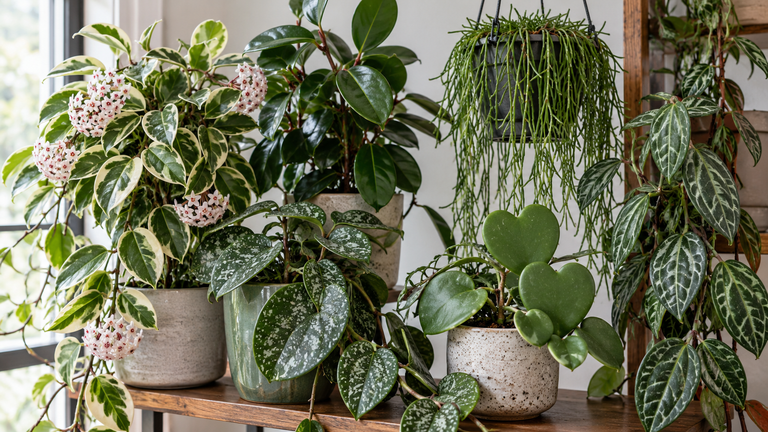
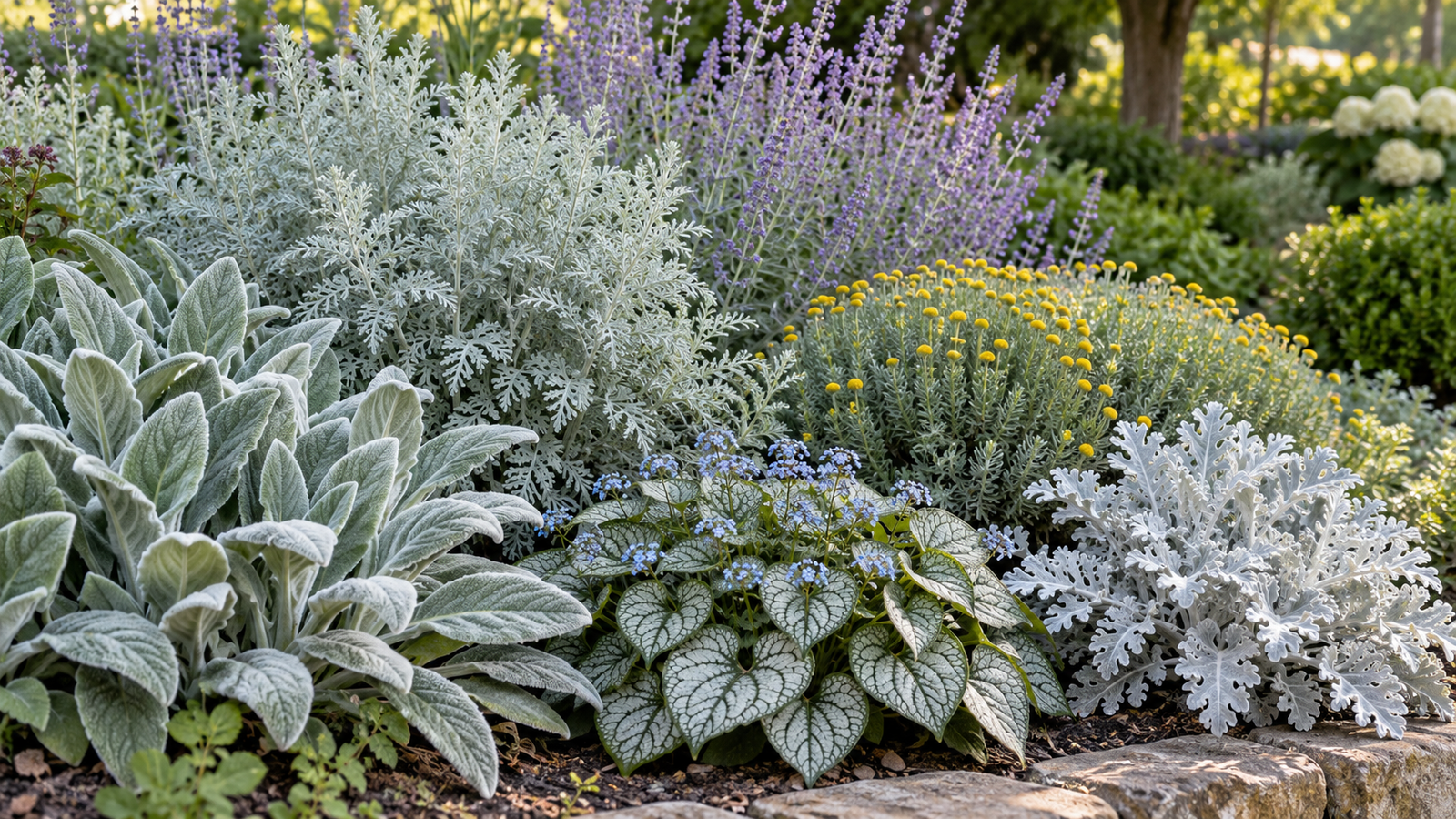
Different plants create their silver appearance in different ways. Lamb’s ear has dense pale hairs that give its foliage a soft, woolly texture. Artemisia has finer grey-silver foliage. Scindapsus pictus remains mostly green but develops distinct silver markings, while Rex begonias can produce highly metallic leaves.
Common silver foliage types include:
- Woolly or fuzzy silver leaves
- Fine grey foliage
- Blue-grey or glaucous foliage
- Metallic leaves
- Silver variegation
- Silver leaves with green veins
- Green leaves marked with silver spots
Many outdoor silver plants tolerate sun and relatively dry soil, but this is not universal. Brunnera, Japanese painted fern, lungwort, and some Heuchera varieties provide attractive silver foliage in shade.
Key point: silver color tells you how a plant looks, but its botanical identity determines how it should be grown.
How to Identify Silver Leaf Plants
To identify an unknown silver plant, look beyond color. Leaf texture, shape, mature size, growth habit, flowers, and whether the plant grows indoors or outdoors are often much stronger clues.
A low-growing plant with thick, soft, fuzzy leaves is likely to be lamb’s ear. Fine or deeply divided grey foliage may indicate Artemisia. Silver foliage combined with yellow button-like flowers suggests Santolina, while grey stems topped with purple-blue flowers often indicate Russian sage.
Indoors, heart-shaped green leaves covered with silver patches may be Scindapsus pictus. Large metallic leaves containing silver, burgundy, pink, or green often belong to Rex begonias.
| What you see | Possible plant |
|---|---|
| Soft, fuzzy silver leaves | Lamb’s ear |
| Fine divided grey foliage | Artemisia |
| Silver mound with yellow flowers | Santolina |
| Grey foliage with purple-blue flowers | Russian sage |
| Deeply cut pale foliage | Dusty miller |
| Huge divided silver leaves | Cardoon |
| Silver leaves with green veins | Brunnera |
| Silver fern-like fronds | Japanese painted fern |
| Green heart-shaped leaves with silver patches | Scindapsus pictus |
| Metallic patterned indoor leaves | Rex begonia |
| Green leaves with silver patches | Pilea cadierei |
If identification is uncertain, compare the plant’s leaf texture, leaf shape, flower color, growth habit, mature size, indoor or outdoor location, and the botanical name shown on its label.
Color should narrow the possibilities rather than provide the final identification.
Why Do Silver Leaf Plants Look Silver?
Silver foliage can result from tiny pale hairs, waxy coatings, reflective leaf surfaces, pigmentation, or variegation. These features interact with light differently from ordinary green foliage and create grey, white, blue-grey, or metallic effects.
In woolly plants such as lamb’s ear, dense hairs create both the soft texture and silver appearance. Artemisia produces a finer grey effect, while Begonia and Scindapsus create silver through pigmentation and pattern rather than dense hairs.
Silver foliage is also common among plants adapted to bright, relatively dry environments. Pale or hairy leaves can help reduce intense solar exposure and influence moisture loss, which helps explain why Artemisia, Santolina, lavender, Russian sage, and similar plants often perform well in sunny, freely draining positions.
That does not mean every silver plant is drought tolerant. Brunnera, Japanese painted fern, lungwort, and tropical houseplants show that silver patterning can also occur in shade-loving or moisture-dependent species.
Which Silver Leaf Plants Suit Your Conditions?
The best silver plant is one that naturally matches your growing conditions.
Before choosing by flower color or leaf texture, check five things first: light, moisture, climate, mature size, and the role you want the plant to perform.
| Growing condition | Good starting choices |
|---|---|
| Full sun | Artemisia, Santolina, Russian sage, lavender, Eryngium |
| Partial shade | Lamb’s ear, Heuchera, some Astelia |
| Shade | Brunnera, Japanese painted fern, lungwort |
| Bright filtered indoor light | Scindapsus, Rex begonia, Pilea |
| Dry, freely draining soil | Artemisia, Santolina, lavender, Eryngium |
| Normally moist, drained soil | Lamb’s ear, Russian sage, rose campion |
| Moist shade | Brunnera, lungwort, Japanese painted fern |
You should also decide what you need from the plant. Some are useful as ground covers, some provide purple or yellow flowers, some brighten shade, while others work best as trailing container plants, indoor climbers, or architectural specimens.
25 Best Silver Leaf Plants
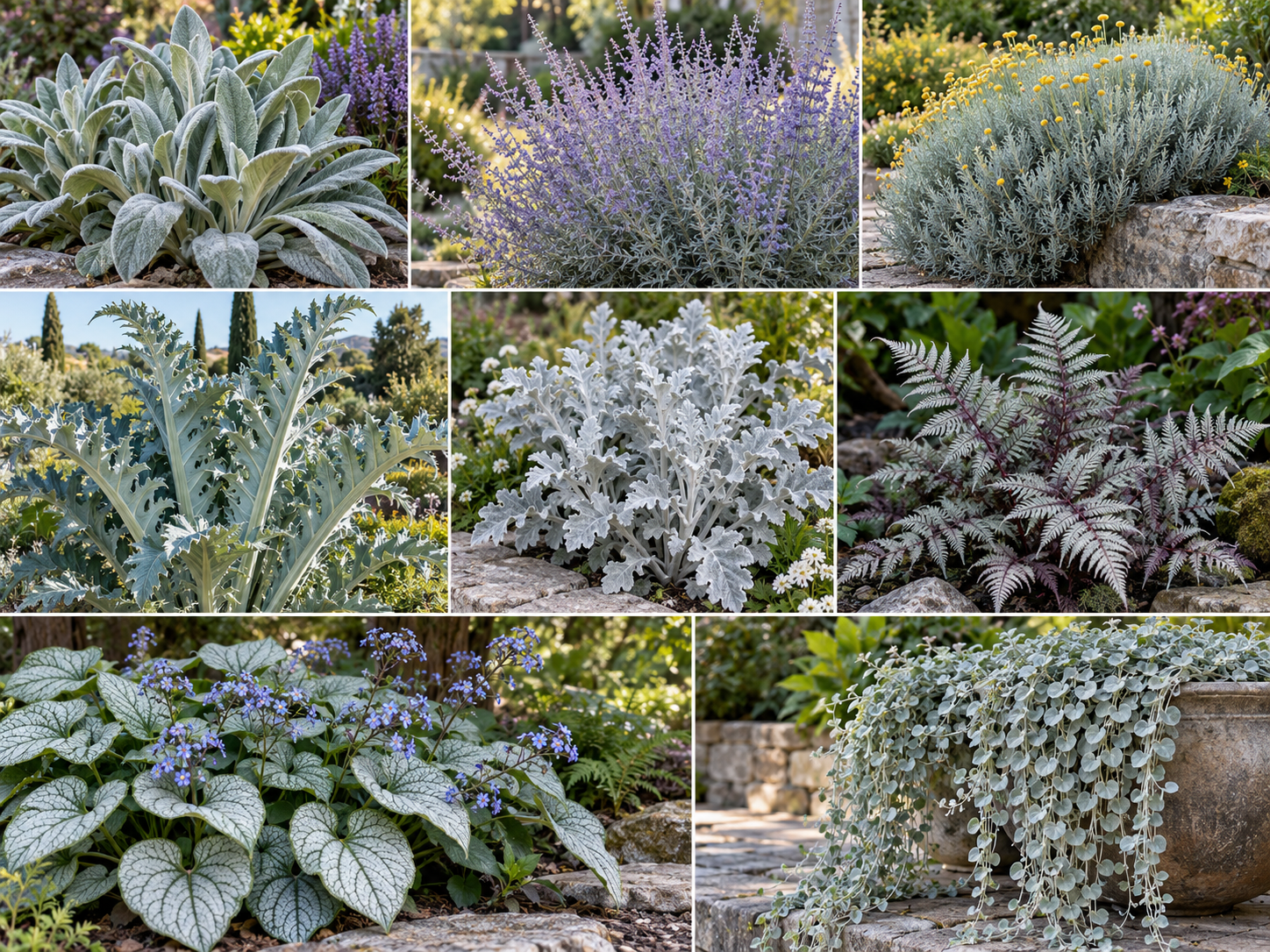
The following silver foliage plants cover a wide range of outdoor and indoor uses.
| Plant | Best for | Light | Main feature |
|---|---|---|---|
| Lamb’s ear | Ground cover | Sun/part shade | Soft woolly leaves |
| Artemisia ‘Valerie Finnis’ | Sunny borders | Full sun | Bright silver foliage |
| Artemisia ‘Silver Mound’ | Border fronts | Full sun | Compact mound |
| Russian sage | Flowering borders | Full sun | Purple-blue flowers |
| Dusty miller | Beds and pots | Full sun | Bright pale foliage |
| Centaurea cineraria | Sunny borders | Full sun | Silver divided leaves |
| Santolina | Edging | Full sun | Yellow flowers |
| Cardoon | Architectural planting | Full sun | Huge silver leaves |
| Brunnera ‘Jack Frost’ | Shade | Part/full shade | Silver leaves with green veins |
| Japanese painted fern | Woodland gardens | Shade | Silver fronds |
| Silver Heuchera | Containers/borders | Part shade | Patterned foliage |
| Astelia chathamica | Architectural foliage | Part shade | Steely leaves |
| Helichrysum petiolare | Containers | Sun/part sun | Trailing grey foliage |
| Eryngium ‘Silver Ghost’ | Gravel gardens | Full sun | Upright silver structure |
| Silver lavender | Fragrant borders | Full sun | Purple flowers |
| Convolvulus cneorum | Evergreen mound | Full sun | Silky silver leaves |
| Dichondra ‘Silver Falls’ | Hanging pots | Sun/bright light | Cascading foliage |
| Snow-in-summer | Rock gardens | Full sun | Silver ground cover |
| Rose campion | Cottage gardens | Full sun | Magenta flowers |
| Lungwort | Shade | Shade/part shade | Silver-spotted foliage |
| Garden sage | Edible borders | Full sun | Grey aromatic foliage |
| Acacia baileyana | Large landscapes | Full sun | Silver leaves, yellow flowers |
| Scindapsus pictus | Indoor trailing | Filtered light | Silver patterning |
| Rex begonia | Indoor display | Filtered light | Metallic leaves |
| Pilea cadierei | Compact houseplant | Filtered light | Silver patches |
Best Silver Ground Cover
Lamb’s ear is one of the strongest choices for sunny to partly shaded areas with well-drained soil. Snow-in-summer works well in dry rock gardens, while Brunnera is a better option where shade is the dominant condition.
Best Silver Plants for Sunny Borders
Artemisia, Russian sage, Santolina, lavender, Eryngium, garden sage, and rose campion are useful starting points where sunlight and drainage are good.
Best Silver Plants for Shade
Brunnera, Japanese painted fern, lungwort, and silver Heuchera provide attractive silver foliage without requiring full sun.
Best Silver Plants for Containers
Dichondra ‘Silver Falls’, Helichrysum, dusty miller, compact Artemisia, and Heuchera can work well in containers when pot size, drainage, and climate are suitable.
Best Outdoor Silver Leaf Plants
Outdoor silver leaf plants should be selected according to the planting site rather than from one universal ranking.
For hot, dry, sunny locations, good starting choices include Artemisia, Santolina, Russian sage, lavender, and Eryngium.
For ordinary sunny borders, lamb’s ear, rose campion, garden sage, dusty miller, and cardoon can all be useful.
In shade, consider Brunnera ‘Jack Frost’, Japanese painted fern, lungwort, and silver Heuchera.
For containers, useful options include Dichondra ‘Silver Falls’, Helichrysum, dusty miller, and compact Artemisia.
Mature size matters just as much as light. Cardoon can become a major architectural specimen, while lamb’s ear remains low. Acacia baileyana belongs to an entirely different scale category and should only be considered where the climate and available space are suitable.
The goal is not to force a favorite plant into an unsuitable location. Choose a silver plant whose natural preferences already match your site.
Best Indoor Silver Leaf Plants
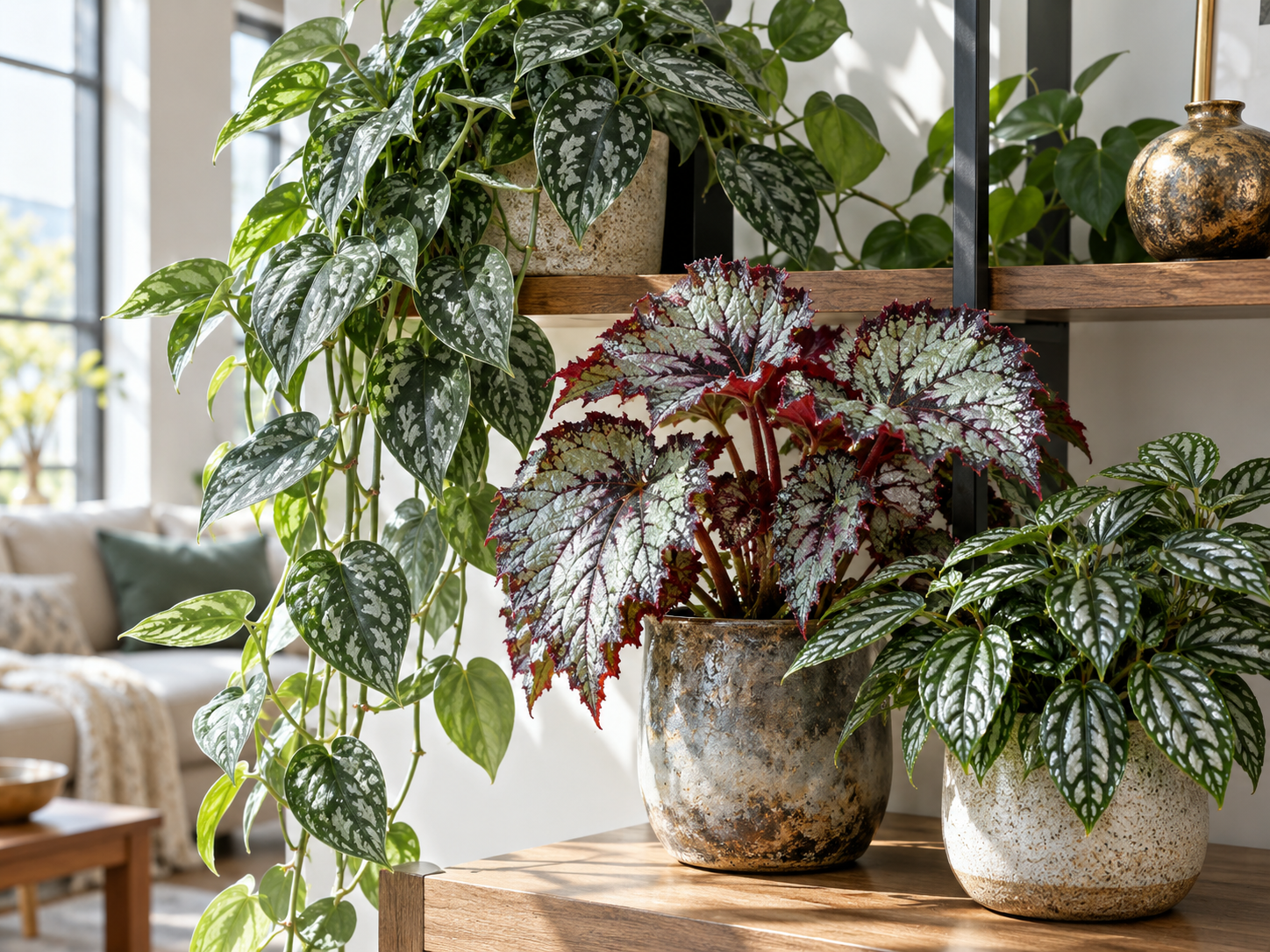
Three useful indoor silver foliage plants are Scindapsus pictus, Rex begonia, and Pilea cadierei.
Scindapsus pictus
Scindapsus pictus is an excellent choice when trailing or climbing growth is wanted. Its heart-shaped green leaves are marked with silver and work well on shelves, in hanging pots, or trained onto supports.
Rex Begonia
Rex begonias are ideal when foliage color is the main attraction. Their broad leaves may combine silver with burgundy, purple, pink, or green.
Pilea cadierei
Pilea cadierei remains more compact and produces green leaves with clearly defined silver patches.
| Desired effect | Best choice |
|---|---|
| Indoor trailing plant | Scindapsus pictus |
| Metallic statement plant | Rex begonia |
| Compact tabletop plant | Pilea cadierei |
These plants should not receive the same care as outdoor Artemisia or Santolina simply because they all have silver foliage. Indoor silver plants generally prefer bright filtered light and a more balanced moisture regime than dry-climate outdoor species.
Best Perennial Silver Leaf Plants
Many popular silver foliage plants are perennial, although whether they return reliably year after year depends on climate.
Useful perennial choices include lamb’s ear, Artemisia, Russian sage, Brunnera, Heuchera, Japanese painted fern, lungwort, and cardoon.
For low planting, lamb’s ear and compact Artemisia are useful choices. Brunnera, lungwort, and Heuchera suit shade better, while Russian sage provides height and purple flowers in sunny borders.
Before treating any plant as reliably perennial, check local winter temperatures, summer heat and humidity, winter drainage, local growing recommendations, and whether the plant dies back or remains evergreen.
A plant may be biologically perennial but still behave like an annual where conditions are too cold, wet, hot, or humid for reliable survival.
Silver Leaf Plants With Purple Flowers
Russian sage is one of the strongest options for combining silver-grey foliage with purple-blue flowers. It works particularly well in sunny, well-drained borders where its upright flowering stems can rise above surrounding plants.
Other useful choices include lamb’s ear, cardoon, rose campion, silver lavender, and Centaurea cineraria.
| Desired effect | Plant |
|---|---|
| Tall sunny border | Russian sage |
| Low silver foliage | Lamb’s ear |
| Architectural feature | Cardoon |
| Bright magenta contrast | Rose campion |
| Fragrant planting | Silver lavender |
Choose plants for their light, moisture, and mature-size requirements first. Flower color should be the final filter.
Silver Leaf Plants With Yellow Flowers
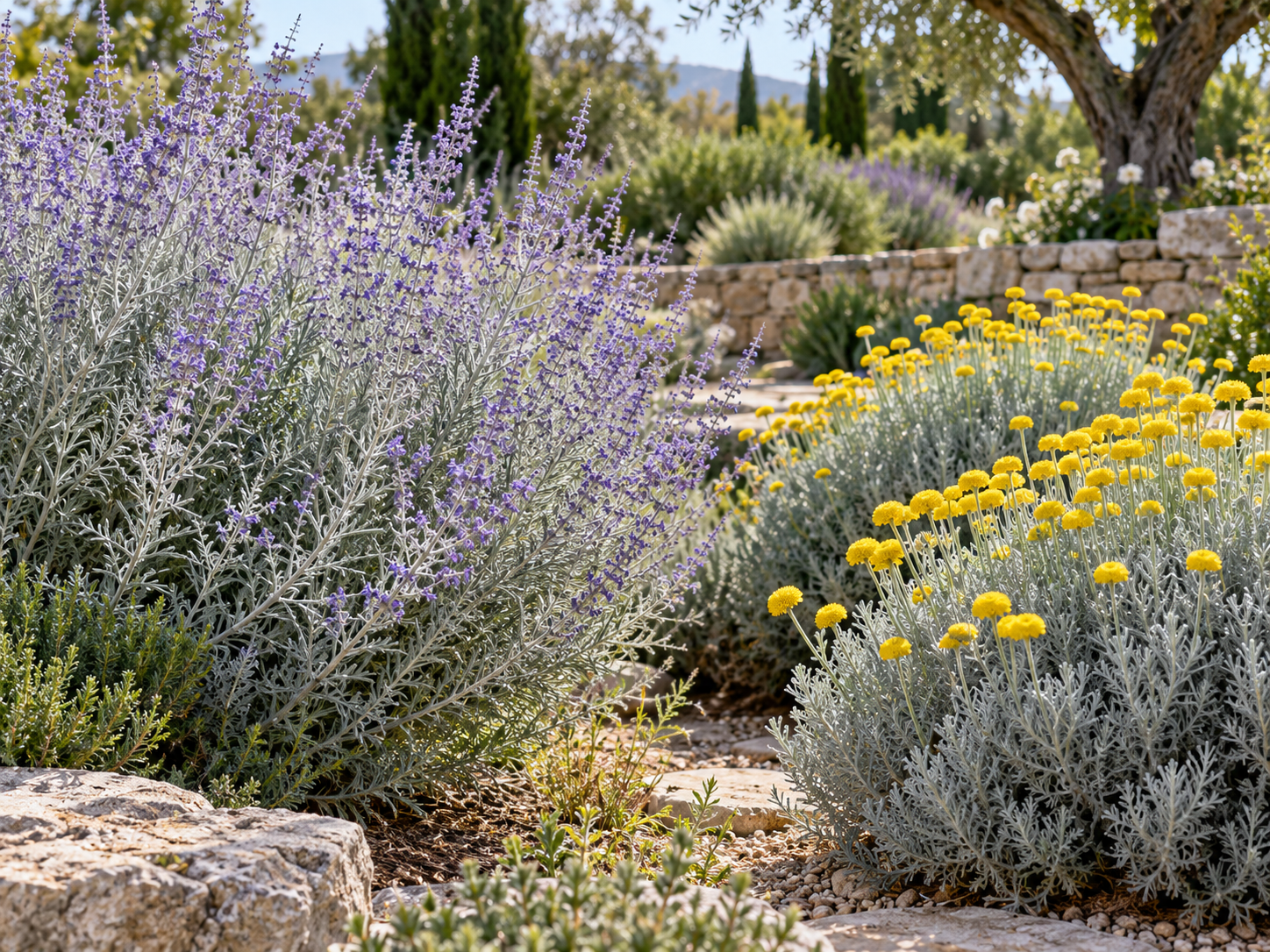
Santolina is one of the clearest compact silver leaf plants with yellow flowers. Its aromatic silver-grey foliage forms a neat mound, while yellow button-like flowers rise above the plant.
It is particularly suitable for sunny edging, gravel gardens, dry borders, and Mediterranean-style planting.
Acacia baileyana also combines silver foliage with yellow flowers, but at a much larger scale. It should only be considered where the climate, available space, and local suitability allow.
For smaller gardens and borders, Santolina is usually the more practical starting point.
Do Silver Leaf Plants Need Full Sun?
Many silver leaf plants prefer full sun, but not all of them.
Sun-loving options include Artemisia, Russian sage, Santolina, lavender, Eryngium, rose campion, and garden sage.
Shade or partial-shade choices include Brunnera, Japanese painted fern, lungwort, silver Heuchera, and Astelia in suitable climates.
Indoor silver plants such as Scindapsus, Rex begonia, and Pilea generally prefer bright filtered light rather than prolonged harsh direct sun.
Check your site during the middle of the day rather than judging it only in the morning or evening. Tree shade, walls, and seasonal changes can significantly alter the amount of light a plant receives.
Silver foliage does not automatically mean full sun.
Silver Leaf Plants for Dry or Moist Soil
Many classic outdoor silver plants perform best in freely draining soil.
| Soil condition | Suitable plants |
|---|---|
| Hot, dry soil | Artemisia, Santolina, lavender, Eryngium |
| Sunny, normally drained soil | Lamb’s ear, Russian sage, rose campion |
| Moist shade | Brunnera, lungwort, Japanese painted fern |
| Containers | Choose according to how quickly the pot dries |
| Persistently wet soil | Improve drainage or select wet-ground plants |
Do not water silver plants according to a fixed calendar. Check the root zone first.
A better question than “How often should I water?” is: “How quickly is the soil drying under my conditions?”
Common Silver Leaf Plant Problems
Most silver plant problems are easier to diagnose when you check growing conditions before adding fertilizer or extra water.
| Problem | What to check |
|---|---|
| Floppy growth | Insufficient light |
| Woolly leaves rotting | Excess moisture and poor airflow |
| Weak flowering | Light level and plant maturity |
| Brown indoor leaves | Sun scorch, dryness, or root stress |
| Fading silver pattern | Light conditions |
| Repeated winter death | Climate mismatch |
| Wilting in wet soil | Root stress and drainage |
| Shade plant scorching | Excess direct sun |
A useful troubleshooting order is:
- Confirm the plant identity.
- Check light.
- Check soil moisture.
- Check drainage.
- Check temperature and climate.
- Inspect for pests or disease.
- Consider nutrition.
Do not assume every stressed plant needs more water.
Silver Leaf Plants for Different Climates
A silver plant that performs well in one country may be unsuitable in another. Winter cold, summer heat, humidity, rainfall, soil type, and local restrictions all matter.
If a recommended species is unsuitable locally, preserve the function you need rather than forcing the exact plant.
For example, when looking for a silver ground cover, match the replacement plant to the required height, foliage effect, light level, moisture tolerance, and local hardiness.
For gardeners in different climates, environmental compatibility matters more than using the exact species named in an international plant list.
How to Buy Silver Leaf Plants
Use botanical names whenever possible because common names can be ambiguous.
“Dusty miller,” for example, has been used for more than one pale-foliaged plant. Russian sage may also appear under its current name Salvia yangii or the older name Perovskia atriplicifolia.
Before buying, check the botanical name, cultivar, mature height and spread, light requirements, moisture needs, drainage, hardiness, intended indoor or outdoor role, and supplied plant size.
Instead of searching only for “silver leaf plants for sale,” more precise searches can include:
Stachys byzantina, Salvia yangii, Santolina chamaecyparissus, Brunnera ‘Jack Frost’, or Scindapsus pictus.
Use common names for discovery and botanical names for verification.
How to Choose Silver Leaf Plants
Choose according to growing conditions first and appearance second.
| Your priority | Good starting choice |
|---|---|
| Soft ground cover | Lamb’s ear |
| Fine sunny foliage | Artemisia |
| Purple flowers | Russian sage |
| Yellow flowers | Santolina |
| Architectural impact | Cardoon |
| Shade | Brunnera |
| Silver fern | Japanese painted fern |
| Container cascade | Dichondra |
| Indoor trailing | Scindapsus |
| Metallic indoor leaves | Rex begonia |
| Compact indoor plant | Pilea |
A useful decision order is:
Light → Moisture → Drainage → Climate → Mature size → Function → Maintenance → Appearance
The best silver plant is not necessarily the brightest or most unusual. It is the plant that naturally matches the location where you intend to grow it.
Silver Leaf Plants FAQs
What is the name of the plant with soft, fuzzy silver leaves?
Lamb’s ear (Stachys byzantina) is one of the best-known plants with soft, fuzzy silver leaves. It forms low spreading growth and prefers well-drained soil.
What are the best perennial plants with silver foliage?
Lamb’s ear, Artemisia, Russian sage, Brunnera, Heuchera, lungwort, and Japanese painted fern are useful perennial silver foliage plants.
Which silver leaf plant has purple flowers?
Russian sage is one of the strongest choices. Lamb’s ear, cardoon, rose campion, and silver lavender can also provide purple or purplish flowers.
Which silver leaf plant has yellow flowers?
Santolina combines compact silver-grey foliage with yellow button-like flowers and performs best in sunny, well-drained conditions.
Can silver leaf plants grow in shade?
Yes. Brunnera, Japanese painted fern, lungwort, and some Heuchera varieties provide silver foliage in shade or partial shade.
Are silver foliage plants drought tolerant?
Many sunny silver plants tolerate relatively dry conditions, but not all silver plants are drought tolerant. Shade plants may require more moisture.
Which silver leaf plants grow indoors?
Scindapsus pictus, Rex begonia, and Pilea cadierei are popular indoor plants with silver or silver-patterned foliage.
Can silver leaf plants grow in containers?
Yes. Dichondra, Helichrysum, dusty miller, compact Artemisia, Heuchera, Santolina, and many silver houseplants can grow successfully in containers.
Are silver leaf plants evergreen?
Some are evergreen or semi-evergreen, while others die back seasonally. This depends on the species and local climate.
Is dusty miller one specific plant?
Not always. The common name has been used for more than one silver-foliaged species, so check the botanical name before following care instructions.
Why is my silver leaf plant turning brown?
Brown leaves may result from excessive or insufficient water, poor drainage, sun scorch, cold damage, or root stress. Check the growing conditions before treating the plant.
How do I choose the right silver leaf plant?
Match the plant to your light, moisture, drainage, climate, and available space first. Then compare flower color, foliage texture, and appearance.
Final Thoughts
Silver leaf plants range from fuzzy ground covers and drought-tolerant perennials to shade plants, architectural specimens, cascading container plants, and tropical houseplants.
For hot, dry sun, Artemisia, Santolina, Russian sage, lavender, and Eryngium are useful starting points. In shade, consider Brunnera, Japanese painted fern, lungwort, and suitable Heuchera varieties.
Lamb’s ear is a strong ground-cover option, Santolina provides yellow flowers, Russian sage adds purple-blue blooms, Scindapsus works well as an indoor trailing plant, and Rex begonia provides dramatic metallic foliage.
If a recommended species is unsuitable for your climate, look for a locally appropriate alternative with the same function, light requirement, moisture tolerance, mature size, and foliage effect.
Ultimately, choose the silver leaf plant whose growing requirements match your site rather than simply choosing the one whose photograph looks best. That usually leads to healthier plants and better long-term results.

Myra is the founder and lead writer of Plantsaholic. She shares practical, research-backed advice on indoor plants, outdoor gardening, flowers, herbs, succulents, and everyday plant care. Her goal is to help gardeners of all experience levels grow healthier plants through simple, easy-to-follow gardening guides.