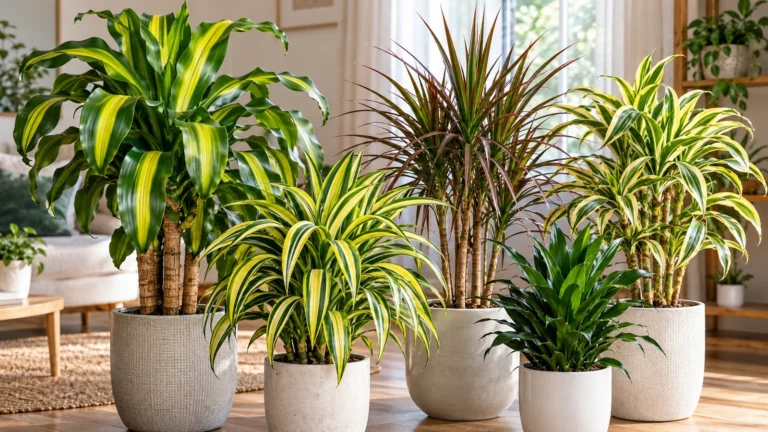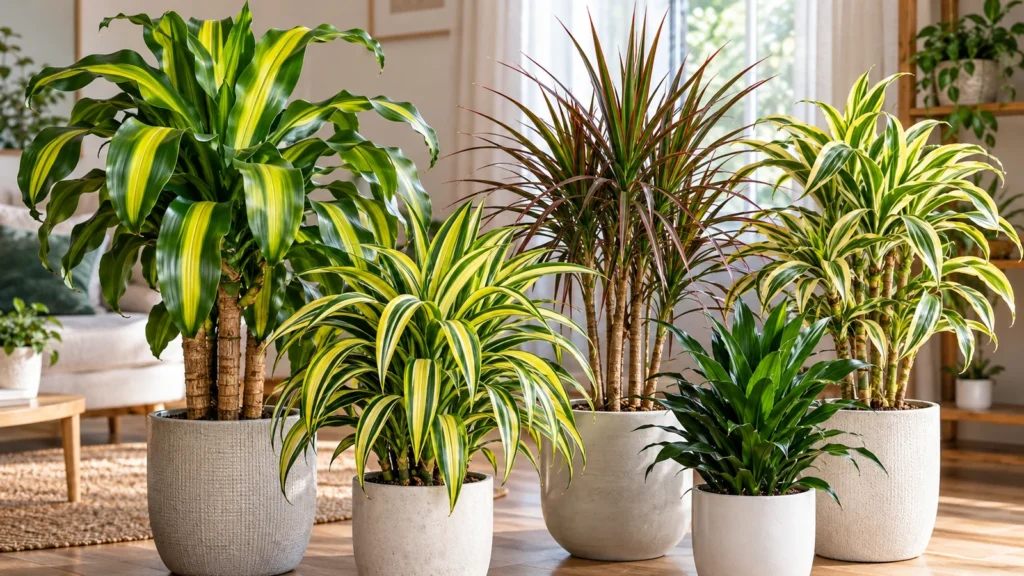
Dracaena varieties range from broad-leaved corn plants and red-edged Madagascar dragon trees to spotted foliage plants, lucky bamboo, and snake plants. This Plantsaholic guide compares 25 types by their identifying features, growing requirements, and suitability for different indoor spaces. Some are compact houseplants; others eventually become substantial outdoor trees.
Botanical identification note: Scientific names follow Kew’s taxonomy, while familiar nursery names are retained for clarity. Verify individual cultivars against authentic photographs of mature foliage and stems; a plant label alone may be unreliable.
What Are the Main Dracaena Varieties?
The Asparagaceae genus Dracaena includes woody trees, tropical shrubs, and former Sansevieria species. Indoor groups include fragrans, marginata forms, reflexa, surculosa, and lucky bamboo.
What Is the Difference Between a Species and a Cultivar?
A species is a botanical group; a cultivar is a selection distinguished by traits such as color. D. fragrans is a species, while ‘Massangeana’ and ‘Lemon Lime’ are cultivars. Nursery and accepted scientific names can differ.
| Nursery name | Accepted botanical relationship |
|---|---|
| Dracaena marginata | D. reflexa var. angustifolia |
| Dracaena deremensis | Synonym included under D. fragrans |
| Snake plant | D. trifasciata |
| Lucky bamboo | D. sanderiana, not bamboo |
| Mass Cane | D. fragrans ‘Massangeana’ |
Identification rule: Compare mature leaves, stripe positions, and stem structure. A trade label is useful evidence, not proof of a cultivar.
How Many Dracaena Species Are There?
Kew listed 224 accepted species in October 2026, including former Sansevieria species. Taxonomy changes; older sources may differ. Dracaena is not a palm. Here “varieties” includes cultivars and species.
Dracaena Varieties at a Glance
| Group | Identification clue | Typical use |
|---|---|---|
| Fragrans | Broad, often striped leaves on canes | Floor plant |
| Marginata | Narrow, often red-edged leaves | Slim indoor tree |
| Reflexa | Leaves along branching stems | Bushy display |
| Surculosa | Spotted or banded oval leaves | Collector plant |
| Sanderiana | Slender upright stems | Tabletop |
| Trifasciata | Thick vertical leaves | Drier indoor spaces |
| Dragon trees | Sword-like leaves, mature trunks | Suitable outdoor climates |
Which Dracaena Fragrans Are Best?
Corn plants produce decorative foliage on woody canes. Solid-green selections generally tolerate moderate indirect light better than strongly variegated forms, which benefit from brighter filtered conditions.
1. Dracaena Fragrans ‘Massangeana'”

Best for: Tall floor displays. Massangeana has broad green leaves with a yellow central stripe above stout canes. Grouped canes add height. Unlike Lindenii, its pale band runs through the center, not the margin. Provide moderate to bright indirect light, drainage, and partial soil drying.
2. Dracaena Fragrans ‘Janet Craig’

Best for: Beginners and offices. Glossy, solid dark-green leaves grow in open crowns. Janet Craig tolerates moderate indirect light, not darkness. It is useful in offices with windows but little direct sunlight. Avoid wet roots and cold drafts.
3. Dracaena Fragrans ‘Compacta’

Best for: Smaller spaces. Short, densely packed green leaves give Compacta a tight silhouette. Retail labels sometimes associate it with Janet Craig. Slow growth suits plant stands, although it can become taller with age; avoid oversized pots.
4. Dracaena Fragrans ‘Lemon Lime’

Best for: Colorful rooms. Arching leaves carry lime, yellow, and dark-green stripes. Its multiple bands distinguish it from Massangeana’s central stripe. Give bright indirect light; avoid scorching sun. Rotate if growth leans.
5. Dracaena Fragrans ‘Warneckii’

Best for: White-gray foliage. Long leaves show green, white, and gray-green bands. Compared with Lemon Lime, its palette appears silvery instead of yellow. Use filtered light and drainage. Brown tips may indicate fluoride sensitivity or salts rather than thirst.
6. Dracaena Fragrans ‘Limelight’

Best for: Bright foliage accents. Limelight has luminous yellow-green leaves rather than sharply contrasting stripes. The color is normal. Give bright indirect light; avoid saturated soil.
7. Dracaena Fragrans ‘Dorado’

Best for: Subtle variegation. Dark-green leaves have lighter lime margins and a slightly curved shape. The downturned leaves create a layered crown in a medium-sized planter. Provide indirect light and drainage; inspect leaf bases for pests.
8. Dracaena Fragrans ‘White Jewel’

Best for: High-contrast foliage. Prominent white-green stripes distinguish White Jewel from softer-colored cultivars. Filter strong sun to protect pale leaves; fertilizer cannot increase white variegation.
9. Dracaena Fragrans ‘Hawaiian Sunshine’

Best for: Understated striping. Glossy dark-green leaves have lighter green markings and often form tidy clusters. It works well where intensely yellow leaves would dominate other plants. Provide indirect light; check for mealybugs.
10. Dracaena Fragrans ‘Lindenii’

Best for: Pale-edged leaves. Cream-yellow margins distinguish Lindenii from Massangeana’s yellow center. Canes become tall; provide filtered light and warmth.
How Can You Tell Similar Fragrans Varieties Apart?

Use the stripe position and crown density to separate similar corn plants. Pale centers, pale margins, and multiple longitudinal bands are different traits. A young plant may also have shorter leaves than its mature form, so compare several fully developed leaves.
| Variety | Distinguishing feature |
|---|---|
| Massangeana | Yellow central stripe |
| Lemon Lime | Lime-yellow bands |
| Janet Craig | Solid dark green |
| Compacta | Dense shorter leaves |
| Warneckii | White-gray stripes |
| White Jewel | Strong white-green contrast |
| Lindenii | Cream-yellow margins |
Buying tip: A small Janet Craig is not automatically Compacta. If the cultivar cannot be confirmed, use the broader name D. fragrans.
What Types of Dracaena Marginata Exist?
Marginata plants have narrow leaves on slim canes, ideal for restricted floor space. Cultivars differ by variegation; trade labels overlap.
11. Standard Dracaena Marginata

Best for: Narrow floor spaces. Green leaves with fine reddish-purple edges form crowns on slim stems. Lower leaves drop naturally. Provide indirect light and prune to manage height.
12. Dracaena Marginata ‘Tricolor’

Best for: Three-color foliage. Narrow leaves combine green, cream, and red. Provide filtered light and acclimate gradually to stronger sun.
13. Dracaena Marginata ‘Colorama’

Best for: Pink-red accents. Colorama shows prominent pink or red coloring alongside green and paler sections. Give bright filtered light; empty decorative outer pots.
14. Dracaena Marginata ‘Bicolor’

Best for: Restrained contrast. Green leaves carry paler bands and reddish edges. Compare actual foliage where trade names overlap; offer filtered light and drainage.
15. Dracaena Marginata ‘Sunray’

Best for: Yellow-centered foliage. Sunray has yellow stripes through narrow green leaves on upright canes. Give indirect light; reduce watering in cooler conditions.
16. Dracaena Marginata ‘Magenta’

Best for: Deeper red tones. Plants sold as Magenta have narrow red-flushed leaves. Verify the seller’s actual plant; provide filtered light.
How Do Marginata Varieties Differ in Color?

Standard marginata has red edges; Tricolor adds cream; Colorama is pinker; Sunray has a yellow center; Magenta appears deeper red. These commercial names can overlap, so compare mature foliage before ordering.
What Other Dracaena Types Are Popular?
Reflexa, surculosa, lucky bamboo, and snake plants add distinct forms and care requirements.
17. Dracaena Reflexa ‘Song of India’

Best for: Yellow-edged foliage. Short green leaves have broad cream-yellow margins on branching stems. Give filtered light and drainage; prune uneven branches.
18. Dracaena Reflexa ‘Song of Jamaica’

Best for: Subtle green patterns. Leaves typically have darker margins and lighter centers along branching stems. Offer indirect light; verify labels using mature leaves.
19. Dracaena Surculosa ‘Florida Beauty’
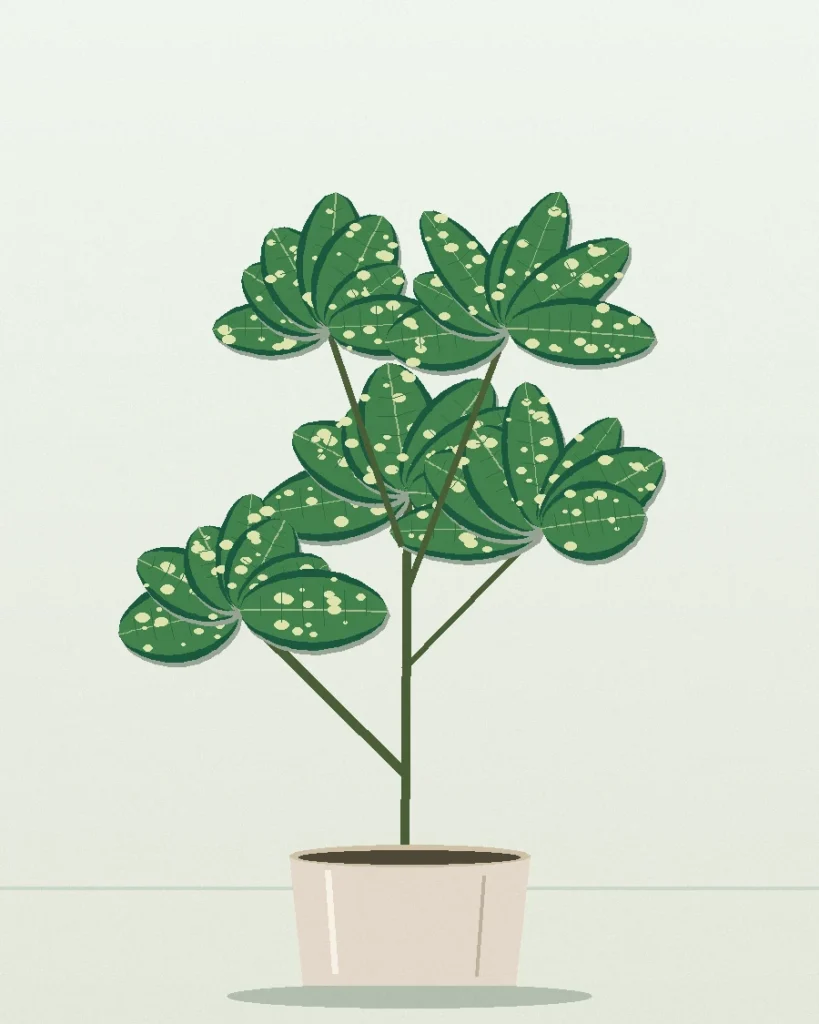
Best for: Spotted leaves. Oval green leaves carry irregular pale spots on slender branches. Its thin branching habit spreads differently from a woody corn plant. Use filtered light, moderate humidity, and sun protection.
20. Dracaena Surculosa ‘Milky Way’

Best for: Central bands. Milky Way generally has a distinctive cream-white central marking on oval leaves, sometimes with spots. Unlike Florida Beauty’s scattered spots, this central band is the main identification clue. Provide warmth and filtered light; verify its label.
21. Dracaena Sanderiana (Lucky Bamboo)

Best for: Tabletop arrangements. Lucky bamboo is Dracaena, not bamboo. Grow stems in draining soil or clean water covering roots; replace water regularly.
22. Dracaena Trifasciata (Snake Plant)

Best for: Less frequent watering. Formerly Sansevieria trifasciata, this plant has thick upright leaves and underground rhizomes. It tolerates low light but grows better in brighter conditions. Let soil dry extensively.
Why Does Snake Plant Care Differ?
Snake plants store water in leaves and rhizomes, so they need longer drying intervals than cane Dracaenas. Display together in separate nursery pots.
Which Rare Dracaena Varieties Stand Out?
Uncommon does not mean endangered. Check habitat, mature size, and lawful sourcing.
23. Dracaena Draco (Dragon Tree)

Best for: Sunny landscapes. Native to Macaronesia, D. draco slowly develops a substantial trunk and branching crowns of sword-like leaves. Established trees need sunny, well-drained sites and ample space.
24. Dracaena Goldieana

Best for: Experienced collectors. Broad green leaves have distinctive horizontal silver-gray bands, unlike the lengthwise stripes of corn-plant cultivars. Goldieana needs warmth, filtered light, and humidity, so a cold, dry room is a poor choice.
25. Dracaena Cinnabari (Socotra Dragon’s Blood Tree)

Best for: Botanical education. This Socotra species forms umbrella-shaped crowns and produces red resin historically called dragon’s blood. This Vulnerable species is not a routine houseplant.
How Can You Verify a Rare Dracaena Before Buying?

Verify the scientific name, actual photographs, propagated origin, climate, and import rules. Price does not prove rarity. Goldieana suits indoor collectors better than large dragon trees.
How Do You Identify Dracaena Varieties?
Identify the plant group first through mature leaf shape and stem structure, then use variegation to narrow the possibilities. One photograph rarely proves a named cultivar.
Identify Dracaena by Leaf Shape and Color
- Broad leaves on thick canes: Usually fragrans.
- Narrow red-edged leaves: Marginata group.
- Yellow-edged leaves on branches: Song of India.
- Oval leaves with pale spots: Surculosa.
- Silver horizontal bands: Goldieana.
- Thick upright basal leaves: Snake plant.
What Is the Difference Between Dracaena and Cordyline?
Both belong to Asparagaceae and can look similar. Woody Dracaenas often have yellowish roots, Cordylines pale roots, but exceptions exist. Compare foliage and labels without unpotting healthy plants.
How Can You Identify an Unlabeled Dracaena?

Identify the species group first; leaf color can vary with maturity and growing conditions.
For an unlabeled plant from a supermarket, the purchase label may read only “Dracaena mix.” Do not identify it as a rare cultivar simply because one leaf has unusual color; natural variation and immature foliage can be misleading.
Take three useful photographs:
- Whole plant, showing canes or branches.
- Mature leaf, showing width and stripe location.
- Stem or crown, showing how foliage is arranged.
| Observation | Likely identification |
|---|---|
| Yellow-centered broad leaf | Massangeana |
| Thin red-edged leaf | Marginata |
| Cream-spotted oval leaf | Surculosa |
| Silver-banded broad leaf | Goldieana |
| Thick upright leaf | Snake plant |
Compare verified botanical photographs. If uncertain, use the species-group name.
Which Dracaena Is Best for Your Home?
Match light, mature size, and watering habits. Variegated selections generally need brighter filtered light than solid-green forms.
| Home condition | Recommended type | Reason |
|---|---|---|
| Moderate indirect light | Janet Craig | Adaptable green foliage |
| Small display | Compacta | Dense, slower growth |
| Narrow floor area | Marginata | Slender stems |
| Bright colorful room | Lemon Lime | Strong variegation |
| Pink-red foliage | Colorama | Contrasting margins |
| Tall focal plant | Massangeana | Woody canes |
| Infrequent watering | Snake plant | Water-storing leaves |
| Tropical collection | Goldieana | Unusual banding |
Before buying: Assess light, mature size, watering habits, and pet access. When two varieties seem equally suitable, choose the specimen with firm canes, no pests, and a healthy root zone rather than paying extra for a questionable label.
Best Dracaena for Low-Light Rooms
Janet Craig, standard marginata, and snake plants tolerate moderate or relatively low light. None thrives indefinitely in darkness without effective grow lighting.
Best Dracaena for Small Rooms
Compacta fits compact displays; lucky bamboo suits desks; marginata uses less horizontal floor space. Check eventual height.
Best Dracaena for Colorful Leaves
Choose Lemon Lime for lime-yellow stripes, Colorama for pink-red margins, Tricolor for cream-red contrast, or White Jewel for white variegation.
Best Dracaena for Beginners
Janet Craig, standard marginata, and Massangeana are accessible choices. Prioritize light, healthy roots, and drainage.
How Tall Do Dracaena Varieties Grow Indoors?
Compacta grows slowly and stays relatively dense. Massangeana and marginata may become tall floor plants; leave space around their foliage for watering and pruning.
Is Dracaena a Good Indoor Plant?
Yes. Dracaenas offer evergreen foliage and upright shapes but still need suitable light and moisture.
Benefits and Disadvantages of Indoor Dracaena
Advantages: Year-round foliage, compact-to-tall forms, and manageable pruning. Limitations: Potential brown tips, wet-root damage, and toxicity to pets. Plants are decorative, not substitutes for ventilation.
Do Dracaena Plants Flower Indoors?
Mature D. fragrans occasionally produces fragrant pale flowers. Indoor blooms are uncommon and unnecessary for plant health.
Does Dracaena Need Sun or Shade?
Most indoor types prefer indirect light; green forms tolerate moderate light, while variegated forms need brighter conditions. Outdoor D. draco takes full sun.
Best Indoor Light Conditions
Gentle morning light works well. Harsh afternoon sun can create dry, bleached patches, while inadequate light may cause slow, sparse growth.
Can Dracaena Grow in Shade?
Partial shade is possible, darkness is not. Acclimate gradually to stronger sun.
Why Is My Dracaena Losing Its Variegation?
Weak light, maturity, or reversion can change stripes. Widespread yellowing suggests possible root stress.
Can Dracaena Grow Indoors or Outdoors?
Both, depending on climate. Tropical forms grow outdoors where frost-free; D. draco prefers sunnier, better-drained sites.
Growing Dracaena Indoors
Many tropical types prefer 18–27°C (64–81°F), indirect light, drainage, and no drafts.
Growing Dracaena Outdoors
Acclimate gradually. Begin in a sheltered position for several days before increasing light. An indoor plant moved straight into midday sun can scorch even when its species tolerates more exposure after adjustment. Avoid waterlogging and cold; inspect pests before moving indoors.
Which Outdoor Climates Are Suitable?
Frost-free climates suit tropical types; sunny, well-drained mild sites suit D. draco. Check winter lows.
How Long Does Dracaena Live?
Dracaenas may live for years or decades. Lifespan varies; bare lower canes can remain healthy if new leaves emerge.
What Affects Dracaena Lifespan?
Waterlogging, darkness, cold, and pests shorten longevity. Some lower-leaf loss is normal.
How Can You Keep Dracaena Healthy for Years?
Maintain drainage, repot crowded roots, and prune tall canes. Healthy cuttings may root.
How Do You Care for Dracaena?
Care depends on species and environment, not a weekly calendar. Snake plants and lucky bamboo differ.
How Often Should You Water Dracaena?
Water many cane types when the upper 2–5 cm (1–2 inches) of potting mix feels dry, then drain thoroughly. Check deeper moisture in large containers. Snake plants need longer drying periods; water-grown lucky bamboo needs clean, regularly replaced water.
What Soil Is Best for Dracaena?
Use a free-draining indoor potting mix in a container with drainage holes; perlite or pumice improves aeration. Snake plants need a particularly fast-draining medium. Avoid oversized pots that retain excess water.
What Temperature and Humidity Do Dracaenas Need?
Tropical types need warmth; goldieana benefits from humidity. Avoid drafts and hot airflow.
How Should You Fertilize Dracaena?
Feed conservatively while growing; reduce winter feeding. Excess salts damage foliage.
Why Do Dracaena Leaves Turn Brown or Yellow?
Brown tips suggest salts, fluoride, or moisture stress. Widespread yellowing with wet soil suggests root trouble.
| Symptom | Possible cause | First check |
|---|---|---|
| Brown tips | Salts, fluoride, dry air | Water quality, feeding |
| Yellowing in wet soil | Excess moisture | Roots and drainage |
| Pale crispy patches | Sun scorch | Window exposure |
| Weak new growth | Low light | Growing location |
| Cottony clusters | Mealybugs | Leaf joints |
| Soft canes | Serious root or stem damage | Root system |
How Do You Prune and Propagate Dracaena?
Cut healthy canes with clean tools to control height; shoots may form below the cut. Root suitable stem cuttings in warm conditions. Divide snake plants rather than treating them like cane plants.
How Can You Diagnose a Dracaena Problem?
Check soil, stems, foliage, and recent changes; drooping can mean drought or root damage. Do not diagnose by yellowing alone: a single declining lower leaf may be normal, but several yellowing leaves with constantly wet soil deserve a root inspection. Start with the easiest reversible factor before repotting.
Follow this order:
- Check moisture beneath the soil surface.
- Confirm that excess water drains freely.
- Examine roots if soil stays wet and leaves yellow.
- Look for insects, scorch, or collapsing canes.
- Change one likely cause and watch new growth.
Brown tips with firm new leaves can signal salts rather than thirst; dead tissue does not recover.
Is Dracaena Safe for Pets?
No. The ASPCA identifies Dracaena as toxic; ingestion can cause vomiting or drooling in cats and dogs. Keep fallen leaves inaccessible; contact a veterinarian promptly after exposure. Choose non-toxic plants for leaf-chewing pets.
How Do You Choose a Healthy Dracaena?
Choose a species suited to your room, then check healthy roots, firm stems, accurate labels, and recent repotting.
Inspect Leaves and Stems
Some lower-leaf aging is normal. Avoid soft canes, sticky foliage, or pest-infested joints.
Examine the Growing Container
Look for drainage and sound roots; avoid soggy soil and oversized pots.
Match the Variety to Your Home
Match Janet Craig to moderate light, Compacta to small rooms, Lemon Lime to brightness, and marginata to narrow spaces.
How Can You Avoid Buying a Mislabeled Dracaena Online?
Request actual photos, name, size, and rooting status. A stock image might show a mature striped cultivar while the shipped plant is a younger generic selection. Ask whether you will receive the pictured specimen. Verify rare-plant provenance, shipping, and import restrictions.
FAQs About Dracaena Varieties
1. What Are the Different Types of Dracaena Plants?
Common groups include fragrans, reflexa, surculosa, sanderiana, marginata forms, dragon trees, and snake plants.
2. Which Dracaena Is Best Indoors?
Janet Craig suits beginners; Compacta fits small displays, while Lemon Lime favors brighter rooms.
3. Is Dracaena a Good Indoor Plant?
Yes. Many are evergreen and manageable with suitable light and drainage, but they are toxic to pets.
4. Does Dracaena Prefer Full Sun or Shade?
Most indoor types prefer filtered light. Established outdoor D. draco often grows in full sun.
5. Is Dracaena Indoor or Outdoor?
Both. Tropical species grow outdoors in frost-free climates but need protection in colder areas.
6. What Are Popular Fragrans Varieties?
Massangeana, Janet Craig, Compacta, Lemon Lime, Warneckii, Limelight, Dorado, White Jewel, Hawaiian Sunshine, and Lindenii.
7. What Are the Types of Marginata?
Common selections include standard marginata, Tricolor, Colorama, Bicolor, Sunray, and Magenta.
8. How Do You Identify Dracaena Leaves?
Compare mature leaf shape, stripe location, spotting, and stem structure rather than relying on one photograph.
9. Which Rare Dracaenas Are Notable?
Goldieana has silver-banded leaves; draco forms a large tree; cinnabari is a Vulnerable Socotra species.
10. How Long Does Dracaena Live?
Many survive for years or decades with appropriate care; longevity varies by species and environment.
11. Which Dracaena Tolerates Low Light?
Janet Craig, marginata, and snake plants tolerate relatively low light but still require adequate illumination.
12. How Often Should Dracaena Be Watered?
Check soil first. Most cane types need partial drying; snake plants require longer intervals.
13. Why Are Dracaena Leaves Brown or Yellow?
Brown tips can involve salts or water stress; widespread yellowing may signal root problems.
14. Is Dracaena Toxic to Pets?
Yes. Ingestion can harm cats and dogs; seek veterinary advice promptly after exposure.
15. Can Dracaena Varieties Share a Pot?
Compatible plants sometimes can. Keep snake plants separate from tropical cane Dracaenas because watering differs.
16. Is Dracaena Suitable for Bedrooms With Children?
Yes, with adequate light, but keep foliage beyond the reach of children likely to ingest it.
Final Thoughts
Choose Dracaenas by leaf pattern, available light, mature size, and maintenance needs. Janet Craig and marginata suit beginners; Lemon Lime adds color; Compacta suits tighter spaces; and goldieana appeals to collectors. Accurate photographs and responsibly sourced plants matter more than rarity claims.

Myra is the founder and lead writer of Plantsaholic. She shares practical, research-backed advice on indoor plants, outdoor gardening, flowers, herbs, succulents, and everyday plant care. Her goal is to help gardeners of all experience levels grow healthier plants through simple, easy-to-follow gardening guides.