An overwatered plant can often be saved if some roots, stems, or crown tissue remain healthy. Stop watering, empty any standing water, and check the soil, drainage, stem base, and roots before repotting. Let a mildly affected plant dry gradually in bright indirect light. Repot when the soil stays saturated or roots are decaying, and propagate healthy stems or nodes when the original root system can no longer recover.
Should You Dry, Repot, or Propagate an Overwatered Plant?
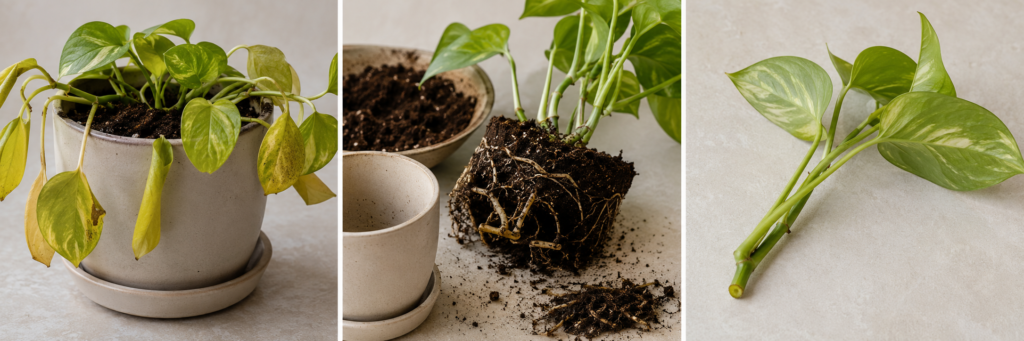
The right response depends on the condition of the root zone. One accidental watering may only require patience, while soil that remains saturated for days can deprive roots of oxygen and lead to decay. Do not repot solely because a few leaves have turned yellow. Repotting can damage fine roots and add transplant stress when the plant may recover in its existing container.
Use the plant’s roots, crown, drainage, and soil smell to make the decision:
- Dry in place when the roots and crown feel firm, drainage works, the soil has no foul smell, and the pot becomes lighter over time.
- Repot when the mix stays waterlogged, drainage is blocked, the soil smells sour, or roots feel soft, slimy, hollow, or fragile.
- Propagate when most roots or the crown have rotted but healthy stems, nodes, leaves, offsets, or rhizomes remain.
Is Your Plant Overwatered? Use This 60-Second Damage Check
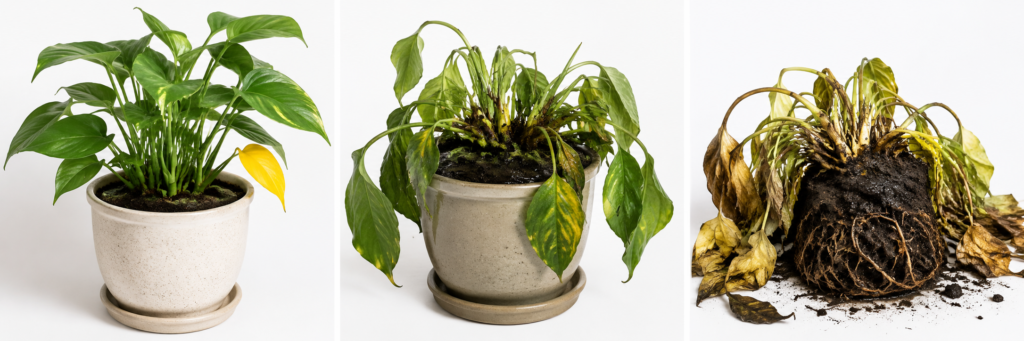
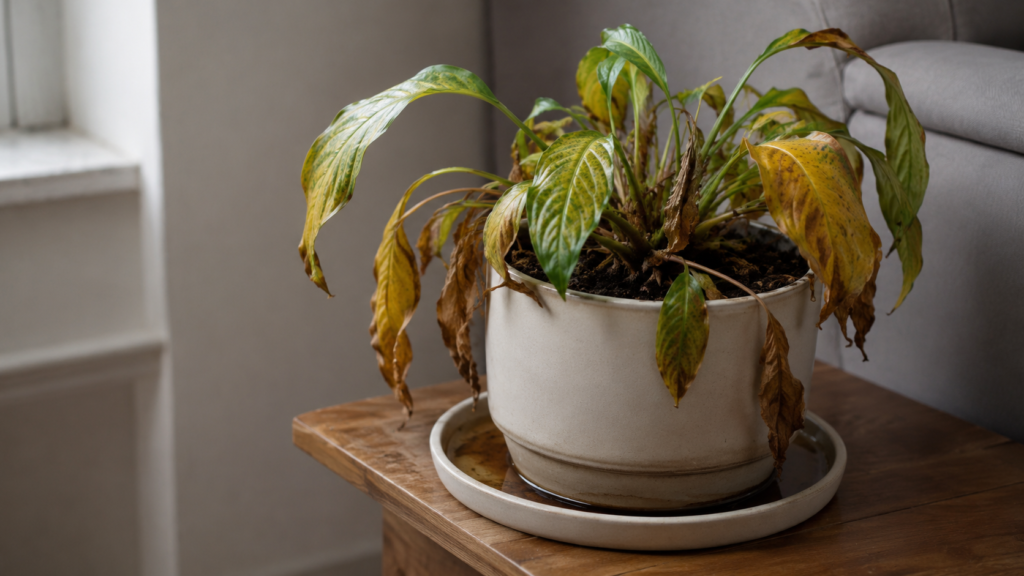
Yellow leaves and drooping growth do not prove overwatering because the same symptoms can appear with underwatering, low light, pests, temperature stress, or transplant shock. Confirm the problem by checking the root zone rather than judging the foliage alone.
Complete these checks:
- Push a finger or moisture probe below the surface.
- Lift the pot and compare its weight with a dry pot.
- Smell the soil for a sour, stagnant, or rotten odour.
- Confirm that drainage holes are open.
- Press the stem base or crown gently.
- Inspect visible roots for firmness and structure.
| Damage level | Main signs | Best response |
|---|---|---|
| Mild | Wet soil, slight yellowing, firm stem, no smell | Stop watering and allow controlled drying |
| Moderate | Heavy pot, slow drying, ongoing leaf loss, poor drainage | Inspect the roots and prepare to repot |
| Severe | Rotten smell, mushy roots, soft crown, collapsing stems | Remove rot, repot, or propagate |
Root colour varies by species and potting mix, so judge roots mainly by firmness, structure, and smell.
Why Does an Overwatered Plant Wilt When the Soil Is Wet?
An overwatered plant may look thirsty because saturated soil limits oxygen around the roots. Healthy potting mix contains spaces that hold both air and water. When those spaces remain filled with water, fine roots lose function and cannot absorb moisture efficiently. The leaves then droop even though the pot is still wet.
This creates a damaging cycle: the plant wilts, the owner assumes it is dry, and more water is added. The additional moisture delays oxygen recovery and increases the risk of root decay.
Use the soil to separate thirst from waterlogging:
- Dry soil with limp leaves: the plant may need water.
- Wet soil with limp leaves: stop watering and check drainage.
- Wet soil with a foul smell or soft roots: inspect for root rot.
- Moist soil with firm growth: avoid unnecessary treatment.
Overwatering occurs when the root zone stays wet longer than the plant can tolerate. Pot size, soil, light, temperature, season, and species all affect drying speed.
How to Save an Overwatered Plant Step by Step
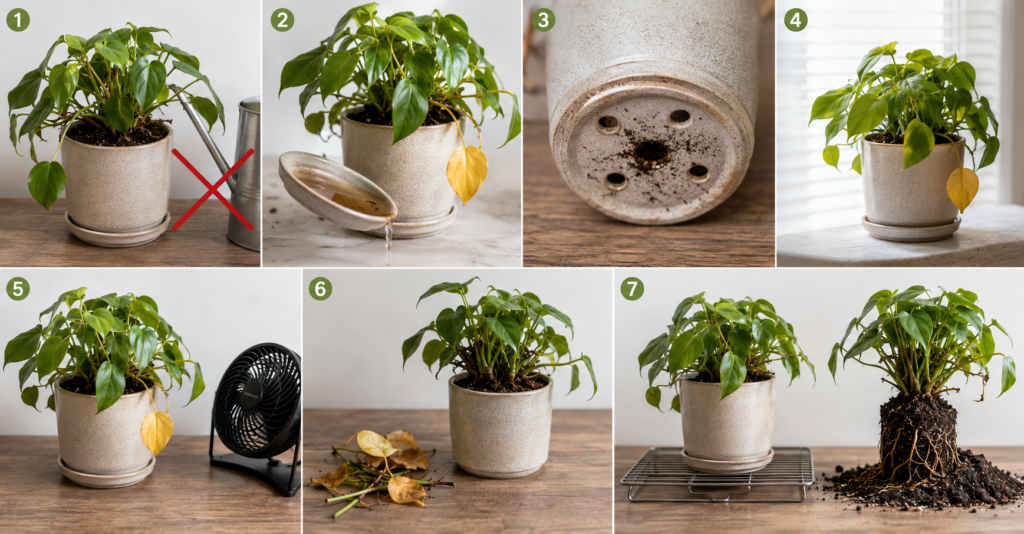
The rescue process should restore air around the roots without adding more stress. Avoid harsh sunlight, fertilizer, heaters, or repeated repotting.
1. Stop Watering
Do not water again because the leaves are drooping. Check the soil first and wait until it reaches the appropriate moisture level for the species.
2. Empty Standing Water
Remove water from saucers, cachepots, trays, and self-watering reservoirs. A nursery pot can drain correctly yet remain waterlogged when it sits inside a full decorative container.
3. Check Drainage
Make sure the holes are not blocked by roots, compacted soil, stones, or decorative material. A container without drainage may need to be replaced.
4. Provide Bright Indirect Light
Move the plant to a bright location without suddenly exposing it to intense sun. Strong sunlight can increase water loss faster than damaged roots can replace it.
5. Improve Gentle Airflow
Moderate air movement helps reduce stagnant conditions. Do not aim a powerful fan at the plant or use a heater to force the soil to dry.
6. Remove Dead Tissue
Trim leaves or stems that are fully yellow, black, mushy, diseased, or collapsing. Keep partially green leaves when they remain firm because they can still support photosynthesis.
7. Choose the Recovery Path
Let healthy roots dry in place, repot when the soil or container prevents recovery, and propagate when the crown or root system is no longer viable.
After taking the correct action, leave the plant stable. Monitor pot weight, soil moisture, stem firmness, smell, and new growth instead of repeatedly disturbing the roots.
Can You Save an Overwatered Plant Without Repotting?
Yes. A mildly overwatered plant can often recover without repotting when the roots and crown remain firm and the soil is gradually drying. One accidental watering does not automatically cause root rot.
Keep the plant in its current pot when:
- Drainage holes work.
- The container becomes lighter over time.
- The soil has no rotten smell.
- The crown and lower stem remain firm.
- Yellowing has slowed.
- No new soft tissue is developing.
Remove sealed decorative containers, empty the saucer, elevate the pot slightly, and keep the plant in bright indirect light. Loosen only a compacted surface layer without digging into the root ball.
Avoid intense sun, heaters, or pushing paper towels deep into the pot. Repot if the pot remains heavy, the smell worsens, or new leaves continue collapsing.
When Does an Overwatered Plant Need Repotting?
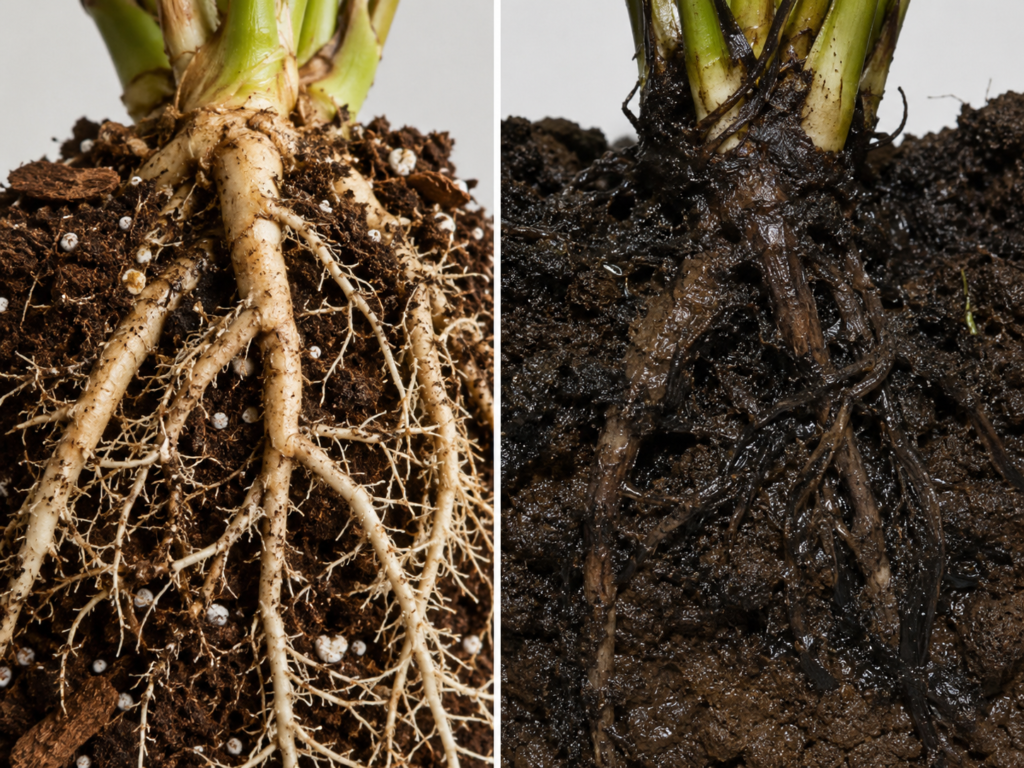
Repot when the current soil or container prevents the roots from returning to a healthy balance of air and moisture. Strong reasons include blocked drainage, compacted mix, persistent saturation, a sour smell, or decaying roots.
Repot when several warning signs appear together:
- The soil stays saturated for many days.
- Water cannot escape from the container.
- The mix feels muddy or compacted.
- The soil smells sour or rotten.
- Roots feel soft, slimy, hollow, or fragile.
- The crown or lower stem is softening.
- The plant continues collapsing after watering stops.
To repot safely:
- Slide the plant gently from its pot.
- Remove loose, waterlogged soil.
- Inspect roots by texture, smell, and firmness.
- Cut away clearly rotten tissue with clean tools.
- Keep firm, structurally intact roots.
- Use fresh, well-draining potting mix.
- Replant in a clean pot with working drainage.
- Match the pot size to the remaining root system.
Do not place a heavily reduced root system in a large container. Excess soil remains wet longer than the surviving roots can use it.
What Should You Do After Repotting?
After repotting, provide stable conditions. Trimmed roots absorb water less efficiently, so the plant may remain wilted or lose previously damaged leaves while it adjusts. Keep it in bright indirect light, away from harsh sun, heaters, and sudden temperature changes.
Follow this aftercare routine:
- Maintain gentle airflow.
- Check moisture below the surface before watering.
- Delay fertilizer until active growth returns.
- Remove only fully dead or decaying tissue.
- Avoid repeatedly inspecting the roots.
- Watch the crown and lower stem for softness.
- Monitor new roots, leaves, or shoots.
Water according to the species and the moisture already present in the new mix. Tropical plants may need slight moisture, while succulents with cut roots may benefit from a brief dry period. Judge success by slower decline, firm stems, and normal soil drying.
How Long Does an Overwatered Plant Take to Recover?
A mildly affected plant may begin stabilizing within several days, while a plant with substantial root damage may need several weeks or longer. Recovery depends on species, light, temperature, season, soil structure, and the amount of healthy root tissue that remains.
During the first few days, look for the pot becoming lighter, standing water disappearing, slower leaf collapse, and no new soft areas. During stabilization, yellowing should slow, stems should remain firm, and the soil should begin drying more predictably. Active recovery is shown by new roots, leaves, shoots, or buds.
Further intervention may be needed when:
- The crown becomes soft.
- Rot spreads upward.
- The smell becomes stronger.
- Fresh soil remains saturated.
- The plant continues collapsing.
- Remaining roots continue disintegrating.
Do not fertilize simply because recovery appears slow. Wait until the plant produces healthy new growth, then resume feeding gradually.
Use This Seven-Day Overwatering Recovery Log
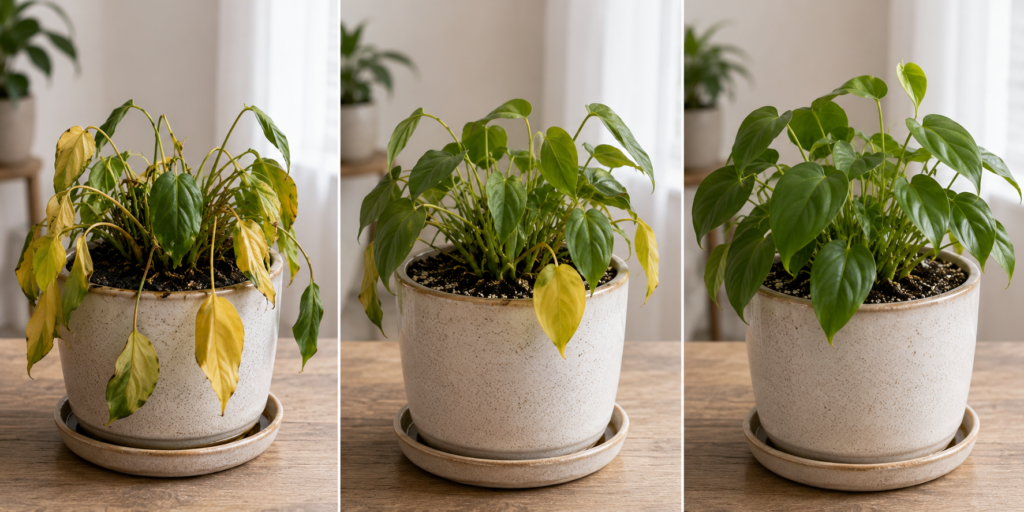
A short recovery log helps you identify whether the plant is improving without repeatedly disturbing its roots. Record the same observations at roughly the same time each day.
| Day | Pot weight | Soil condition | New yellow leaves | Stem or crown | Smell | Action |
|---|---|---|---|---|---|---|
| 1 | Heavy/medium/light | Saturated/wet/moist | Firm/soft | None/sour | ||
| 2 | Heavy/medium/light | Saturated/wet/moist | Firm/soft | None/sour | ||
| 3 | Heavy/medium/light | Saturated/wet/moist | Firm/soft | None/sour | ||
| 4 | Heavy/medium/light | Saturated/wet/moist | Firm/soft | None/sour | ||
| 5 | Heavy/medium/light | Saturated/wet/moist | Firm/soft | None/sour | ||
| 6 | Heavy/medium/light | Saturated/wet/moist | Firm/soft | None/sour | ||
| 7 | Heavy/medium/light | Saturated/wet/moist | Firm/soft | None/sour |
Continue controlled drying when the pot becomes lighter, the stem remains firm, no foul smell develops, and leaf decline slows. Inspect the roots or repot when the pot stays heavy, the soil remains saturated, the stem base softens, or the smell worsens.
The seven-day period is an observation window, not a promise of complete recovery.
Rescue Adjustments by Plant Type
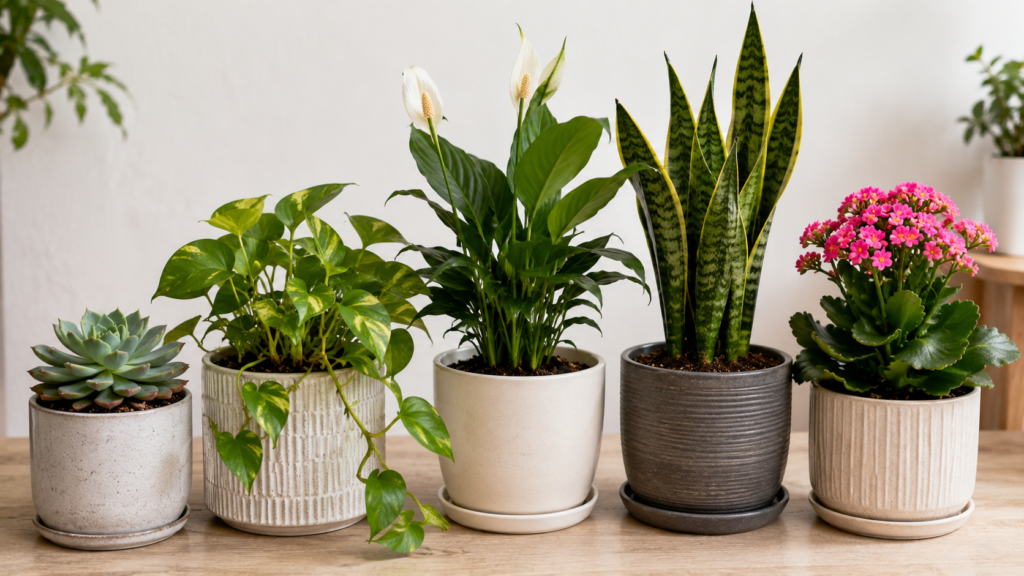
Adjust drying time, potting mix, and aftercare to the plant’s natural moisture needs.
Succulents and Cacti
Allow the mix to dry thoroughly, remove soft tissue, and use a gritty, fast-draining medium. Delay watering after cutting rotten roots. Propagate healthy leaves, offsets, or stems if the base is badly damaged.
Pothos, Philodendrons, and Monsteras
These tropical aroids often recover when firm roots and healthy nodes remain. Use an airy mix, avoid oversized pots, and propagate a healthy node as backup when root damage is extensive.
Peace Lilies and Ferns
Improve drainage but do not keep these moisture-loving plants completely dry for long periods. Protect them from direct sunlight and water again when the root zone reaches an appropriate moisture level.
Snake Plants and ZZ Plants
Inspect thick roots and rhizomes for softness. Remove mushy sections, use a smaller pot with excellent drainage, and allow longer drying periods.
Flowering Container Plants
Root stress may cause flowers and buds to fall. Prioritize root recovery, remove decaying flowers, delay fertilizer, and expect blooming to pause while the plant stabilizes.
Seven Mistakes That Make Overwatering Damage Worse
1. Watering Because the Plant Droops
Drooping can result from damaged roots rather than thirst. Check the soil, pot weight, and drainage before adding water.
2. Using Harsh Direct Sunlight
Strong sunlight can increase water loss faster than damaged roots can replace it. Use bright indirect light.
3. Fertilizing Immediately
Fertilizer does not repair rotten roots and may add salt stress. Wait until healthy new growth appears.
4. Leaving Water in a Cachepot
A nursery pot may drain correctly yet remain submerged inside a decorative container. Empty the outer pot after watering.
5. Moving the Plant Into a Larger Pot
Extra soil stays wet longer. Match the container to the size of the remaining root system.
6. Reusing Waterlogged Soil
Compacted or contaminated mix may continue holding excess moisture. Replace it when root rot is present.
7. Relying Only on Home Remedies
Cinnamon, charcoal, or hydrogen peroxide cannot correct poor drainage or restore dead roots. Fix the root environment first.
When Should You Propagate Instead of Repotting?
Propagation is the better option when too little of the original root system or crown remains to support recovery. A plant with several firm roots may recover after repotting, but a plant whose roots have almost completely decomposed may continue declining despite fresh soil.
Propagate when:
- Most roots are soft or detached.
- The crown has started rotting.
- Rot has entered the lower stem.
- A healthy node remains above the damage.
- An unaffected offset or rhizome can be separated.
- The plant declines again after repotting.
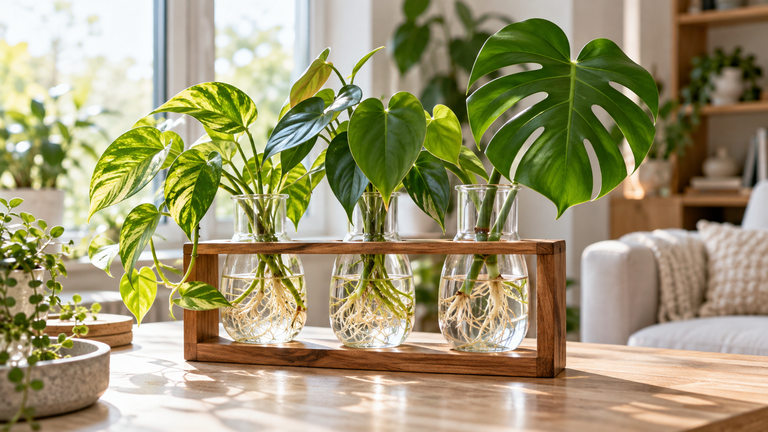
Cut above the highest visible point of rot with a clean blade and keep only firm tissue. Allow the cutting to callus when the species requires it, then root it in water, potting mix, perlite, moss, or another suitable medium.
Not every plant propagates in water. Pothos root from nodes, snake plants from leaf sections, and many succulents from leaves or stems. Propagation is the correct rescue when healthy growing tissue remains but the original roots cannot recover.
How to Prevent Overwatering Next Time
Prevent overwatering by watering according to plant and soil conditions rather than a fixed calendar. Water use changes with season, light, temperature, humidity, pot size, soil structure, and growth stage.
Use this routine:
- Check below the soil surface.
- Lift the pot and compare its weight.
- Confirm that drainage holes are open.
- Consider the plant’s natural moisture needs.
- Adjust for light, temperature, and season.
- Water only when needed.
- Let excess water drain.
- Empty the saucer or cachepot.
- Record how long the mix takes to dry.
- Recheck before watering again.
Use an appropriately sized container and airy potting mix. A moisture meter can provide a second reference, but it should not replace soil checks, pot weight, and observation. Ask, “Has this plant used enough of the previous water?”
FAQs
Can an Overwatered Plant Be Saved?
Yes. Recovery is possible when some roots, stems, or crown tissue remain healthy. Mild cases may need drying, while severe cases may require repotting or propagation.
How Can I Tell Whether a Plant Is Overwatered or Underwatered?
Check the soil. Dry, lightweight soil suggests underwatering, while wet soil with drooping or yellow leaves usually points to overwatering.
How Do You Dry an Overwatered Plant Without Repotting?
Stop watering, empty standing water, and provide bright indirect light with gentle airflow. Keep it in the same pot only when the roots remain firm and the soil is gradually drying.
Should I Repot an Overwatered Plant Immediately?
Not always. Repot when the soil stays saturated, drainage is poor, the mix smells sour, or the roots feel soft and rotten.
Can Yellow Leaves Turn Green Again?
Fully yellow leaves usually remain yellow. Recovery is shown when new yellowing stops and healthy new growth appears.
How Long Does Recovery Take?
Mild cases may stabilize within days, while plants with damaged roots may need several weeks. Look for firm stems, normal soil drying, and new growth.
Should I Fertilize a Recovering Plant?
No. Wait until healthy roots, leaves, shoots, or buds appear before resuming fertilizer.
When Should I Propagate Instead of Repotting?
Propagate when most roots or the crown have rotted but healthy stems, nodes, leaves, offsets, or rhizomes remain.
Final Rescue Decision
Saving an overwatered plant begins with matching the treatment to the condition of the root system.
- Dry in place when the roots and crown remain firm.
- Inspect the roots when the soil does not begin drying.
- Repot when the container or mix keeps the roots waterlogged.
- Remove rot when roots are soft, slimy, hollow, or foul-smelling.
- Propagate when the roots or crown cannot recover.
- Wait and observe when decline has stopped and the plant is stabilizing.
Judge success by firm tissue, normal soil drying, slower leaf loss, no spreading decay, and healthy new growth. The goal is not to dry the plant as quickly as possible. It is to restore a healthy balance between moisture and oxygen while preserving as much functional root and leaf tissue as possible.

Myra is the founder and lead writer of Plantsaholic. She shares practical, research-backed advice on indoor plants, outdoor gardening, flowers, herbs, succulents, and everyday plant care. Her goal is to help gardeners of all experience levels grow healthier plants through simple, easy-to-follow gardening guides.