The best plant shelf decor ideas combine healthy houseplants, coordinated planters, meaningful objects, and enough open space to make each element visible. Start with one focal plant, introduce contrasting shapes, repeat a limited palette, and keep every pot easy to water and remove.
A successful plant shelf should work as both decor and a growing space. Light, drainage, mature plant size, shelf capacity, and daily maintenance matter more than filling every gap. The goal is a display that still looks balanced after the plants produce new leaves and longer vines.
Which Plant Shelf Layout Fits Your Space?
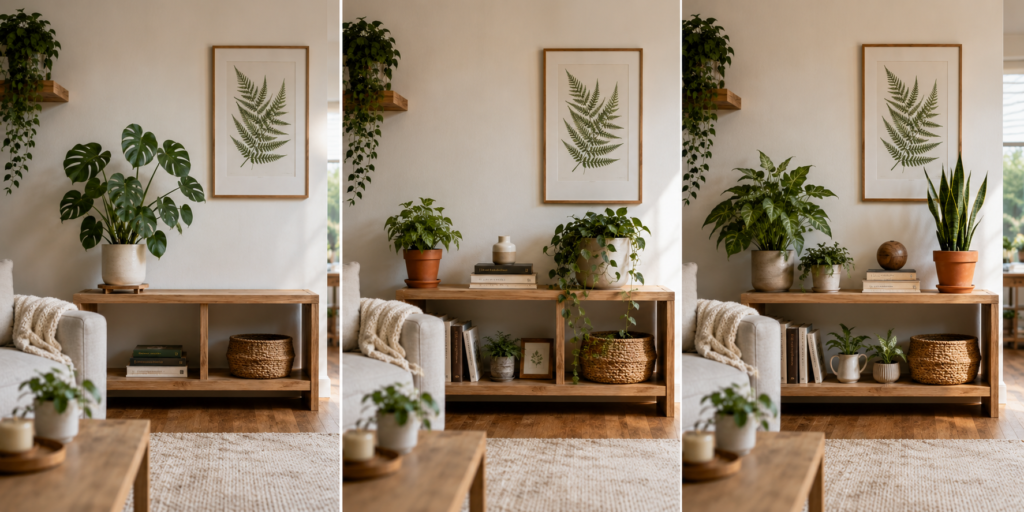
Choose the layout according to shelf size, available light, plant number, and maintenance access.
Minimal Layout
Best for narrow shelves, small rooms, or one strong light zone.
Use:
- One focal plant
- One low decorative object
- One open area
This layout is easy to clean and gives the plant room to grow.
Balanced Layout
Best for standard bookcases and mixed plant-and-book displays.
Use:
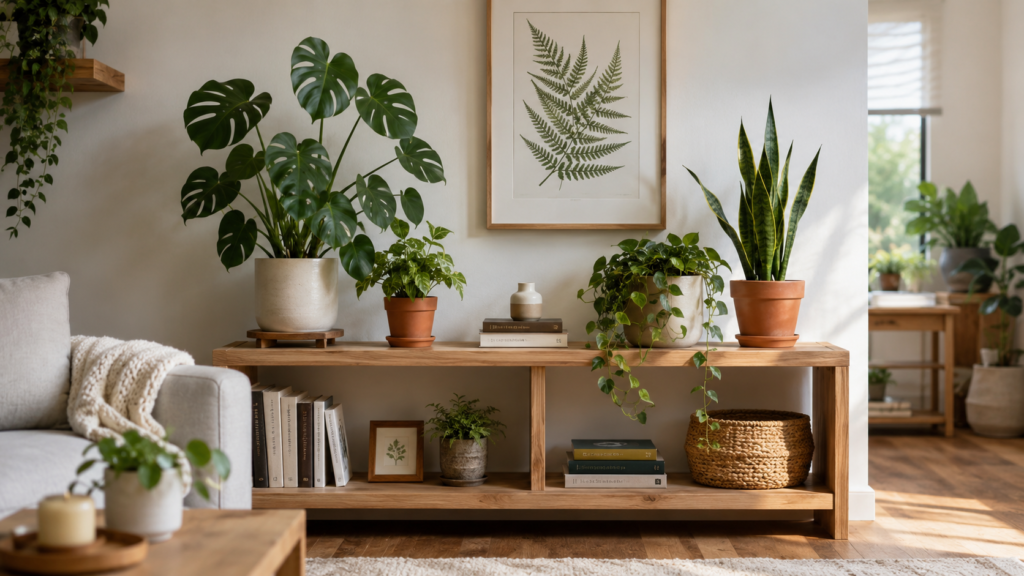
- One upright plant
- One trailing or rounded plant
- One short book stack
- One meaningful object
Keep at least one section visibly open.
Layered Layout
Best for larger collections and deeper shelving units.
Use:
- One dominant plant in each group
- Several contrasting plant shapes
- Repeated planter materials
- Clear gaps between compositions
Choose the simplest layout that fits the plants you currently own. Do not select a layered arrangement only because the shelf has unused space.
What Makes a Plant Shelf Look Styled Instead of Cluttered?
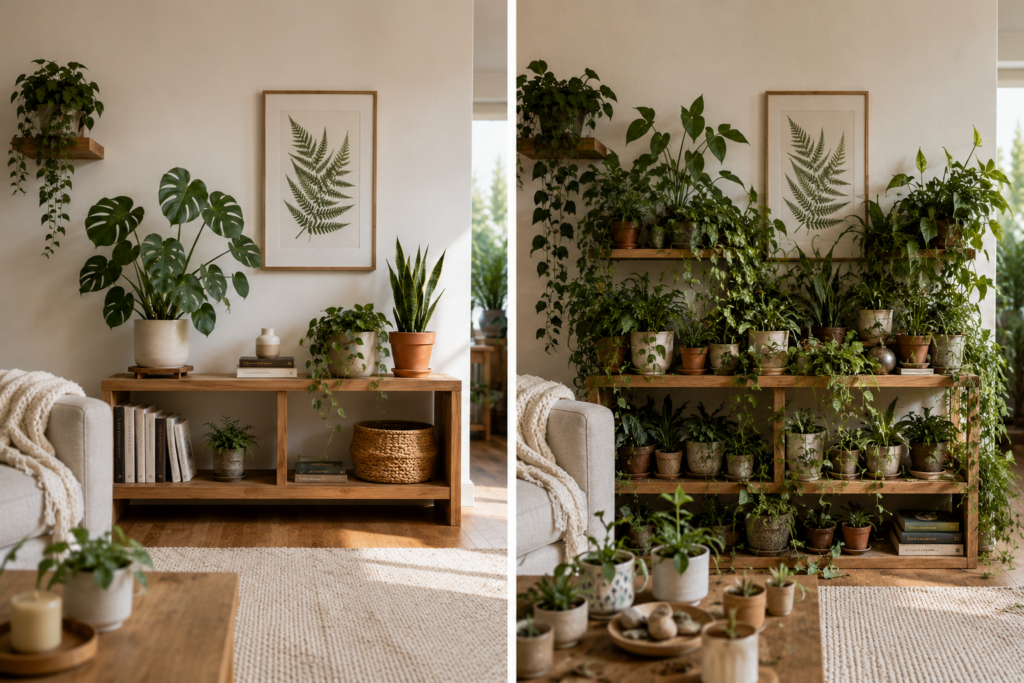
A styled plant shelf has a clear visual hierarchy. One plant or group attracts attention first, while the surrounding items support it. A cluttered shelf usually contains too many similar pots, competing colors, overlapping foliage, and decorative objects placed in every available gap.
The number of objects is less important than their relationship. A shelf with six coordinated items can look calmer than one with three unrelated pieces.
Use these principles:
- Create one focal point.
- Vary heights and plant shapes.
- Repeat two or three colors or materials.
- Group smaller objects.
- Leave intentional negative space.
- Keep every planter removable.
- Allow room for mature growth.
A tall plant, short book stack, and low ceramic bowl create stronger movement than three objects of equal height. Similarly, repeating terracotta, cream, or black across several items creates unity without requiring everything to match.
When removing an object improves both visual balance and plant access, leave it out.
The Five Non-Negotiables of Plant Shelf Styling
Every plant shelf needs five things: suitable light, watering access, protected surfaces, growth room, and visual hierarchy.
1. Suitable Light
Match each plant to the light available in its exact position. Upper shelves are not always brighter, and large frames or books may shade nearby foliage.
2. Watering Access
Every pot should be removable without moving several fragile objects. Avoid threading vines permanently through books, frames, or shelf supports.
3. Protected Surfaces
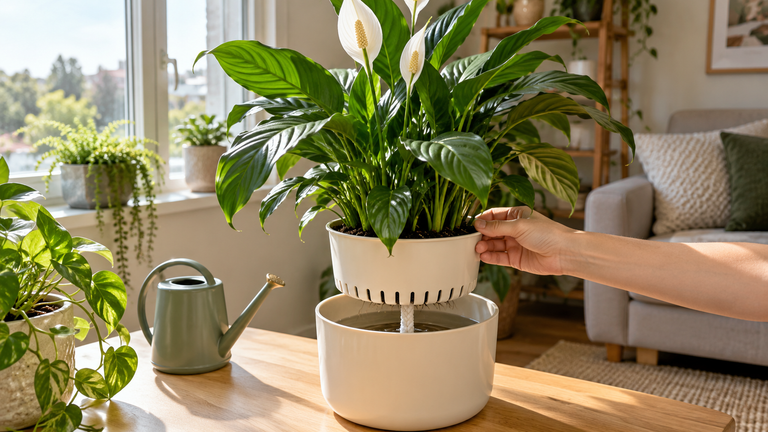
Use trays, liners, or sealed cachepots. Empty collected water and allow nursery pots to drain before returning them to the shelf.
4. Growth Room
Consider future height, width, and trailing length. A display that looks completely full on the first day will usually become overcrowded.
5. Visual Hierarchy
Use one dominant plant, contrasting forms, repeated materials, and visible open space.
When a decorative choice interferes with one of these requirements, move the object rather than placing the plant in unsuitable conditions.
What Should You Decide Before Decorating a Plant Shelf?
Plan the shelf before choosing accessories. Measure the usable width, depth, and vertical clearance, then identify the strongest light zone and the safest place for heavier planters.
Decide:
- Which shelf levels receive usable light
- How much weight the unit can support
- Which plants need frequent watering
- Which plants will grow upright or trail
- What style suits the room
- Which colors or materials will repeat
- Where negative space will remain
Choose one main style, such as minimalist, modern, boho, rustic, or maximalist. Then select two or three supporting colors. Terracotta, cream, and natural wood create warmth, while black, white, glass, and dark foliage produce a more modern effect.
Select the healthiest and most distinctive plant as the focal point. It may stand out because of height, fullness, variegation, or leaf shape, but it must also suit the available light and space.
Plant-Led Plant Shelf Decor Ideas
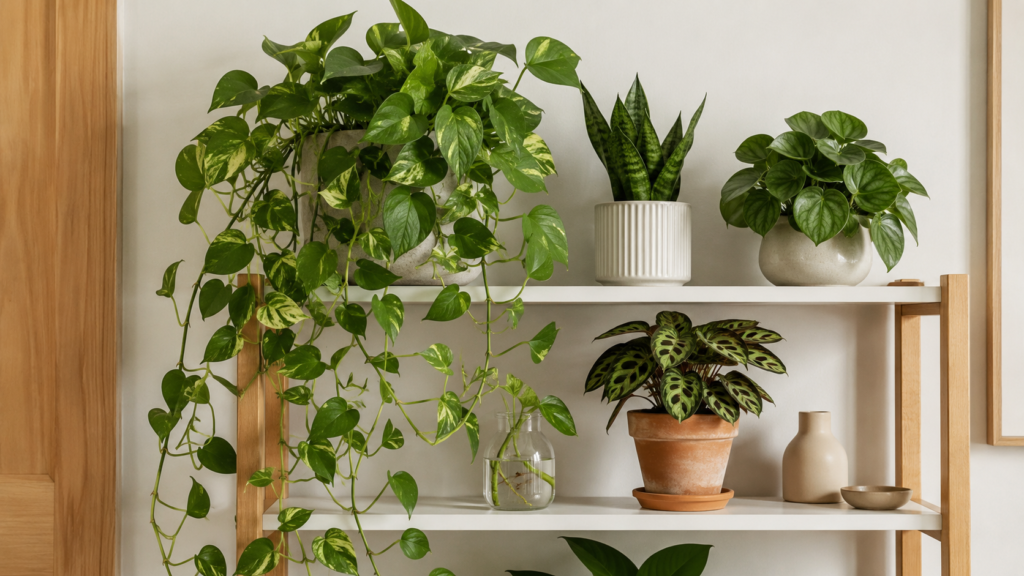
Plant-led displays use foliage as the main decorative feature and keep accessories minimal.
1. Build Around One Focal Plant
Place the strongest plant first, then add one or two quieter elements. A full pothos paired with neutral books and a ceramic bowl creates a complete composition without excessive decor.
2. Soften an Edge With a Trailing Plant
Place one trailing plant near an outer edge. Let the stems fall naturally without covering the whole bookcase or shading plants below.
3. Pair Upright and Cascading Forms
Combine an upright plant with a trailing plant. The opposing directions create immediate movement and balance.
4. Place Detailed Foliage at Eye Level
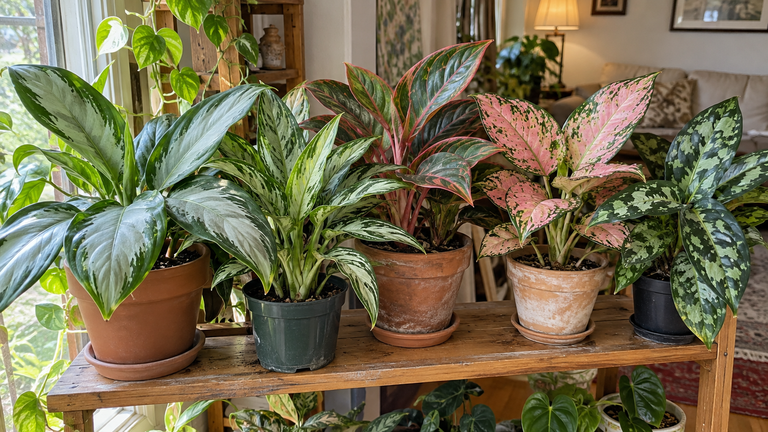
Compact plants with patterned or textured leaves work best where their detail can be seen clearly.
5. Repeat One Plant in Different Sizes
Use the same species at different stages of growth. One may stay compact while another trails, creating unity without complete uniformity.
6. Use Foliage as the Color Accent
Let cream, silver, pink, lime, or red leaf markings provide color instead of adding another decorative object.
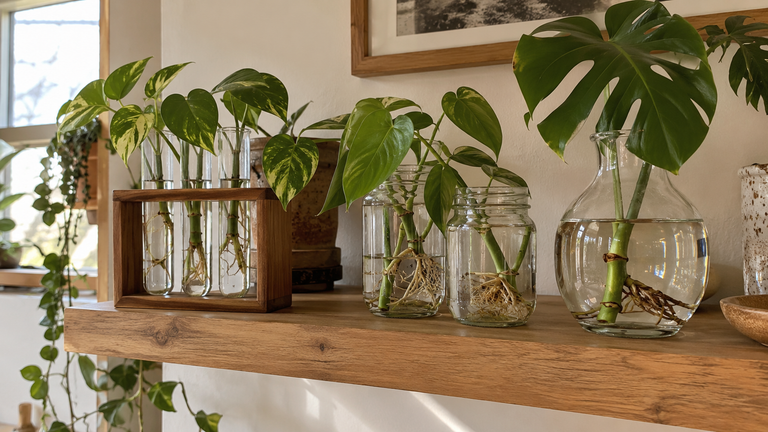
7. Add One Propagation Vessel
A clear vessel introduces water, roots, and transparency. Keep it stable and easy to clean.
These ideas work best when you want plants, rather than accessories, to remain the main feature.
How to Decorate a Plant Shelf With Books and Objects
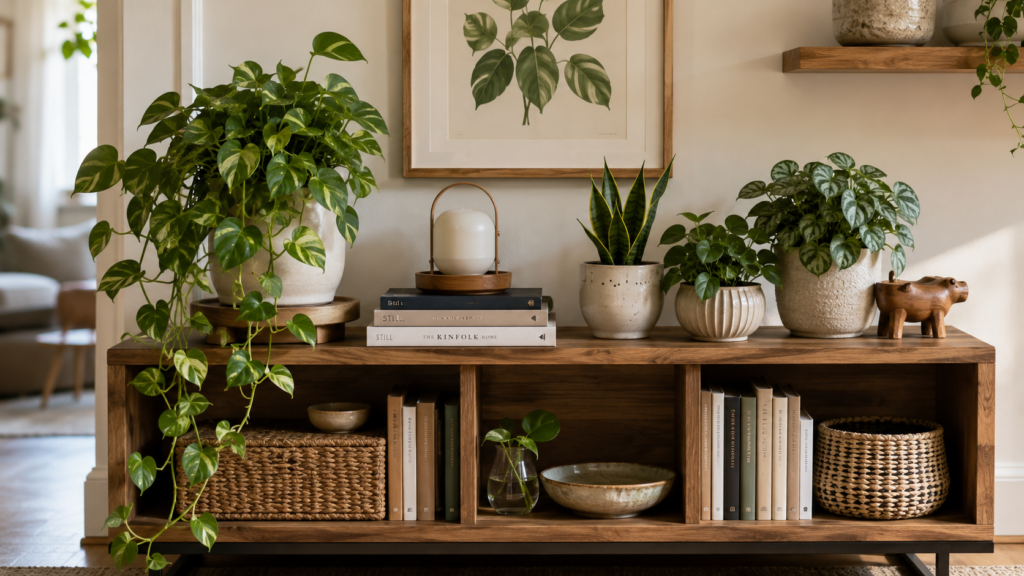
Books and decorative objects can add height, structure, and personality, but they should not make plant care difficult.
8. Raise a Small Plant on Books
Use a short horizontal stack to elevate a compact plant. Protect the books with a waterproof tray or sealed cachepot.
9. Place Art Behind a Compact Plant
A small frame adds vertical height without using much shelf space. Keep it behind low foliage so it does not block light.
10. Repeat a Planter Color
Use a ceramic bowl, vase, or decorative object that repeats the color of a planter elsewhere on the shelf.
11. Pair Soft Foliage With a Solid Object
Trailing or fine-textured leaves contrast well with smooth ceramic, stone, or carved wood.
12. Store Supplies in a Basket
A dry basket can hold pruning scissors, ties, gloves, or cleaning cloths. Place it on a lower shelf.
13. Coordinate Water Trays
Choose trays that match the planter palette instead of hiding mismatched saucers behind foliage.
14. Include One Meaningful Object
A photograph, travel souvenir, inherited book, or handmade item adds more personality than generic filler decor.
Every planter should remain removable, and vulnerable objects should be protected from drainage water.
Plant Shelf Arrangement and Composition Ideas
Composition determines how the eye moves across the shelf.
15. Create Two Asymmetrical Groups
On a long shelf, create one visually heavier group and one lighter group with open space between them.
16. Use the Rule of Three
Group one plant, one book stack, and one decorative object. Vary their height, shape, and texture.
17. Repeat One Color Across Shelves
Use the same color at different levels of a bookcase to connect the display. Stagger the repeated items instead of aligning them vertically.
18. Mix Tall, Medium, and Low Elements
A varied outline creates more movement than a straight row of equal-height pots.
19. Leave One Area Empty
Negative space prevents visual overload and gives plants room to expand.
20. Control Trailing Growth
Guide one vine gently across an edge or downward. Keep it away from drawers, electronics, candles, and lower plants.
A strong composition usually contains one focal point, varied heights, repeated materials, and at least one open area.
Plant Shelf Ideas by Interior Style
Choose a style that already relates to the room.
21. Minimalist
Use one upright plant, one trailing plant, neutral pots, and generous open space. Avoid adding objects simply because the shelf looks empty.
22. Boho
Combine terracotta, wood, woven fibers, books, and relaxed foliage. Limit heavily patterned accessories so the display does not become crowded.
23. Modern
Use black metal, matte ceramic, glass, clean lines, and plants with sculptural shapes. One abstract object is usually enough.
24. Rustic
Mix warm wood, aged terracotta, handmade ceramics, vintage books, and softer foliage. Protect all porous surfaces from moisture.
25. Controlled Indoor Jungle
Use one upright anchor, one dominant trailing plant, and several compact supporting plants. Repeat pot colors and preserve at least one visible gap.
Apply two or three compatible ideas rather than combining every style on one shelf.
How Can You Arrange Decor by Shelf Width?
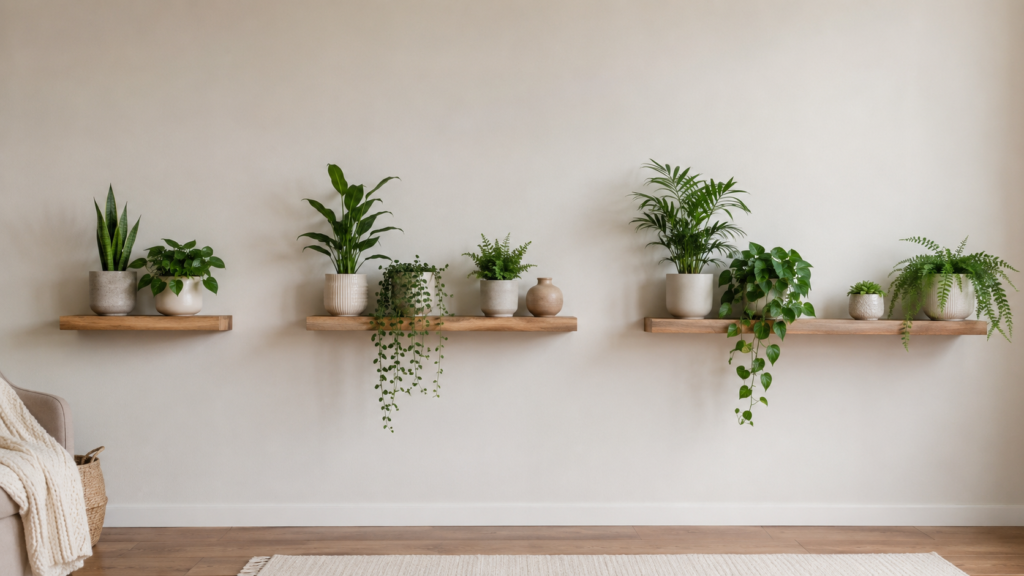
Shelf width provides a starting point, but foliage spread matters more than pot diameter.
24-Inch or 60-Centimeter Shelf
Use one compact group:
- One anchor plant
- One low object
- One short book stack or frame
- One open section
36-Inch or 90-Centimeter Shelf
Use:
- One upright plant
- One compact or trailing plant
- Two or three books
- One small accessory
- Open space at one end
48-Inch or 120-Centimeter Shelf
Create two separate groups. Use a larger plant and low object in one group, then a smaller plant, frame, and accessory in the other.
Multi-Level Bookcase
Give each shelf a role:
- Top: lightweight trailing plant
- Eye level: main focal composition
- Middle: books and compact plant
- Quiet shelf: minimal objects
- Bottom: heavier planters or storage
Plantsaholic Plant Shelf Review
Rate each area from one to five:
- Light access
- Watering access
- Airflow
- Growth room
- Surface protection
- Visual balance
A low score indicates that the arrangement needs adjustment, especially when light, access, or protection is weak.
How Should You Use the Plantsaholic Shelf-Width Formulas?
The Plantsaholic formulas are editorial styling guides, not structural or horticultural standards. They assume that most planters are approximately 4–6 inches or 10–15 centimeters wide and that foliage has not spread far beyond the containers.
Adjust every formula according to:
- Mature foliage width
- Vertical clearance
- Shelf depth
- Pot weight
- Light direction
- Watering access
- Manufacturer weight limits
The suggested occupancy percentages and review score are visual planning tools only. They do not determine whether a shelf is structurally safe or whether a plant receives suitable care.
When the pots technically fit but leaves already overlap or watering feels difficult, use a simpler formula.
Which Shelf Type Is Best for Plant Decor?
Choose a shelf that provides safe support, suitable depth, usable light, and easy access.
| Shelf Type | Best Use | Main Limitation |
|---|---|---|
| Floating shelf | One compact composition | Limited depth and capacity |
| Bookcase | Mixed plants, books, and decor | Lower shelves may be darker |
| Cubby shelf | One group per compartment | Restricted growth room |
| Ladder shelf | Heavy plants low, trailing plants high | Uneven depth |
| Tiered stand | Light-based plant grouping | Can look crowded |
| Windowsill shelf | Plants needing brighter light | Heat and direct sun |
| Corner shelf | Upright anchor and controlled vine | Uneven exposure |
Floating shelves suit lightweight planters and minimal decor. Bookcases offer more flexibility but should not repeat the same arrangement on every level. Cubby shelves work best with compact plants, while ladder shelves should place heavier pots on lower tiers.
Choose the shelf that provides the best growing conditions and safest access, even when another style appears more decorative.
Which Plant Shapes Work Best in Shelf Decor?
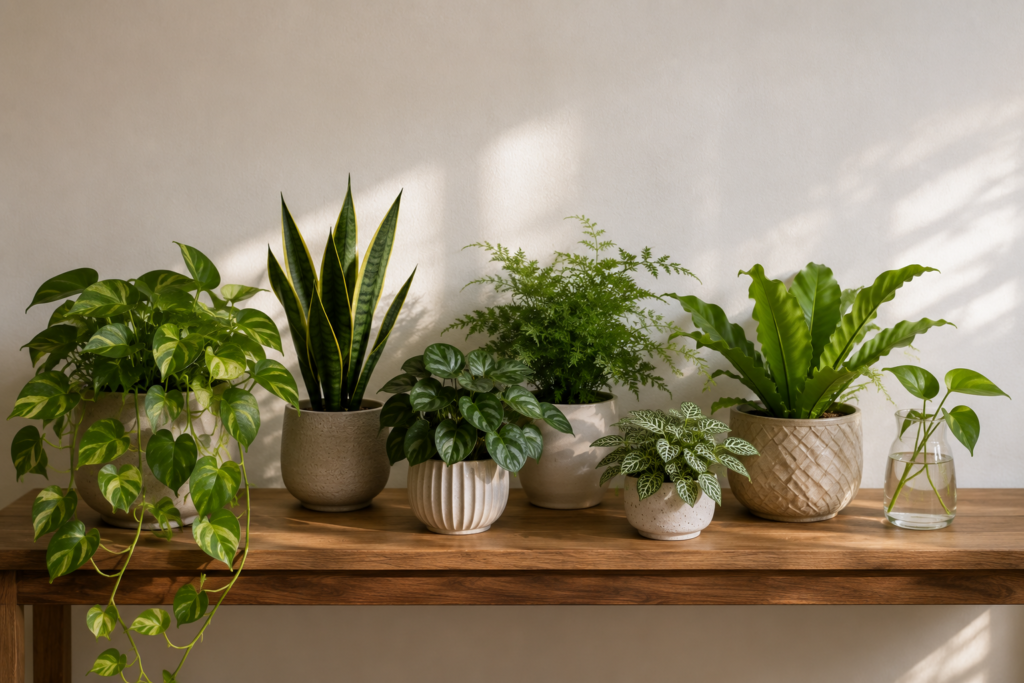
Plant shape determines how the display feels.
| Visual Role | Growth Habit | Examples |
|---|---|---|
| Soft edge | Trailing | Pothos, heartleaf philodendron |
| Vertical structure | Upright | Compact snake plant, ZZ plant |
| Rounded fullness | Mounding | Peperomia, Pilea |
| Fine texture | Fern-like | Compact ferns |
| Patterned accent | Decorative foliage | Fittonia, prayer plant |
| Sculptural focus | Distinct form | Bird’s nest fern, compact aroid |
| Transparent detail | Propagation | Vine cuttings |
Combine contrasting forms instead of selecting several plants with the same outline. One upright, one trailing, and one compact plant usually creates a balanced group.
Consider mature size as well as current appearance. A plant that fits today may outgrow the vertical clearance or shade nearby foliage within a few months.
How Do You Make a Plant Shelf Safer for Pets?
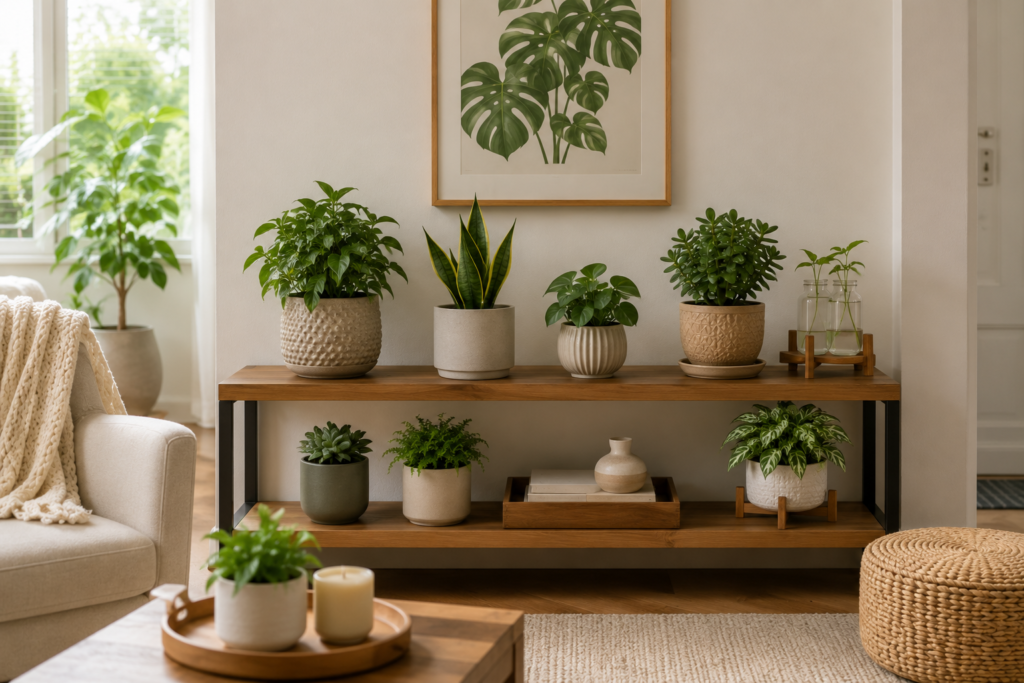
Shelf height alone does not make a plant safe. Cats may climb nearby furniture, and hanging vines can bring foliage within reach.
Before placing a plant:
- Confirm its botanical identity.
- Check a recognized pet-toxicity database.
- Avoid relying only on common names.
- Keep long vines out of reach.
- Remove fallen leaves.
- Use stable planters.
- Keep propagation water inaccessible.
- Avoid shelves beside climbable furniture.
Physical safety matters too. Keep glass vessels away from edges and make sure lightweight nursery pots fit securely inside decorative containers.
When a pet can reach the foliage, vine, soil, or drainage water, treat the entire display as accessible.
How Do You Mix Plants, Books, and Decorative Objects Safely?
A safe display protects books and furniture, keeps plants removable, and avoids heat or unstable weight.
Use:
- Waterproof trays
- Sealed cachepots
- Shelf liners
- Cork-backed coasters
- Separate watering areas
Let pots finish draining before returning them. Do not allow cachepots to remain filled with water.
Keep plants away from active candles, radiators, heaters, and heat-producing electronics. Observe whether frames or large objects cast shade over nearby foliage.
Place heavier pots near supports or on lower levels. Avoid placing heavy ceramic planters above beds, seating, or desks unless the installation is designed to support them.
Simplify the shelf when routine watering requires moving several fragile or valuable objects.
How Do You Choose the Right Plant Shelf Style?
Choose the style that matches both the room and your maintenance preference.
| Style | Best For | Main Risk |
|---|---|---|
| Minimalist | Calm, simple rooms | Looking too empty |
| Boho | Warm, collected interiors | Overcrowding |
| Modern | Clean, architectural spaces | Too many small accessories |
| Rustic | Natural, textured rooms | Water damage |
| Maximalist | Colorful collections | Loss of hierarchy |
Minimalist styling requires fewer items but stronger shapes. Boho displays use more texture and need regular editing. Modern shelves depend on clean lines and controlled accessories. Rustic shelves need careful moisture protection, while maximalist displays require clear grouping to avoid visual chaos.
Follow the room’s established style rather than copying a temporary trend.
How Should Plant Shelf Decor Change by Room?
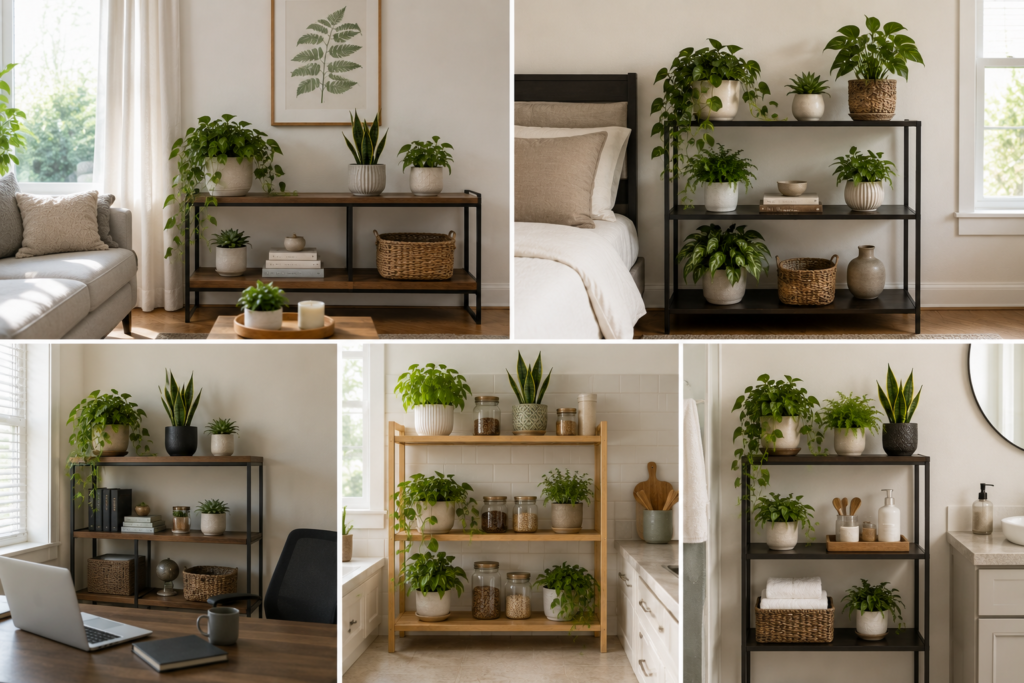
Living Room
Create one composition visible from the main seating area. Repeat colors from rugs, cushions, or artwork.
Bedroom
Use fewer objects, softer textures, and lightweight planters. Avoid heavy pots above the bed.
Home Office
Keep plants away from monitors, cables, vents, chargers, and frequently used documents.
Kitchen
Use washable surfaces and keep plants away from heat, grease, steam, and cooking splashes.
Bathroom
Use moisture-resistant shelving and plants suited to the actual light. Humidity does not compensate for darkness.
Small Apartment
Use one vertical display instead of scattering pots across several surfaces. Place lighter trailing plants above and heavier items below.
Adapt the shelf to the room’s daily use before choosing decorative accessories.
How Can You Give a Plant Shelf a 10-Minute Makeover?
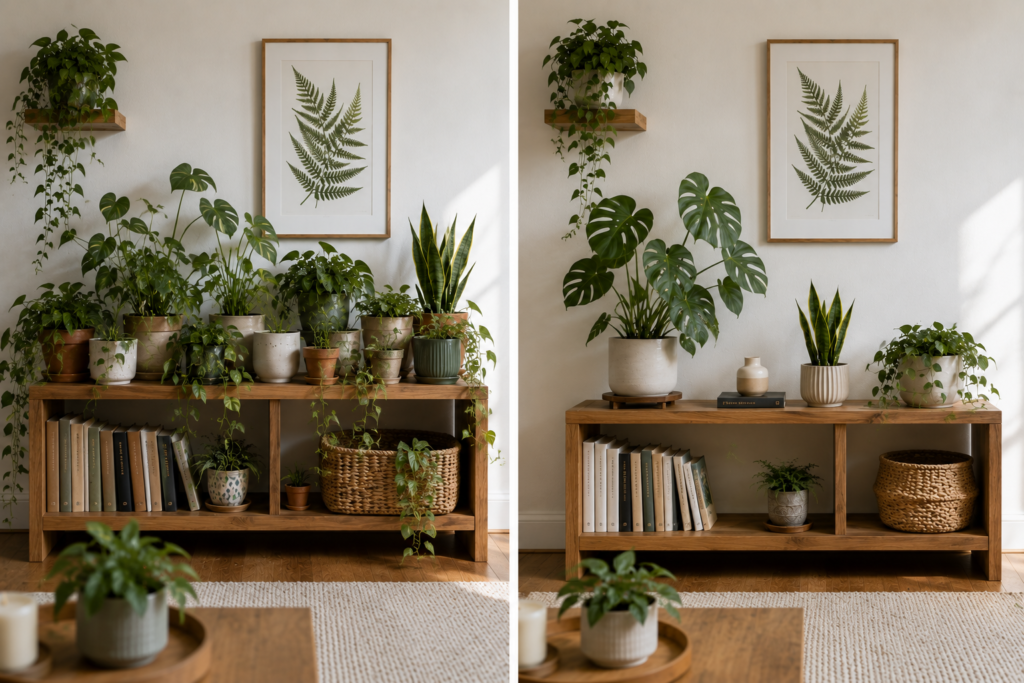
- Remove everything and clean the shelf.
- Return the healthiest focal plant.
- Add one plant with a contrasting shape.
- Repeat one color or material.
- Add one height-building element.
- Add one meaningful object.
- Remove one unnecessary item.
- View the shelf from across the room.
- Test watering access.
- Leave room for growth.
The quickest improvement often comes from removing objects rather than adding new ones. Complete the makeover with existing items before buying more decor.
What Plant Shelf Decorating Mistakes Should You Avoid?
| Mistake | Better Approach |
|---|---|
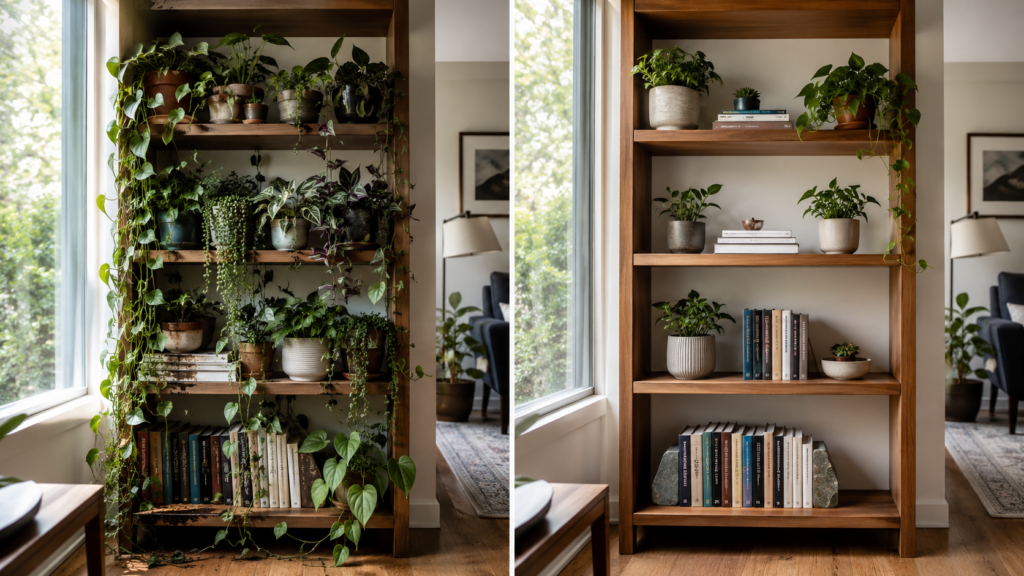
| Too many small pots | Use fewer plants with stronger shapes |
| Identical containers | Repeat one feature, not the entire pot |
| Filling every gap | Preserve negative space |
| Similar plant forms | Mix upright, rounded, and trailing growth |
| Ignoring mature size | Plan for future width and height |
| Uncontrolled vines | Guide or prune stems |
| Decor blocking pots | Keep every planter removable |
| No water protection | Use trays and liners |
| Too many colors | Limit the palette |
| One watering schedule | Check each plant separately |
| Heavy items high up | Place weight lower |
| Touching foliage | Increase spacing |
A styling choice becomes a mistake when it reduces light, drainage, airflow, access, or safety.
How Can You Test a Plant Shelf for 30 Days?
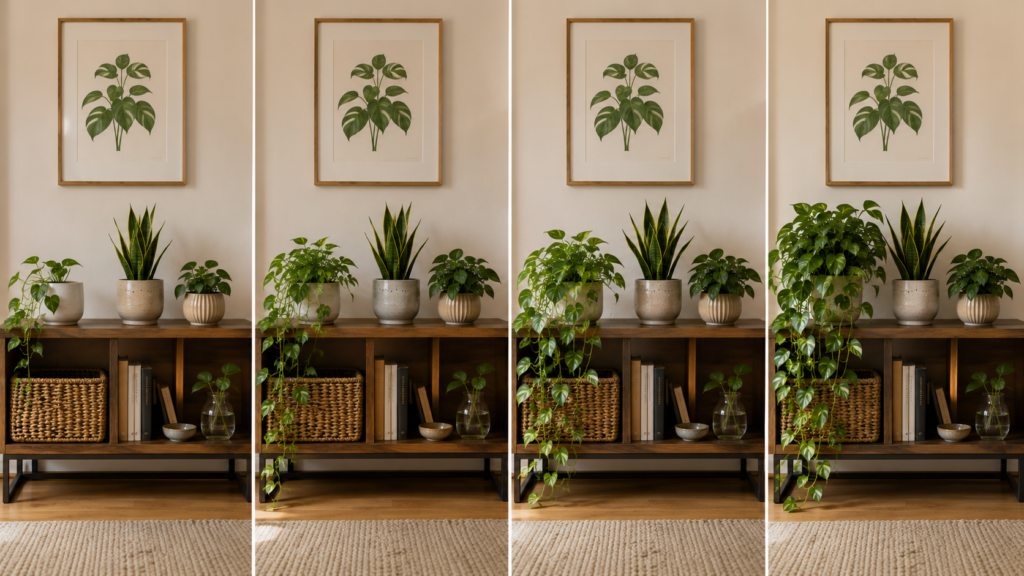
A 30-day test shows whether the display remains practical after watering, growth, and ordinary room use.
Day 0
Record:
- Shelf dimensions
- Window location
- Plants and pot sizes
- Decorative objects
- Surface protection
- Starting photograph
Day 7
Check whether every plant was easy to water and whether any object needed to be moved.
Day 14
Look for leaning foliage, stretched growth, scorching, overlapping vines, or soil remaining wet longer than expected.
Day 21
Inspect leaves, stems, trays, pot rims, and shelf surfaces.
Day 30
Classify each item:
- Keep
- Move
- Remove
- Replace
The shelf passes when all plants remain accessible, surfaces stay protected, and growth has room to continue.
Plantsaholic Plant Shelf Makeover: A 30-Day Case Study
Publish this section only after completing a genuine makeover with original photographs and observations.
Include:
- Shelf width and depth
- Window and light description
- Plants and planter sizes
- Original problems
- Items removed or repositioned
- Time required
- Before photograph
- After photograph
- Seven-day observations
- Thirty-day results
- What worked
- What needed adjustment
Do not publish placeholder measurements, invented results, or fabricated first-hand experience.
How Do You Keep a Styled Plant Shelf Looking Good?
Weekly
- Remove fallen leaves.
- Check moisture before watering.
- Empty trays and cachepots.
- Inspect for pests.
- Redirect vines.
- Wipe water marks.
- Check pot stability.
Monthly
- Remove plants and clean the shelf.
- Wash trays and cachepots.
- Dust leaves.
- Prune excessive growth.
- Review spacing.
- Check brackets.
- Photograph the display.
Seasonally
Reassess light, temperature, drafts, watering frequency, and supplemental lighting.
As plants mature, remove accessories, prune vines, separate overlapping foliage, or move larger plants to a more suitable location.
Maintain the shelf by removing and repositioning before purchasing additional plants or decor.
FAQs About Plant Shelf Decor
How Do You Decorate a Plant Shelf Without Clutter?
Use one focal plant, vary heights, repeat a limited palette, and leave some space empty. Remove anything that blocks light or makes watering difficult.
What Is the Rule of Three?
Group three different elements, such as one plant, one book stack, and one decorative object. Vary their height, shape, and texture.
How Many Plants Should Go on One Shelf?
A small shelf may need one or two plants, while a wider shelf can hold two groups. Stop adding plants when foliage overlaps or pots become difficult to reach.
Can Real Plants Grow on a Bookshelf?
Yes, when the shelf provides suitable light, airflow, drainage protection, and watering access.
What Plants Look Best on Shelves?
Compact, upright, rounded, and trailing plants usually work best. Choose according to mature size and available light.
Should All Plant Pots Match?
No. Repeat one feature, such as color or material, while varying shape and size.
How Do You Protect Books From Plant Water?
Use sealed cachepots or waterproof trays and let pots finish draining before returning them.
Can Plants Grow on a Dark Shelf?
No plant thrives in complete darkness. Use suitable supplemental lighting when natural light is insufficient.
Which Plant Shelf Formula Should You Use?
Choose the formula according to available space, light, plant number, shelf strength, and maintenance access.
Minimal Formula
Best for narrow shelves, small collections, and low-maintenance styling.
Use:
- One focal plant
- One supporting object
- Generous open space
Balanced Formula
Best for standard bookcases and mixed plant-and-book displays.
Use:
- One upright plant
- One trailing or rounded plant
- One book stack
- One meaningful object
Layered Formula
Best for larger collections and deeper shelves.
Use:
- One dominant plant per group
- Contrasting plant forms
- Repeated materials
- Clear separation
Grow-First Formula
Best for propagation shelves, limited light, or rapidly growing plants. Position plants first and add only decor that does not interfere with care.
Collection Formula
Best for related plants with similar requirements. Vary pot height and preserve enough space to inspect each specimen.
Before completing the shelf, ask:
- Does every plant receive suitable light?
- Can every pot be removed?
- Are vulnerable surfaces protected?
- Is one focal point visible?
- Is there room for growth?
- Are heavy items safely positioned?
- Would removing one object improve the display?
A successful plant shelf should remain attractive from across the room and practical up close. Healthy plants, clear hierarchy, limited materials, and enough open space will produce a stronger result than simply filling every shelf.
Myra is the founder and lead writer of Plantsaholic. She shares practical, research-backed advice on indoor plants, outdoor gardening, flowers, herbs, succulents, and everyday plant care. Her goal is to help gardeners of all experience levels grow healthier plants through simple, easy-to-follow gardening guides.