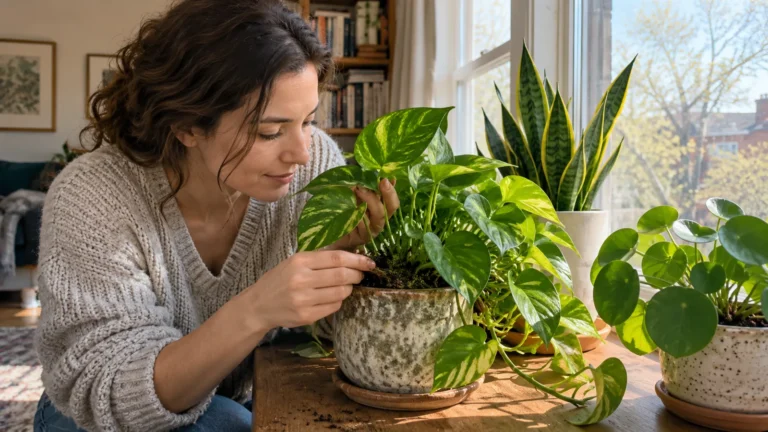
Spring plant care begins with observation, not a new watering schedule. Longer days and warmer conditions can encourage growth, but plants respond differently. Inspect leaves, roots, soil moisture, and light before watering more, feeding, pruning, or repotting.
Spring generally falls between March and May in the Northern Hemisphere and September and November in the Southern Hemisphere. In the tropics, wet and dry seasons may matter more. Follow local conditions, not a universal calendar.
Spring Plant Care Basics
New growth may increase water and nutrient demand, but not always. A brightly lit pothos may grow quickly while one in a dim room barely changes.
Plantsaholic 60-Second Spring Plant Check
| Check | Look for | Possible response |
|---|---|---|
| Leaves | Yellowing, spots, dust | Clean or investigate |
| Stems | Damage, stretching | Prune or improve light |
| Soil | Dryness, prolonged wetness | Adjust watering |
| Roots | Crowding, poor drainage | Assess the pot |
| Pests | Insects, webbing, residue | Identify the cause |
| Growth | New shoots or leaves | Review care demands |
Which Spring Task Comes First?
Address the most urgent problem. Water genuinely dry plants; investigate saturated soil before feeding; isolate plants with pests. Healthy plants may need only monitoring. Take note of which pots dry first and which receive new sunlight; this baseline makes later problems easier to diagnose.
Spring Care by Plant Type
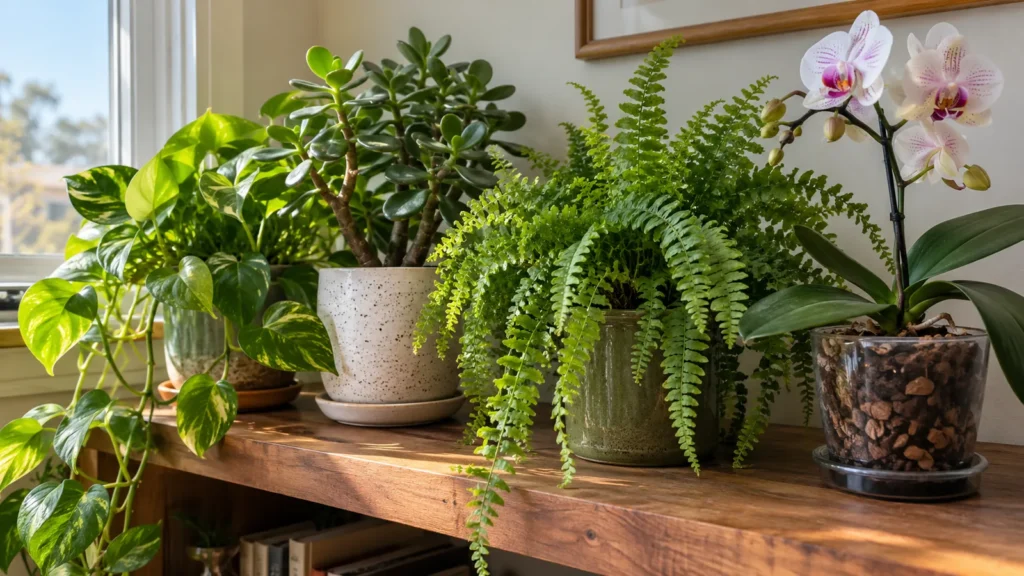
Plants have different growth cycles. A fern and jade plant need different care, even in the same room.
| Plant group | Spring priority | Common mistake |
|---|---|---|
| Tropical foliage plants, including pothos and Monstera | Check new growth and light | Sudden direct sun |
| Drought-tolerant plants, including jade and ZZ plant | Let the medium dry appropriately | Constantly wet roots |
| Moisture-loving foliage plants, including many ferns | Monitor root-zone moisture | Extended drought |
| Epiphytic orchids, including Phalaenopsis | Inspect roots and bark | Watering bark like ordinary soil |
| Seasonal bloomers, including cyclamen | Follow flowering and rest cycles | Forcing growth with fertilizer |
If growth stops, assess light, temperature, moisture, and roots. Some species naturally rest; fertilizer cannot correct unsuitable conditions. Identify plants to species where possible, because even related varieties may differ in light tolerance and watering requirements.
Spring Watering Guide
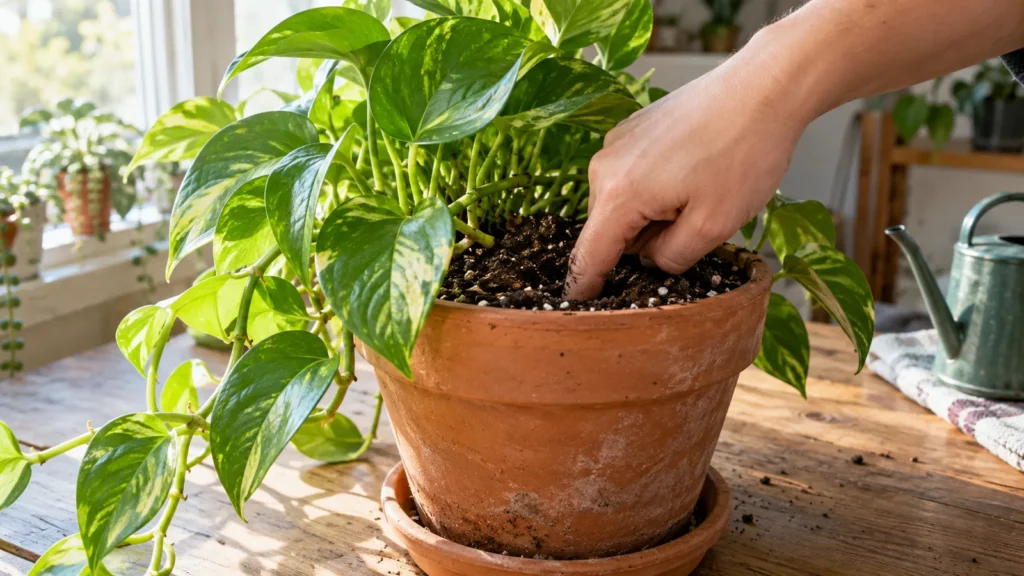
Water use may rise with light and growth. Drying depends on pot size, material, airflow, and mix; sunny terracotta dries faster than shaded plastic.
How to Check Soil Moisture
- Check moisture at a depth appropriate to the roots.
- Compare the pot’s wet and dry weights.
- Check drainage and empty standing water.
- Match dryness to the species.
- If roots remain moist, wait.
Water the root zone thoroughly and drain excess in conventional pots. If water passes straight through dry mix, check whether the root ball needs rewetting. Check more often; water only when needed. For hanging baskets or very large containers, check more than one spot: moisture near the rim may not reflect conditions in the center.
When to Fertilize Plants
Feed healthy, actively growing plants with adequate light and roots. New leaves are a better signal than dates. Fertilizer cannot fix rot, poor light, or pests.
Delay feeding if soil is saturated, roots are damaged, or plants are stressed. Check whether fresh mix contains fertilizer. Follow the product label; overfeeding can injure roots.
If leaves turn pale while the medium remains wet, investigate drainage and roots first. Do not assume every discoloration signals nutrient deficiency. If white crust appears on the potting medium, investigate possible mineral or fertilizer residue and review the feeding routine before adding more.
When to Repot Plants
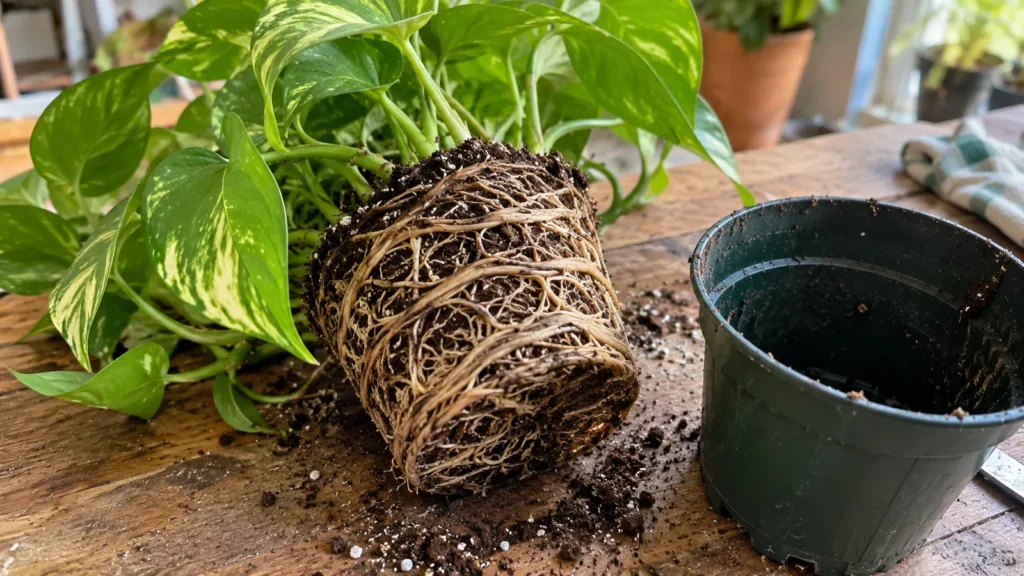
Spring suits repotting many actively growing houseplants, but not annually by default. Repot for crowded roots, deteriorated mix, or drainage problems.
Is Your Plant Root-Bound?
Look for dense circling roots, rapid drying, instability, or extensive roots through drainage holes. One visible root is not proof of overcrowding. If roots are healthy but the mix is exhausted, replacing the medium without a large increase in pot size may be sufficient.
Choose a pot only slightly larger than the root mass. For many small houseplants, an increase of roughly 1–2 inches (2.5–5 cm) in diameter is a practical starting point, not a universal rule. Excess unused mix can remain wet for too long.
After-Repotting Care
Use suitable mix, maintain planting depth, and water appropriately. Avoid sudden intense sunlight; check moisture before watering again. New mix may already contain fertilizer. Investigate persistent wilting or wetness.
Spring Light Adjustments
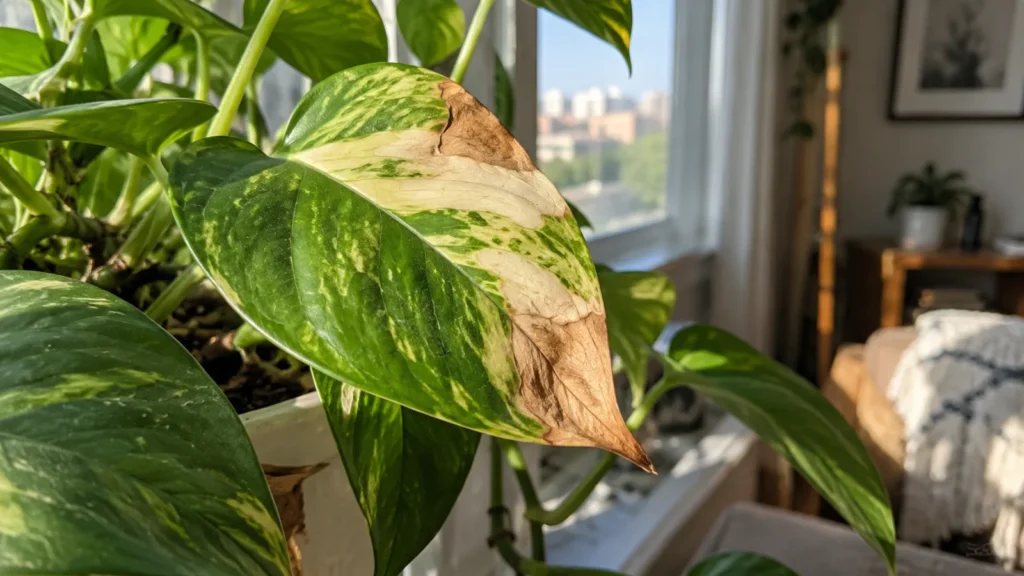
Spring sunlight can strengthen and last longer. Sudden direct sun may scorch leaves accustomed to winter light.
Stretched stems, small new leaves, and strong leaning toward a window may indicate insufficient light. Bleached patches or crisp brown areas after a location change may indicate excess exposure. Assess the plant’s history before diagnosing: similar symptoms can have other causes.
Move sensitive plants toward brighter positions gradually. Many cacti and succulents tolerate strong light after acclimation; many shade-adapted tropical plants and ferns need protection. Aim for suitable light, not maximum light. A curtain, more distance from the window, or a different position can soften intense exposure without creating deep shade.
Spring Plant Maintenance
Clean dusty leaves, remove dead material, and prune only when needed. Wipe smooth foliage gently with a damp cloth; avoid scrubbing fuzzy or wax-coated leaves.
Pruning and Propagation
Use clean, sharp tools to remove dead or damaged stems. Leggy foliage plants may branch after a suitable cut, but flowering plants can require different timing. Healthy cuttings from some species may be propagated in water or an appropriate rooting medium. For plants such as pothos, the cutting needs a viable node; a detached leaf alone may not form a complete plant.
Do not turn a routine spring inspection into unnecessary heavy pruning or propagation. Disinfect cutting tools between plants when disease is suspected, and avoid taking cuttings from visibly infested material.
Spring Humidity Needs
Indoor humidity changes with heating, air conditioning, ventilation, and weather. Ferns and succulents respond differently.
Before using a humidifier, check species needs and rule out watering, root, salt, or sun problems. Brown edges alone do not prove low humidity. If you use a humidifier, keep the unit clean and avoid leaving surrounding surfaces persistently wet.
Moving Houseplants Outdoors
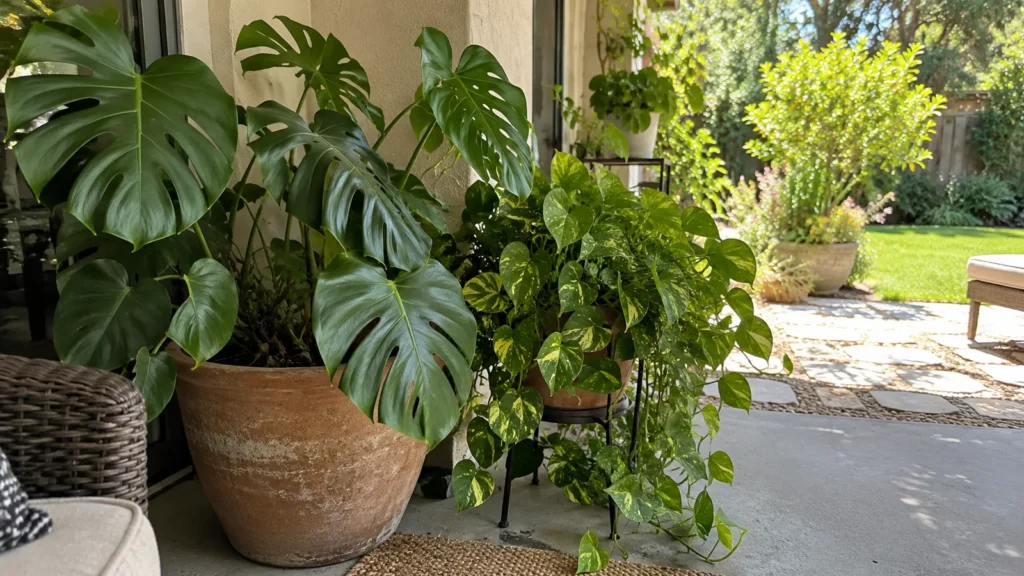
Move houseplants outdoors only at species-safe nighttime temperatures. Many tropical plants prefer nights above 50°F (10°C); sensitive species need warmer conditions.
Begin in sheltered shade, gradually increase exposure, and check moisture as wind and light increase drying. Check upcoming overnight forecasts repeatedly: one unseasonably warm day does not make a frost-sensitive plant outdoor-ready.
Hardening Off Seedlings
Indoor-grown seedlings also need a gradual transition. Begin in a sheltered shaded spot, extend outdoor time over several days, introduce mild sunlight slowly, and protect seedlings from strong wind and cold nights. Transplant only when the crop and weather are suitable.
Preventing Damping-Off
Damping-off can cause young seedlings to collapse at the soil line. Reduce risk with clean trays, fresh free-draining seed-starting mix, suitable temperature and light, and moisture that is consistent but not excessive. Remove collapsed seedlings and affected material promptly. Prevention is usually more successful than trying to rescue a seedling with a rotted stem. Avoid reusing affected seed-starting mix for a new batch.
Spring Care Mistakes to Avoid
Avoid simultaneous repotting, heavy feeding, strong sun, and outdoor relocation. Identify the main problem, change one factor, then observe.
How to Tell Whether a Change Worked
Record the starting condition: soil drying rate, damaged leaves, light exposure, and any visible pests. After a change, check for stable moisture use, healthy new leaves, or fewer living pests. Old yellow or scorched leaves may never look healthy again, so assess new growth rather than expecting existing damage to disappear.
Consistent photos reveal gradual changes. If the plant deteriorates, revisit the diagnosis rather than applying an unrelated treatment. Keep the date and details of major changes so you can distinguish delayed stress from an ongoing problem.
Outdoor Spring Plant Care
Inspect established beds before planting. Check damage, supports, irrigation, and wet areas. Avoid working saturated soil because compaction harms roots and drainage.
| Area | Spring priority |
|---|---|
| Perennials | Check emerging growth and winter damage |
| Shrubs | Identify flowering and pruning needs |
| Containers | Inspect roots, mix, and drainage |
| Climbers | Repair ties and supports |
| Beds | Check drainage and soil workability |
| Irrigation | Test hoses, emitters, and leaks |
Spring Bulb Foliage
After daffodils or tulips finish flowering, keep their healthy green leaves. They continue photosynthesis and replenish energy reserves for future growth. Remove fading flowers where appropriate, but allow foliage to yellow naturally before clearing it. Nearby perennials can disguise untidy leaves without depriving bulbs of this recovery period. Avoid tying foliage into tight bundles, which reduces its exposure to light.
When to Prune Shrubs
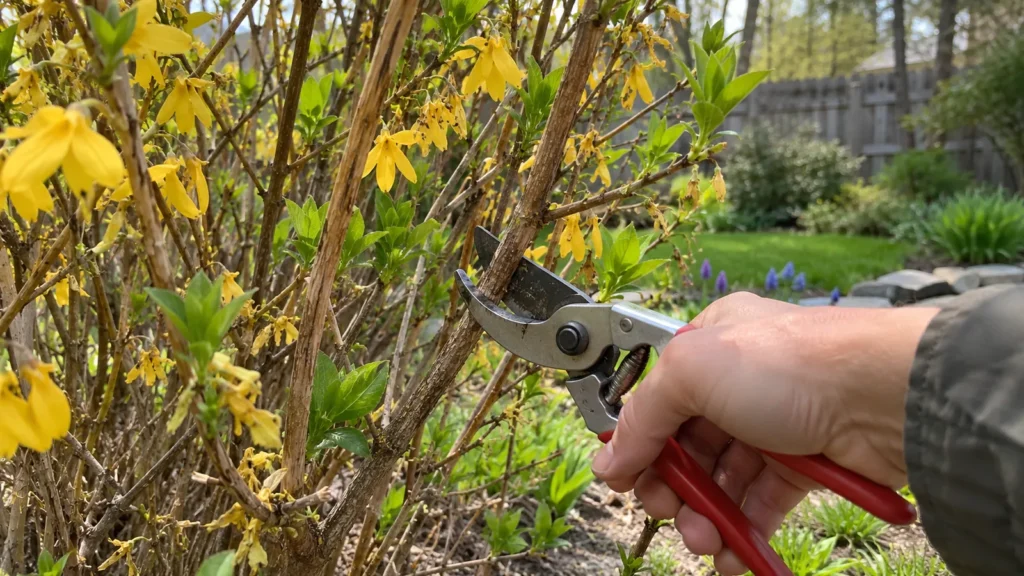
Prune according to bud formation. Lilacs and forsythias flower on old wood, so prune after blooming to preserve buds.
Shrubs that flower on new growth, including smooth hydrangea and some summer-blooming spireas, may be pruned in late winter or early spring when appropriate. Hydrangea varieties differ, so identify the exact plant before cutting.
Remove clearly dead or damaged branches when safe, but avoid severe pruning without a reason. Check local disease-related restrictions before pruning susceptible trees. Correct timing protects flowers while still allowing necessary maintenance. When identification is uncertain, postpone cosmetic pruning.
What to Plant in Spring
Choose crops by temperature tolerance. Cool-season vegetables establish in mild weather; warm-season crops need warmer, usually frost-free conditions.
| Cool-season choices | Warm-season choices |
|---|---|
| Peas, spinach, lettuce | Tomatoes, peppers, eggplant |
| Radishes, carrots, beets | Cucumbers, beans, squash |
| Kale, broccoli, cabbage | Zucchini, basil |
Early Spring Planting
Peas, spinach, radishes, carrots, and beets are commonly direct-sown when soil is workable. Lettuce, kale, and broccoli may be sown or transplanted depending on climate and available starts. Avoid forcing seeds into frozen, saturated, or sticky ground. Warm-season crops may be started indoors and moved out later after hardening off.
Parsley, cilantro, chives, and dill often suit cooler conditions; basil usually prefers warmth. Select flowers using the same cold-tolerance principle instead of assuming all annuals tolerate spring nights. Check seed packets for recommended sowing depth, temperature, and spacing, since these vary even among cool-season crops.
What to Plant in April
In cooler Northern Hemisphere climates, April may suit peas, carrots, lettuce, and spinach. Frost-free regions may plant beans, tomatoes, and squash when soil is warm.
In much of the Southern Hemisphere, April is autumn, so leafy greens, peas, broad beans, garlic, and other cool-season crops may be more appropriate. Tropical gardeners should use local rainfall and temperature patterns rather than Northern Hemisphere planting advice.
Do not use a month alone to decide whether to plant: check weather, soil, and the crop’s needs. Greenhouses and exposed beds warm at different rates.
Last Frost Date Guide
The average last frost date indicates when freezing temperatures become less likely, not when frost becomes impossible. Elevation, valleys, nearby water, and unusual weather can create local differences. Check the current forecast even after your area’s average date has passed.
A useful sequence is local frost estimate → forecast → soil conditions → crop tolerance. Hardy spinach and peas can endure conditions that may damage basil, tomatoes, or peppers. For tender seedlings and tropical houseplants, postpone outdoor exposure if cold nights are still forecast. Low-lying garden areas may experience frost even when a nearby town forecast appears safe.
Spring Soil Temperature Guide
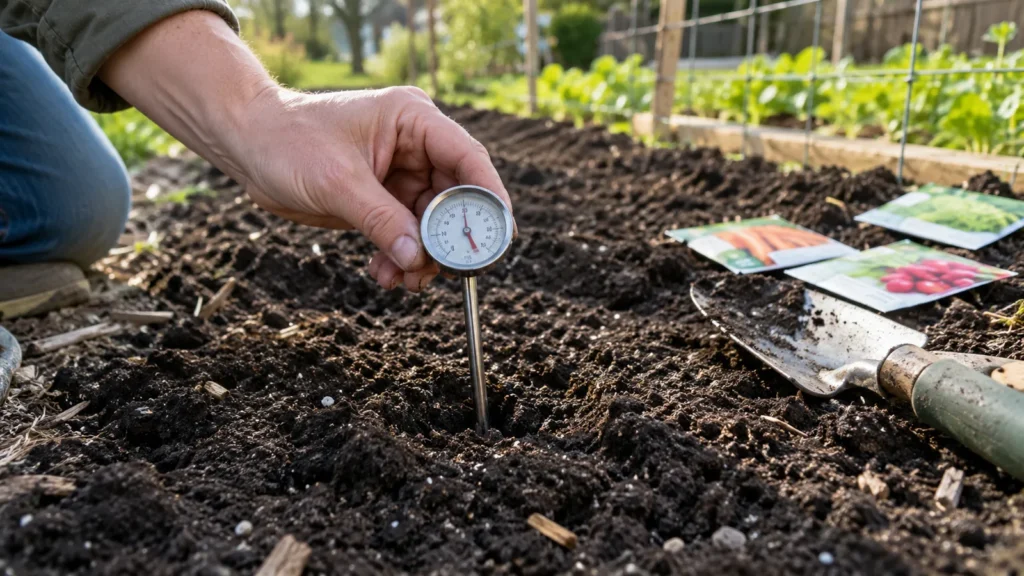
Soil temperature affects germination and root establishment. Shaded or saturated beds can remain cold despite warm air.
| Crop group | General guidance |
|---|---|
| Cool-season crops | Plant when soil is workable and appropriate for the species |
| Beans and cucumbers | Many germinate more reliably near 60°F (16°C) or warmer |
| Tomatoes | Transplant after frost danger and adequate soil warming |
| Peppers | Often prefer soil around 65°F (18°C) or warmer |
| Basil | Wait for reliably warm conditions |
These are practical guidelines, not universal thresholds. Use a soil thermometer at a depth relevant to the seed or roots, take readings over several days, and check drainage before planting. Follow crop- or variety-specific recommendations where available. Measure repeatedly at a consistent time.
Spring Care by Climate
Adapt advice to local season, growing environment, frost risk, and site conditions.
For example, outdoor perennials, balcony containers, and tropical houseplants experience different light, soil, and temperature patterns even within one city. In arid regions, wind and rapid evaporation can matter more than spring rainfall; in wetter areas, saturated ground may delay planting.
If a recommended species does not suit your region, select an alternative with similar uses and appropriate growing requirements. Local observations and forecasts should outweigh imported planting calendars. In hot regions, protecting plants from intense sun may be more urgent than encouraging faster spring growth.
Spring Balcony Plant Care
Balconies have distinct microclimates. Sunny railings dry quickly; shaded courtyards and rain-exposed pots may stay wet.
| Location | Main concern | Useful adjustment |
|---|---|---|
| Sunny ledge | Scorch and fast drying | Acclimate and check moisture |
| Windy balcony | Water loss, unstable pots | Shelter and secure containers |
| Shaded corner | Slow drying | Avoid excess watering |
| Rain-exposed patio | Waterlogging | Confirm free drainage |
Check each pot separately rather than watering every container together. Small pots and dark containers may heat or cool quickly, affecting roots. Choose plants suited to the exact exposure and protect vulnerable foliage from strong winds. Ensure balcony pots and supports are stable, especially where they could fall or spill onto people below.
Common Spring Plant Problems
When symptoms appear, investigate recent changes in sun, watering, or repotting before treating.
| Symptom | Possible cause | First check |
|---|---|---|
| Scorched patches | Sudden strong light | Exposure history |
| Yellow leaves | Moisture or root stress, aging | Soil and roots |
| Wilting after repotting | Root disturbance or moisture issue | Root zone |
| Stretched stems | Inadequate light | Placement |
| Sticky leaves | Sap-feeding pests | Stems and leaf undersides |
| Soil wet for days | Poor drainage or low water use | Pot and mix |
Yellow leaves alone do not prove overwatering, and brown tips alone do not prove low humidity. Look at the whole plant and growing environment before applying a remedy. If roots are soft and unhealthy, correcting the root environment takes priority over removing every blemished leaf.
Spring Pest Identification and Control
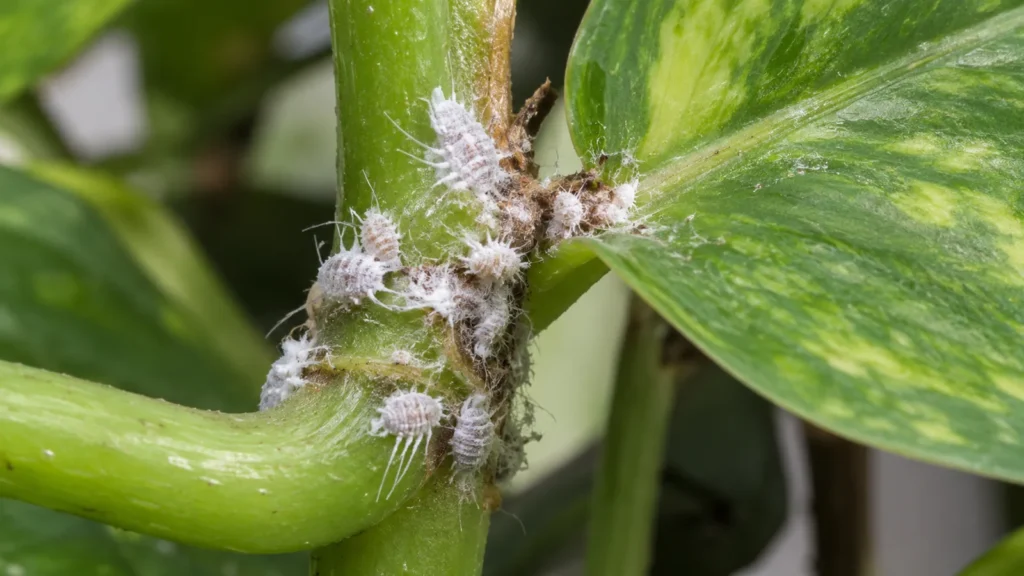
Inspect shoots, leaf undersides, stems, and soil. Identify pests before choosing treatment.
| Pest | Typical clue |
|---|---|
| Spider mites | Leaf stippling and sometimes fine webbing |
| Mealybugs | White cotton-like clusters |
| Scale insects | Attached bumps, sometimes sticky residue |
| Aphids | Groups on tender growth and distorted shoots |
| Fungus gnats | Small dark flies near moist mix |
What to Do When You Find Pests
Separate an affected houseplant where practical. Confirm the pest with careful inspection, then remove exposed pests by gentle rinsing or manual removal when suitable. Correct contributing conditions, such as persistently wet mix associated with fungus gnats. If a product is necessary, follow its label for the specific pest, plant, and indoor or outdoor location.
Reinspect for living pests rather than judging success by old leaf damage. Avoid automatic preventive spraying: unnecessary treatments can injure sensitive plants without solving the actual problem. Test compatibility with the plant and follow label instructions on repeat applications, ventilation, and protecting pollinators outdoors.
Spring Plant Care Checklist
Use only checklist tasks your plants need:
- Inspect leaves, stems, roots, and new growth.
- Check root-zone moisture before watering.
- Confirm drainage and container condition.
- Identify any pests before treatment.
- Review changing sunlight and temperature.
- Clean appropriate foliage and remove dead material.
- Feed healthy plants only when growth and conditions justify it.
- Repot only when roots or medium require attention.
- Acclimate indoor plants and seedlings before moving outside.
- Check frost risk and soil temperature before planting.
- Inspect beds, supports, and irrigation.
- Change major care factors gradually and monitor the response.
Buy tools or supplies only for an identified need.
Effective spring plant care follows four principles: plant condition beats calendar dates, diagnosis beats automatic treatment, gradual changes beat sudden changes, and local conditions beat universal advice.
Spring Plant Care FAQs
What is the first thing to do for plants in spring?
Inspect leaves, soil, roots, and new growth. Check for pests before changing watering, light, or fertilizer.
Should I water houseplants more in spring?
Possibly. Water use may increase with growth. Check soil moisture instead of relying on a fixed schedule.
When should I fertilize houseplants in spring?
Feed healthy plants when active growth begins. Avoid fertilizing plants with damaged roots or saturated soil.
Should all houseplants be repotted in spring?
No. Repot only when roots are crowded, the mix has deteriorated, or drainage needs correction.
Why are my houseplant leaves turning yellow in spring?
Possible causes include watering problems, root damage, light changes, and natural aging. Inspect before treating.
Can spring sunlight burn indoor plant leaves?
Yes. Sudden intense sun can scorch sensitive foliage. Increase light exposure gradually.
When can I move houseplants outside in spring?
When nighttime temperatures suit the species. Begin in sheltered shade and acclimate gradually.
What pests should I check for during spring plant care?
Look for mites, mealybugs, scale, aphids, and fungus gnats. Inspect stems, leaf undersides, and soil.
What should I plant during spring?
Choose cool-season crops early and warm-season crops once temperatures and frost risk are suitable.
What vegetables can I plant in early spring?
Peas, spinach, radishes, carrots, and lettuce are common choices when soil is workable.
What can I plant in April?
It depends on local climate. Cool areas favor hardy crops; frost-free regions may plant summer crops.
Why does the last frost date matter for spring planting?
It estimates when freezing weather becomes less likely. Check current forecasts before planting tender crops.
How warm should soil be before spring planting?
Many warm-season crops prefer around 60°F (16°C) or warmer; requirements vary by crop.
Should I prune spring-flowering shrubs before they bloom?
Usually not. Many bloom on old wood and should be pruned after flowering.
How do I adapt spring plant care to my climate?
Use local temperatures, rainfall, frost risk, and growing conditions instead of another region’s calendar.

Myra is the founder and lead writer of Plantsaholic. She shares practical, research-backed advice on indoor plants, outdoor gardening, flowers, herbs, succulents, and everyday plant care. Her goal is to help gardeners of all experience levels grow healthier plants through simple, easy-to-follow gardening guides.