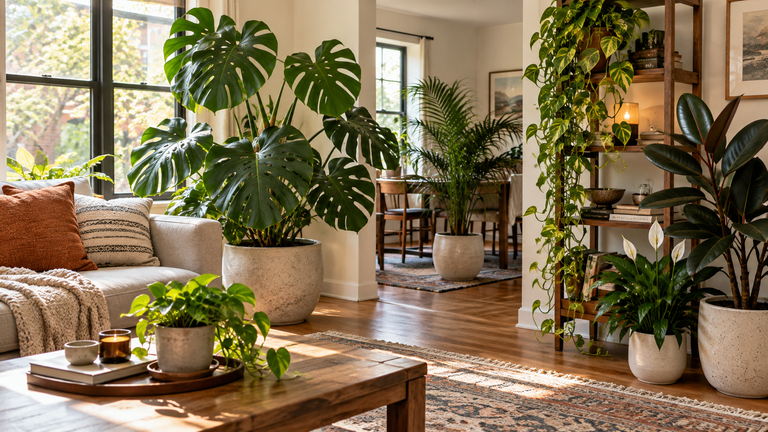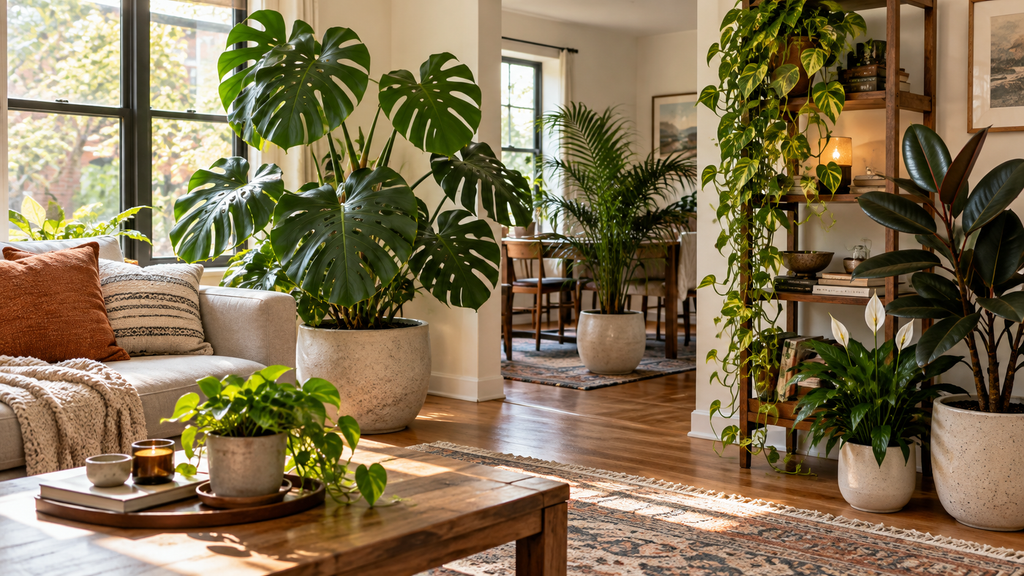
Tropical indoor plants bring lush leaves and occasional flowers into homes. Adaptable choices include pothos, ZZ plant, Monstera, Chinese evergreen, and parlor palm. Choose according to light, watering habits, humidity, space, and pet safety.
| Your priority | Start with |
|---|---|
| Easy first plant | Golden pothos |
| Infrequent watering | ZZ plant |
| Lower-light room | Chinese evergreen |
| Large foliage | Monstera |
| Tall, sunny space | Bird of Paradise |
| Indoor flowers | Anthurium or peace lily |
| A palm-like look | Parlor palm |
Compare 15 species and their different care needs.
What Are Tropical Indoor Plants?
Tropical indoor plants originate from warm regions and can adapt to containers. Some grow beneath forest canopies; others inhabit seasonally dry areas. A moisture-storing ZZ plant therefore needs different care from a humidity-sensitive prayer plant.
They include climbing Monstera, trailing pothos, upright rubber plants, palms, and flowering Anthuriums. Identify the species before choosing its light, soil, and humidity routine.
How to Choose Tropical Indoor Plants
Start with the intended location. A plant suited to your conditions is a better purchase than a fashionable but unsuitable specimen.
Check Your Light
Check the intended spot throughout the day. Curtains, trees, buildings, and window distance reduce light. ZZ plant, green Chinese evergreen, and parlor palm tolerate dimmer places; Monstera and rubber plant prefer bright indirect light. Bird of Paradise needs stronger light.
Measure Light Where Leaves Grow
Measure at leaf height if possible. University of Minnesota Extension broadly categorizes 50–250 foot-candles as low, 250–1,000 as medium, and above 1,000 as high light. These are not species-specific thresholds. Check at different times. Leggy stems, small leaves, or fading variegation suggest inadequate light. Windowless rooms need grow lights.
Match Your Watering Habits
ZZ and snake plants tolerate missed watering. Peace lilies and many Calathea-type plants prefer more consistent moisture. Never water automatically without checking the pot.
Consider Humidity, Space, and Safety
Dry rooms stress sensitive foliage. Allow for mature height and spread, and check whether pets or children could chew irritating or toxic leaves.
15 Best Tropical Indoor Plants
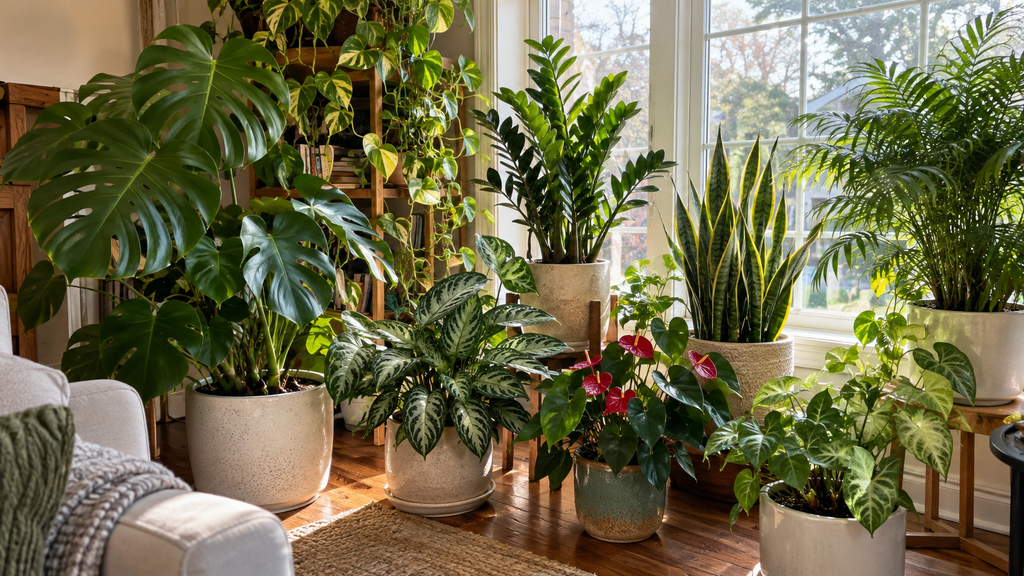
Compare light, watering, and growing habits below. Low-light tolerance does not mean darkness is suitable.
| Plant | Preferred light | Moisture approach | Best use |
|---|---|---|---|
| Golden pothos | Medium–bright indirect | Partial dry-down | Trailing shelves |
| ZZ plant | Low–bright indirect | Substantial dry-down | Low maintenance |
| Monstera | Bright indirect | Partial dry-down | Large foliage |
| Heartleaf philodendron | Medium–bright indirect | Partial dry-down | Vines or supports |
| Rubber plant | Bright indirect | Partial dry-down | Upright display |
| Chinese evergreen | Low–bright indirect | Moderate dry-down | Patterned foliage |
| Peace lily | Medium–bright indirect | Lightly moist | Flowers and leaves |
| Snake plant | Low–bright indirect | Substantial dry-down | Narrow spaces |
| Parlor palm | Low–bright indirect | Moderate dry-down | Compact palm |
| Areca palm | Medium–bright indirect | Moderately moist | Spacious rooms |
| Bird of Paradise | Very bright | Moderate dry-down | Sunny focal point |
| Calathea-type plants | Filtered indirect | Even moisture | Leaf patterns |
| Syngonium | Medium–bright indirect | Partial dry-down | Compact climbing |
| Anthurium | Bright indirect | Light dry-down | Colorful spathes |
| Dieffenbachia | Medium–bright indirect | Partial dry-down | Bold upright leaves |
1. Golden Pothos
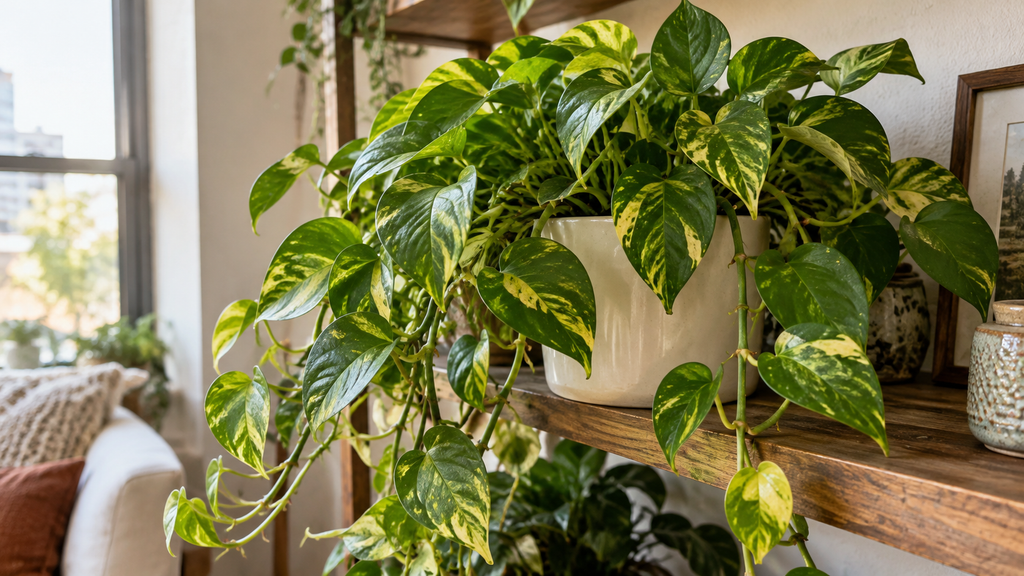
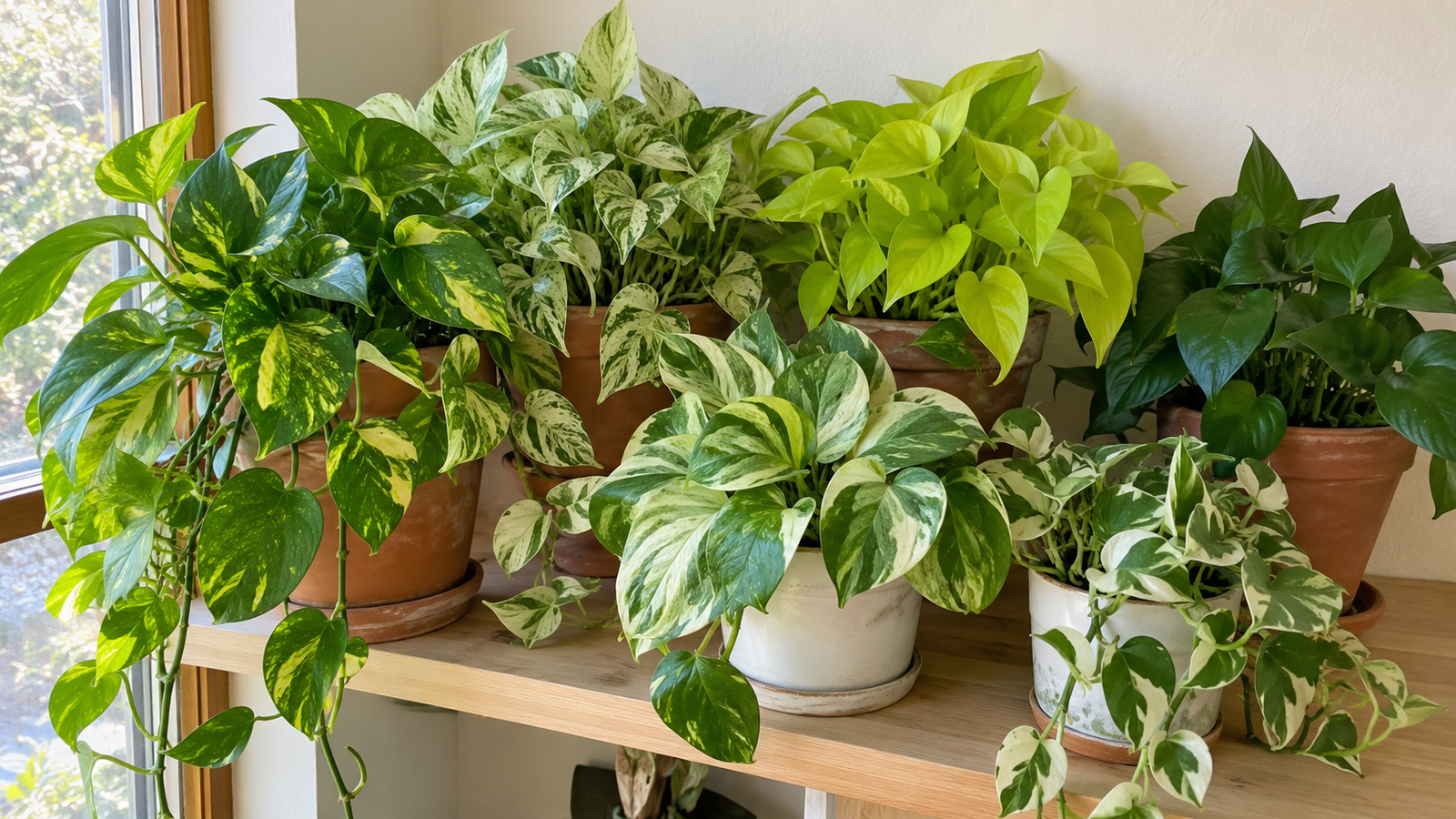
Epipremnum aureum has heart-shaped green leaves, often splashed with yellow. Trail it from shelves or train it to climb. Give medium to bright indirect light and let the upper mix dry. Dim light reduces variegation. Best for: beginners who want visible growth without demanding care.
2. ZZ Plant
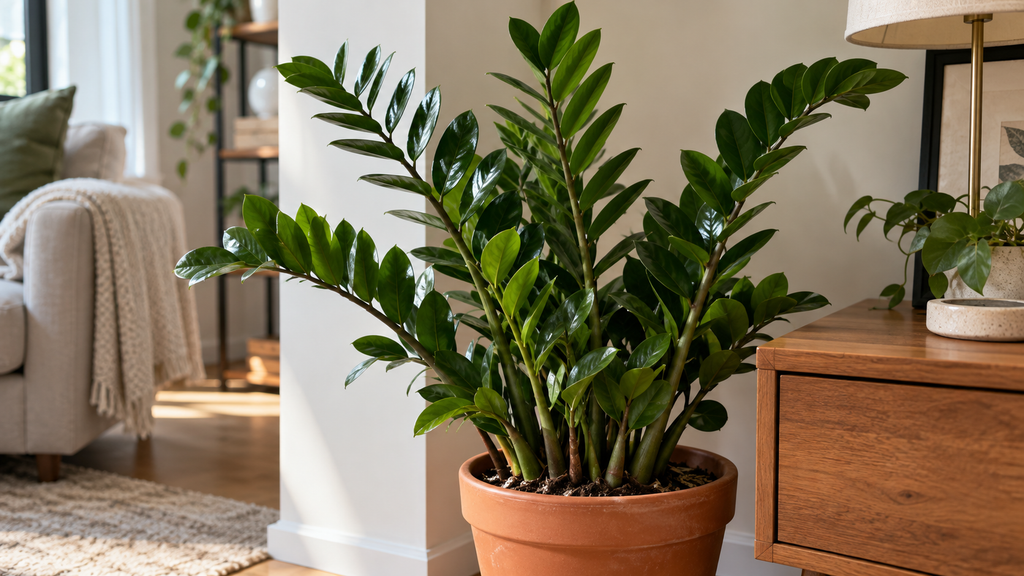
Zamioculcas zamiifolia has glossy leaflets and thick underground rhizomes that store water. It tolerates missed watering and lower light, but soggy soil can rot roots. Allow substantial drying. Best for: frequent travelers and people who prefer minimal maintenance.
3. Monstera deliciosa
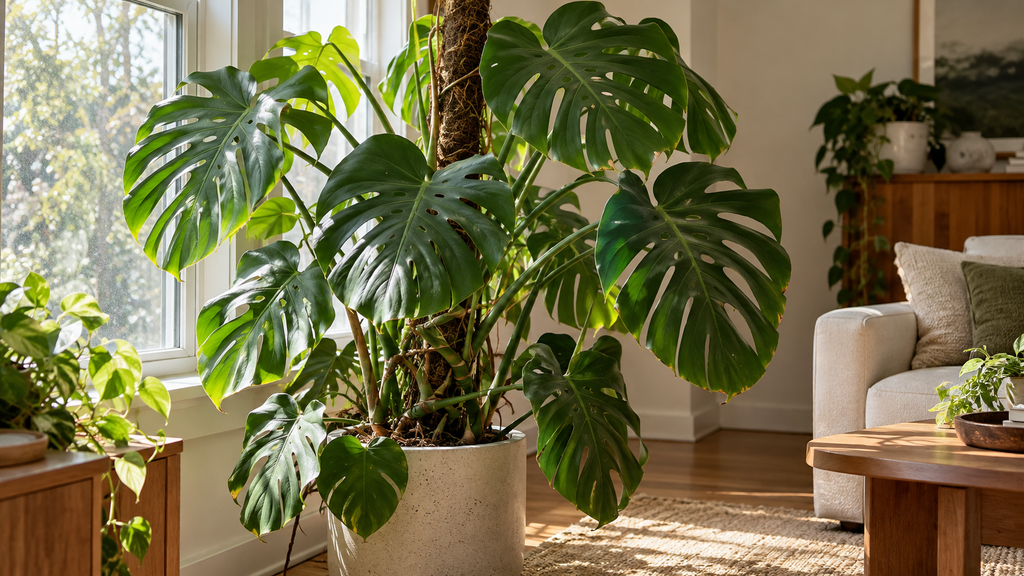
Monstera deliciosa develops large leaves with splits and holes as it matures in suitable conditions. Provide bright indirect light, airy soil, and climbing support. Mature specimens need considerable space. Best for: spacious living rooms.
4. Heartleaf Philodendron
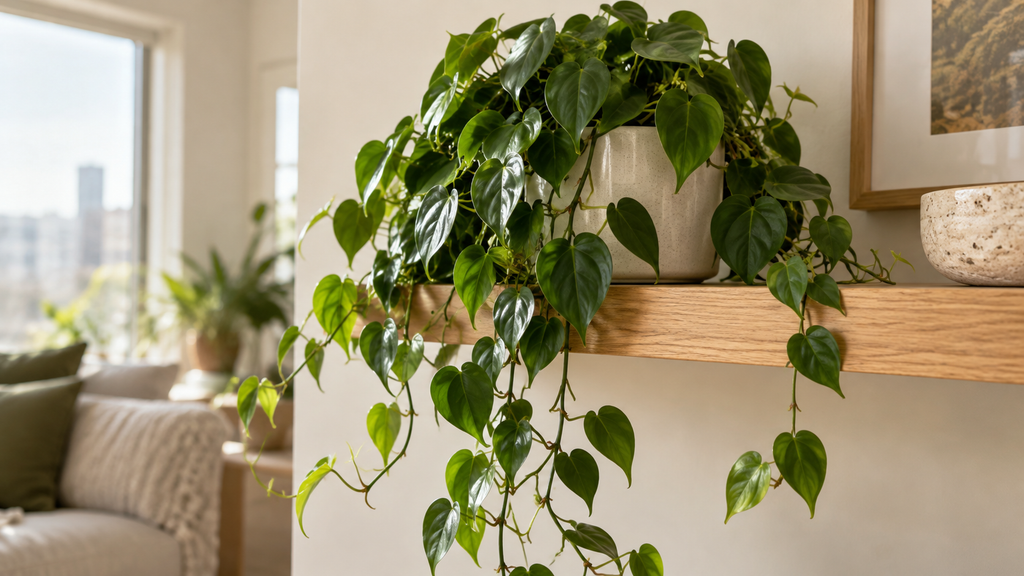
Philodendron hederaceum forms slender trailing or climbing vines with heart-shaped foliage. Trail it from shelves or offer support. Give indirect light, allow partial drying, and protect it from chewing pets. Best for: flexible displays in smaller rooms.
5. Rubber Plant
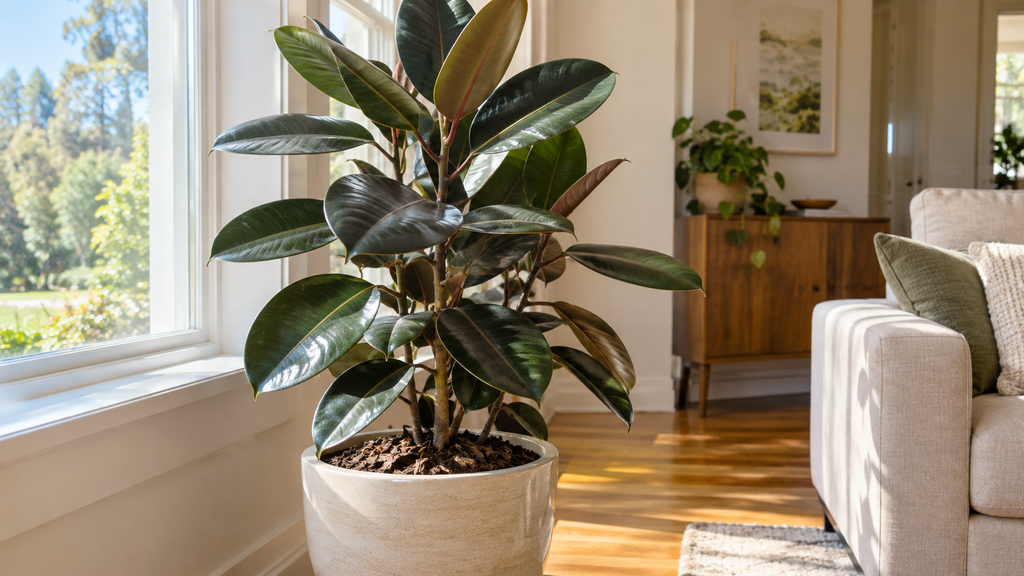
Ficus elastica carries thick, shiny leaves on a sturdy upright stem. Provide bright indirect light and let the upper mix dry. Avoid sudden exposure to strong sun. Best for: a tree-like statement without Monstera’s sprawling habit.
6. Chinese Evergreen
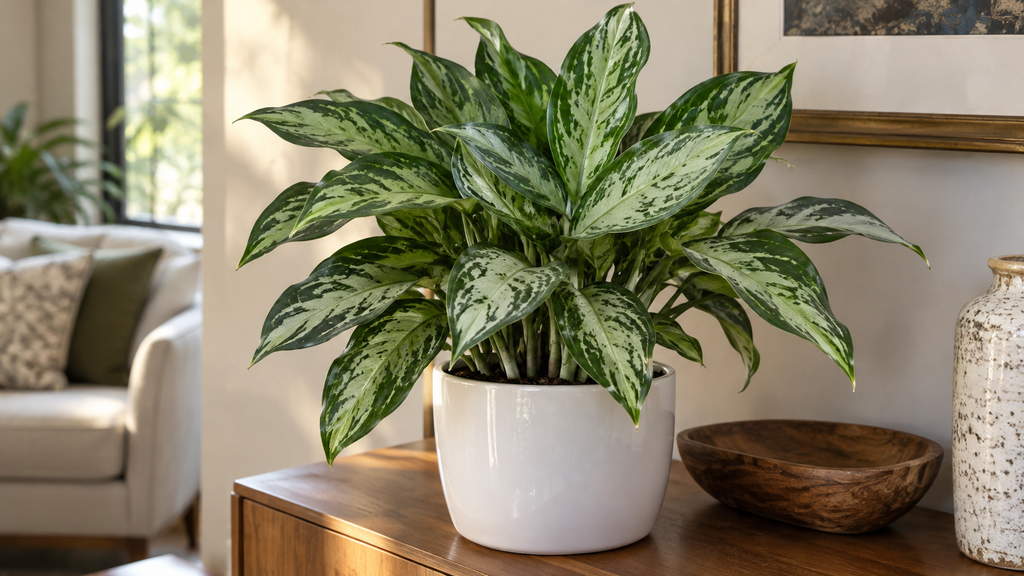
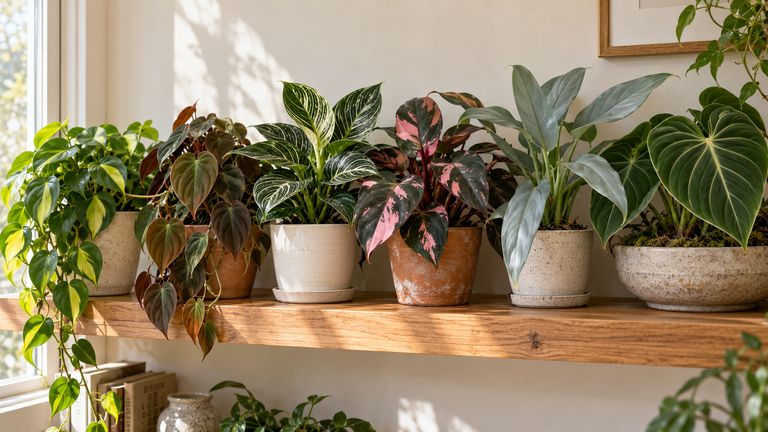
Aglaonema species and cultivars offer green, silver, cream, pink, or red-patterned foliage. Green forms tolerate less light than colorful cultivars. Allow moderate drying and avoid cold drafts. Best for: decorative foliage in rooms without intense sunlight.
7. Peace Lily
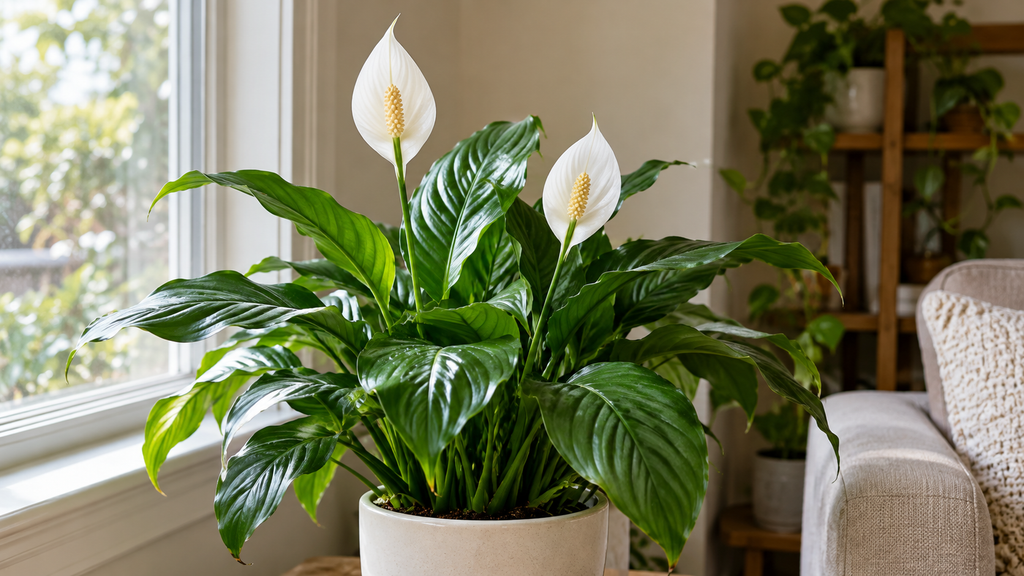
Spathiphyllum species combine glossy leaves with white spathes surrounding a spadix of tiny flowers. Keep lightly moist and provide adequate indirect light for blooms. Wilting can also indicate damaged roots. Best for: growers willing to check moisture regularly.
8. Snake Plant
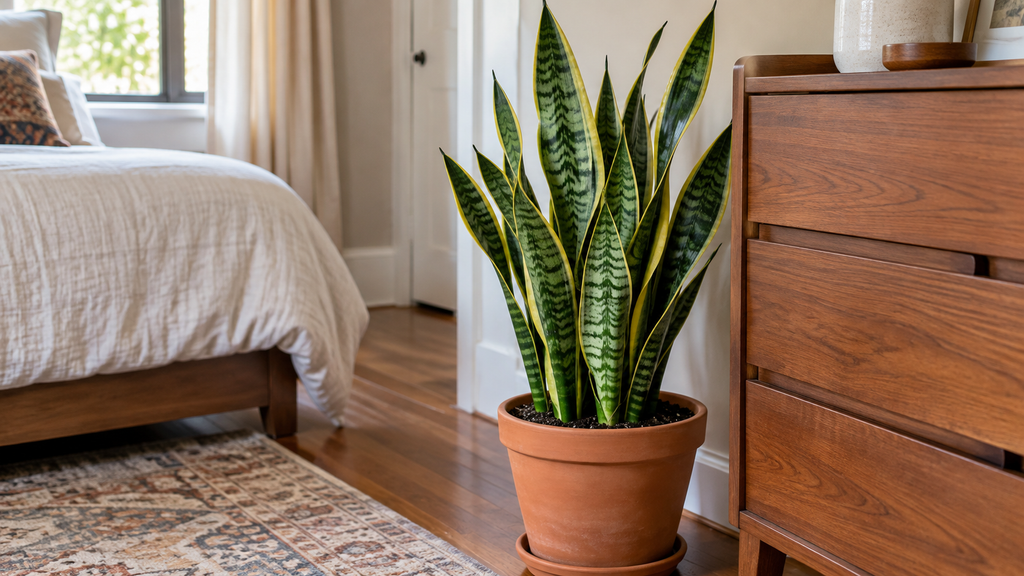
Dracaena trifasciata produces upright, sword-like leaves that fit narrow spaces. It tolerates drying and lower light but grows better with good indirect light. Avoid wet soil. Best for: compact spaces and infrequent watering.
9. Parlor Palm
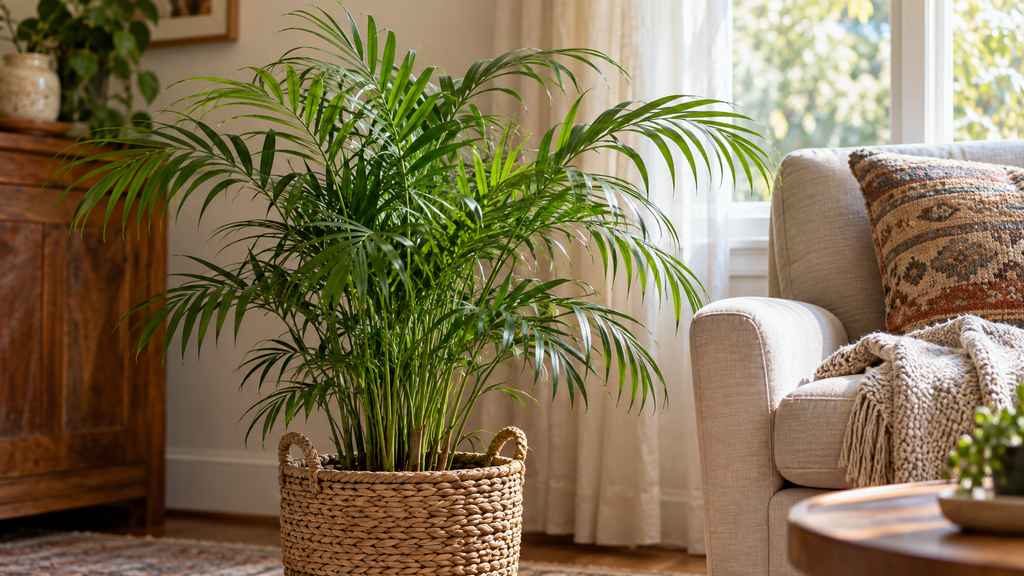
Chamaedorea elegans has delicate arching fronds and remains more manageable indoors than many large palms. It tolerates lower indirect light and moderate watering. Dry air may brown tips. The ASPCA lists it as non-toxic to cats and dogs. Best for: gentle palm texture.
10. Areca Palm
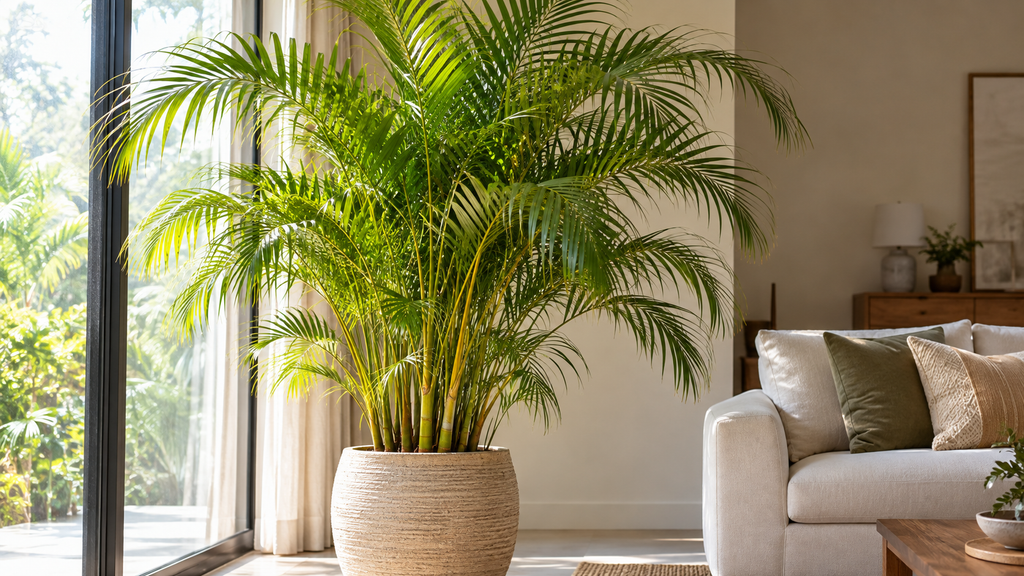
Chrysalidocarpus lutescens, also sold as Dypsis lutescens, creates a full display of arching feathery fronds. Provide bright indirect light, room to spread, and steady moisture; dryness can brown tips. Best for: bright rooms where a larger palm can spread.
11. Bird of Paradise
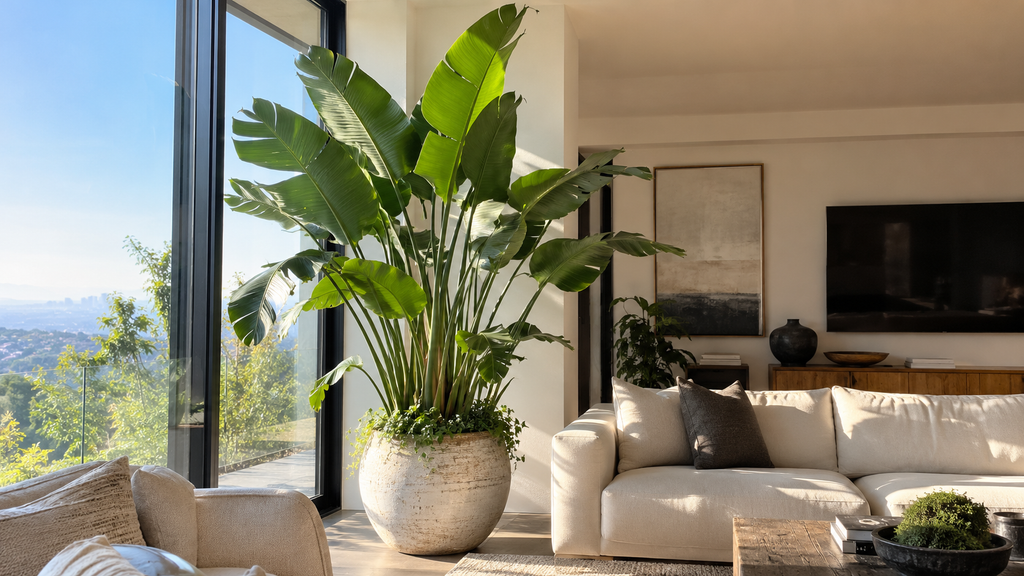
Strelitzia species develop dramatic paddle-shaped leaves and can become large indoor specimens. Give very bright light, space, and watering suited to active growth. Indoor flowering is unreliable. Best for: a sunny room with height to spare.
12. Calathea-Type Plants
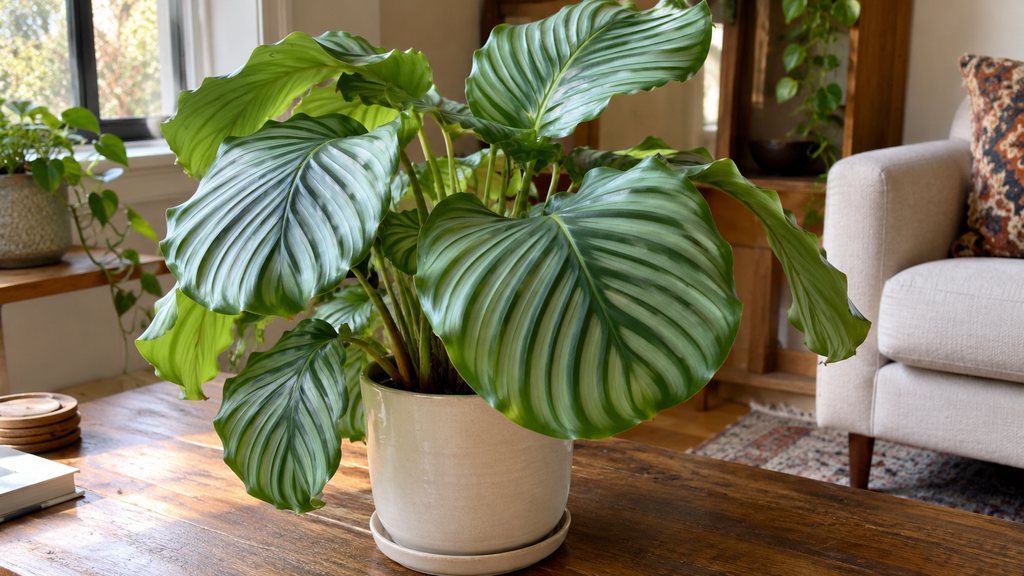
Many plants still sold as Calathea belong botanically to Goeppertia or related genera. Their patterns need attentive care: provide filtered light, even moisture, and humidity to limit crispy edges. Best for: growers comfortable managing humidity.
13. Syngonium
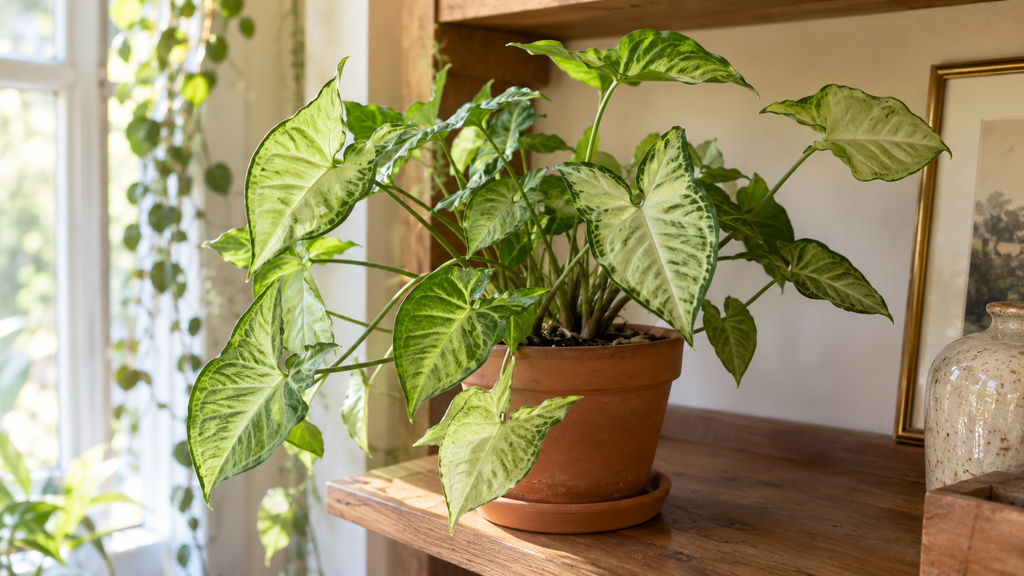
Syngonium podophyllum begins with arrow-shaped leaves and can develop longer climbing or trailing stems. Provide indirect light and partial drying. Mature vines may need training or pruning. Best for: compact shelves or supports.
14. Anthurium
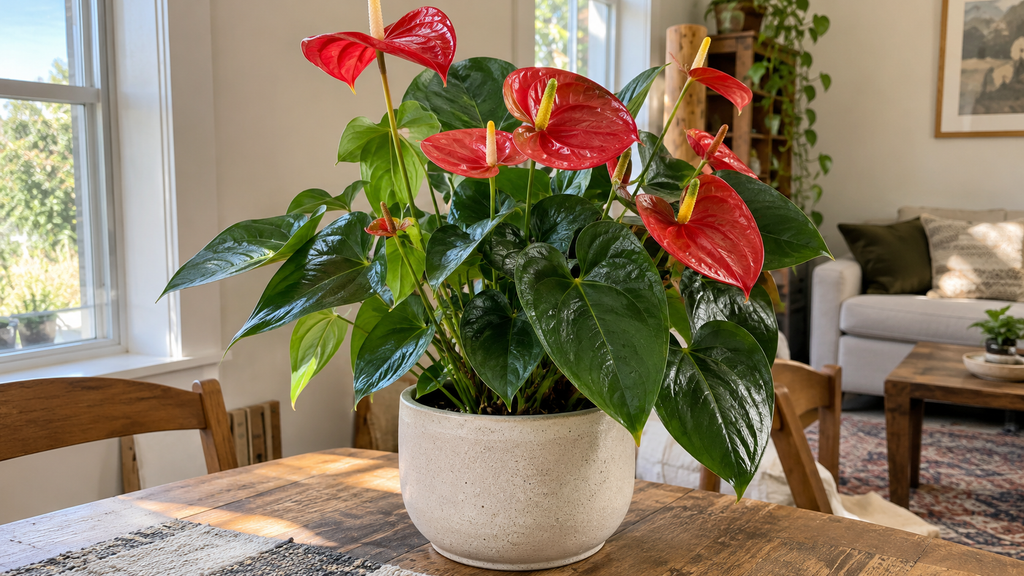
Common flowering Anthurium hybrids produce colorful spathes, often red, pink, or white, surrounding the actual tiny flowers on a spadix. Give bright indirect light and airy soil; humidity needs vary by species. Best for: color where a flowering tropical plant is desired.
15. Dieffenbachia
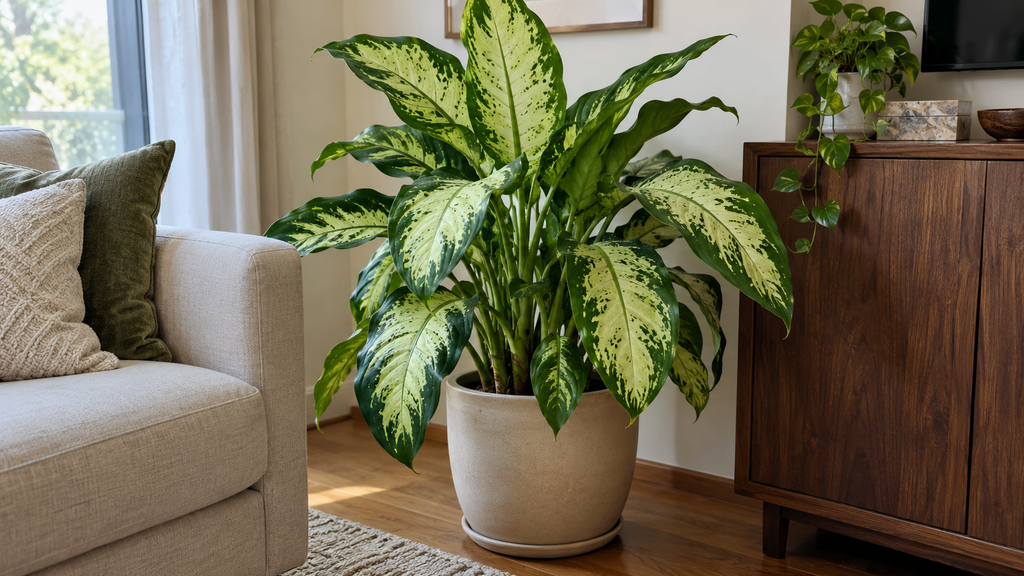
Dieffenbachia species have broad cream-and-green patterned leaves and an upright habit. They prefer indirect light and partial drying. Irritating sap and foliage require care around pets and children. Best for: bold foliage without climbing support.
Which Tropical Plants Flower Indoors?
Anthurium and peace lily are more reliable indoor flowering choices than Bird of Paradise. Anthurium hybrids produce colorful spathes in bright indirect light; peace lilies may stop flowering in dim conditions.
Strelitzia reginae may eventually flower with maturity and strong light, but this can take years. Large Strelitzia nicolai specimens are usually grown indoors for foliage rather than blooms. Buy either Bird of Paradise for its leaf display, not a promise of flowers.
Best Low-Light Tropical Indoor Plants
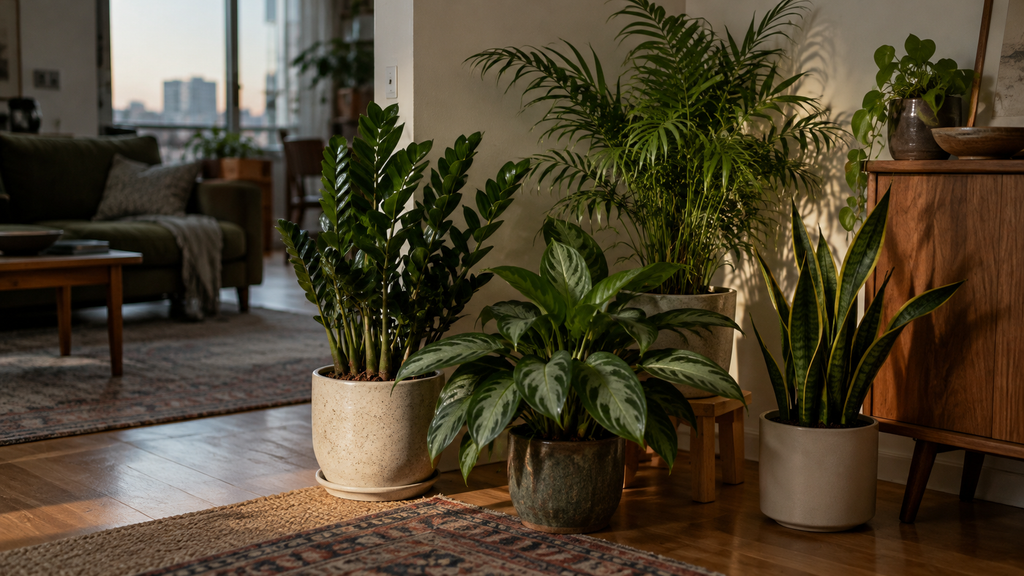
ZZ plant, green Chinese evergreen, parlor palm, pothos, and snake plant tolerate dimmer rooms, but low light is not darkness. Stretched stems or smaller leaves may signal a need for more light.
Keep Bird of Paradise near strong light; survival without growth may indicate a poor location.
Do Tropical Plants Need Direct Sun?
Pothos, Monstera, philodendrons, and Anthurium generally prefer filtered light. Bird of Paradise needs more brightness and tolerates appropriately acclimated direct sun.
Acclimate shade-grown plants gradually to avoid scorch. Judge light at the plant, not by window direction alone.
How to Care for Tropical Indoor Plants
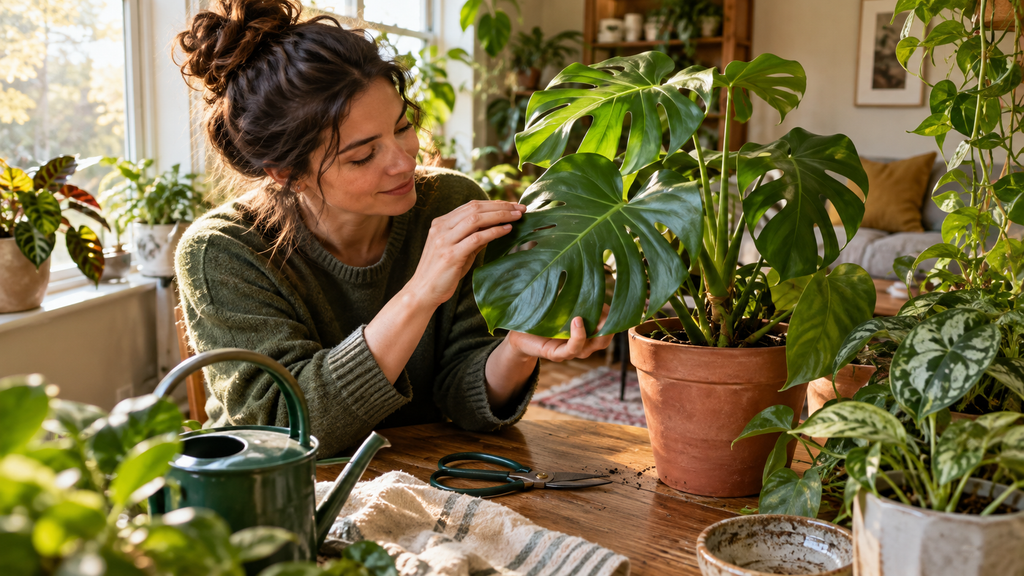
Good care starts with stable light, drainage, and temperatures; light also influences water use. Many common tropical houseplants do well around 65–80°F (18–27°C), but exact tolerances vary.
Inspect foliage weekly for insects and yellowing. Feed modestly during active growth; fertilizer cannot fix poor light or damaged roots. In heated, dry rooms, humidity-sensitive species may need additional moisture in the air. In cool or dim rooms, soil often dries more slowly, so reduce watering accordingly.
How to Water Tropical Indoor Plants
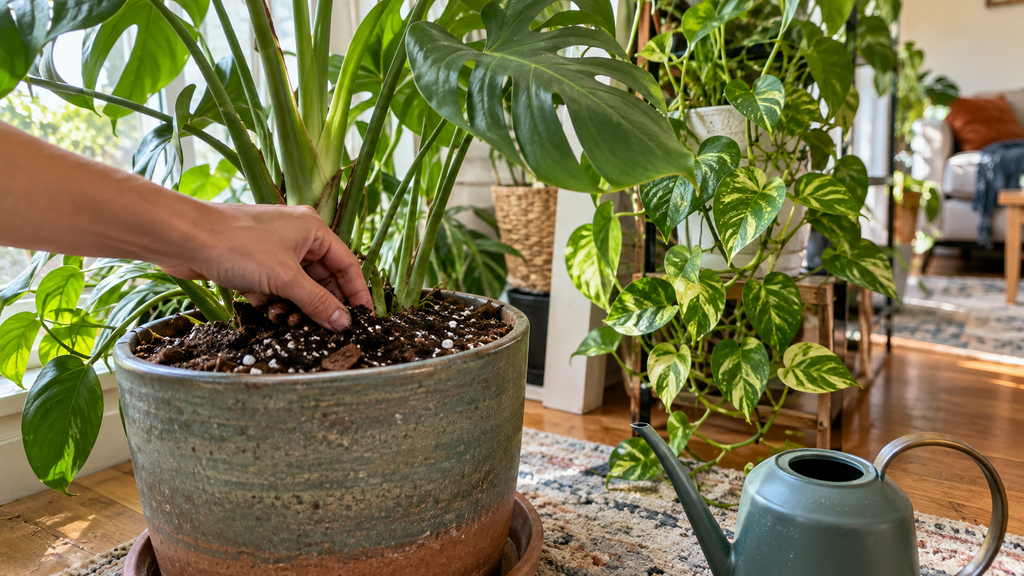
There is no universal weekly watering rule. Check species, soil, container, temperature, and light.
| Plant group | Example | When to water |
|---|---|---|
| Dry-tolerant | ZZ, snake plant | After most mix dries |
| Moderate dry-down | Pothos, Monstera, rubber plant | After upper mix dries |
| Evenly moist | Peace lily, many Calathea-types | As top layer starts drying |
| Palm foliage | Areca, parlor palm | As upper mix begins drying |
Check Moisture Below the Surface
Insert a finger or wooden skewer into the medium, or learn the weight of the pot when wet versus dry. Larger containers may remain moist underneath a dry surface. When watering is needed, moisten the root ball and let excess water drain; empty saucers afterward.
If Leaves Droop but Soil Is Wet
Do not immediately add water. Waterlogged roots may lack oxygen and struggle to function. Examine drainage and, if necessary, root condition. Mushy or foul-smelling roots suggest damage. Change the underlying cause rather than masking symptoms with fertilizer.
Humidity Needs of Tropical Plants
Humidity requirements differ. ZZ plant, pothos, snake plant, and rubber plant usually tolerate average home conditions. Monstera and peace lily may appreciate moderate humidity. Many Calathea-type plants and some Anthuriums are more sensitive to prolonged dry air.
A household range near 40–60% relative humidity can be a practical starting point, not a universal target. Use a hygrometer to see what the plant actually experiences. Misting leaves does not maintain stable room humidity; a clean, appropriately managed humidifier is more effective when genuinely needed. Brown tips can also come from salts, inconsistent watering, or root stress, so investigate before assuming humidity is the only cause.
Best Soil for Tropical Indoor Plants
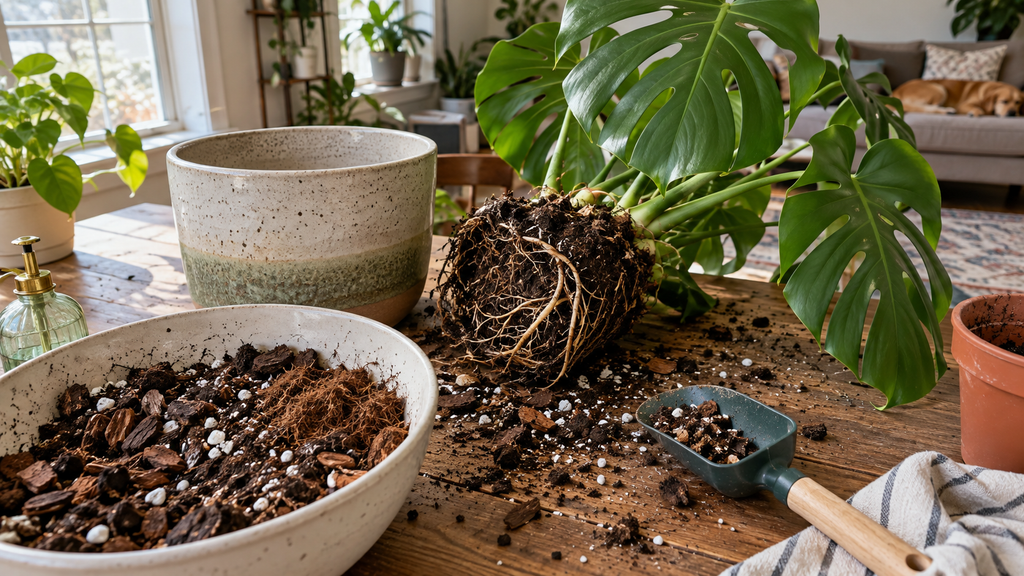
A good container medium must balance water retention, drainage, and oxygen around the roots. Dense garden soil often compacts in pots; gravel at the bottom does not replace drainage holes.
| Plant group | Useful mix characteristics |
|---|---|
| Monstera and climbing aroids | Airy mix with bark and perlite or pumice |
| Peace lily and Calathea-types | Moisture-retentive but freely draining |
| ZZ and snake plant | Fast-draining with mineral material |
| Rubber plant and Bird of Paradise | Structured, well-drained houseplant mix |
When to Repot
Repot when roots densely fill the container, the plant becomes unstable, or the mix breaks down. For many smaller houseplants, a pot 1–2 inches (2.5–5 cm) wider is a reasonable starting point, provided it suits the actual root ball. Avoid moving a small plant into a huge wet pot. Inspect roots, maintain the previous planting depth, and use fresh suitable medium. Repot during active growth when possible, unless root damage requires urgent action.
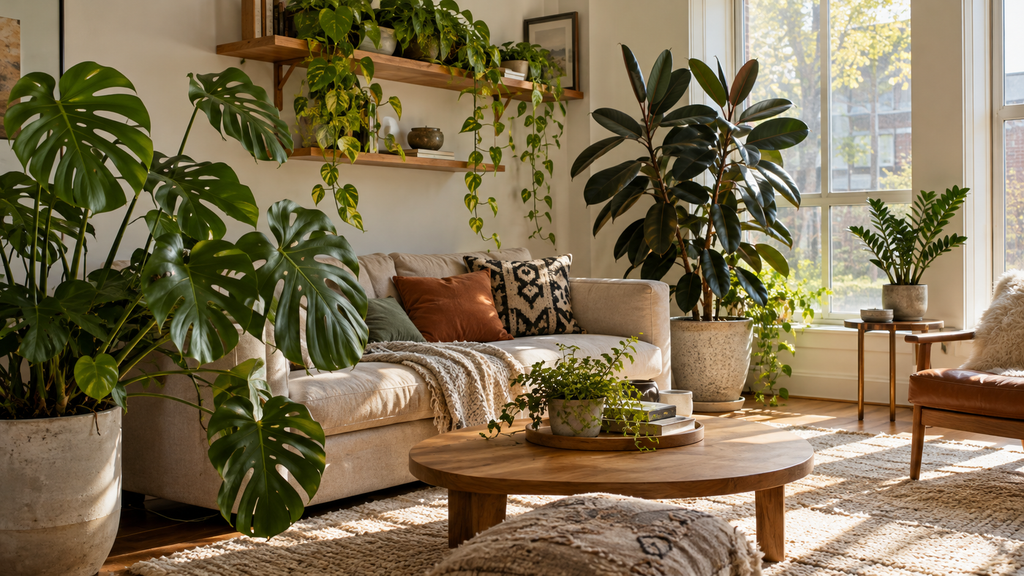
Tropical Plants for Different Rooms
Match the plant to light and mature footprint, not simply room labels. A bathroom without a window still needs a grow light; occasional shower steam cannot make up for darkness.
| Location | Good options | Check first |
|---|---|---|
| Small bedroom | Snake plant, Chinese evergreen | Available daylight |
| Bright living room | Monstera, rubber plant | Future width |
| Sunny spacious room | Bird of Paradise | Light and ceiling height |
| Shelf | Pothos, heartleaf philodendron | Trailing room |
| Lit bathroom | Peace lily, some Calathea-types | Light and airflow |
| Compact office | ZZ plant, Syngonium | Moisture and desk space |
Buying Healthy Tropical Indoor Plants
Inspect a plant before paying. Confirm the botanical name, likely mature size, and whether the intended location provides sufficient light. Check leaf undersides and stems for webbing, cottony clusters, scale insects, or sticky residue. Avoid obviously collapsing plants or containers with persistently waterlogged soil.
Which Plants Are Safer for Pets?
The ASPCA lists parlor palm, areca palm, watermelon peperomia, and rattlesnake plant as non-toxic to cats and dogs. Even non-toxic leaves can upset a pet’s stomach if eaten. Popular choices such as pothos, philodendron, Monstera, peace lily, Dieffenbachia, and ZZ plant are unsuitable for pets that may chew them. Never confuse true palms with sago palm, a highly toxic cycad. Verify the exact species in the ASPCA plant database and contact a veterinarian promptly after suspected toxic ingestion.
How to Acclimate Tropical Plants
Treat the first two weeks after purchase as an observation period. On arrival, inspect leaves, stems, and soil; isolate the plant initially if pests are a concern. Place it in stable, species-appropriate light away from heating and air-conditioning drafts.
During the first week, check moisture before watering and monitor for yellowing, leaf drop, pests, or scorch. In the second week, make gradual adjustments only when evidence suggests they are needed. Avoid automatically fertilizing or repotting a healthy new plant. Sudden changes in light and root conditions can add stress rather than solve it.
Common Tropical Indoor Plant Problems
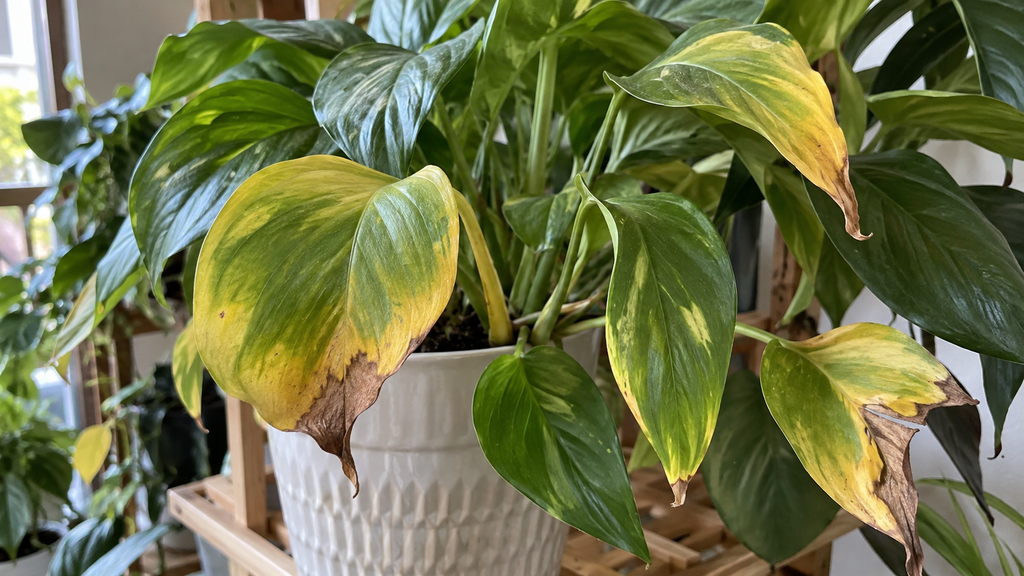
Treat a damaged leaf as a clue, not a diagnosis. Check light, root-zone moisture, temperature, and pests before making several changes at once.
| Symptom | Possible causes | Check first |
|---|---|---|
| Yellow leaves | Excess water, low light, aging | Moisture and drainage |
| Brown tips | Dry air, salts, irregular watering | Humidity and soil |
| Weak stretched stems | Insufficient light | Window exposure |
| Pale scorched areas | Sudden strong sun | Recent placement change |
| Wet soil with drooping | Root stress | Roots and pot drainage |
| Sticky leaves | Sap-feeding insects | Leaf undersides |
| Fine webbing | Spider mites | Foliage and growing points |
Conditions often interact: low light plus wet soil can keep roots saturated, while dry air plus irregular watering may worsen leaf-edge damage. Correct the clearest environmental mismatch first and observe new growth; old damaged tissue usually does not recover.
How to Treat Tropical Plant Pests
Common pests include spider mites, mealybugs, scale, thrips, and fungus gnats. Fine webbing and stippling suggest mites; white cottony clusters suggest mealybugs; small flies near persistently moist soil may be fungus gnats.
Isolate the affected plant and identify the pest before treatment. Gently wash or physically remove insects where practical. For persistent infestations, select an appropriately labeled insecticidal soap, horticultural oil, or other treatment suitable for the plant and pest. Follow product instructions and inspect repeatedly. Do not assume homemade dish-soap or vinegar sprays are safe for delicate leaves.
Can Tropical Plants Cool a Room?
Plants release water vapor through transpiration, but a few pots will not noticeably cool a room. A Monstera or palm cannot replace shade, ventilation, fans, or air conditioning.
Do Tropical Plants Purify Indoor Air?
Houseplants can absorb certain airborne compounds under controlled laboratory conditions, but that does not mean a few pots meaningfully clean the air in a ventilated home. A review by Cummings and Waring found passive pollutant removal from potted plants too limited to compete with typical building air exchange. For air quality, prioritize source control, ventilation, and suitable filtration. The real benefits of tropical plants are ornamental variety and the experience of growing them.
How We Selected These Plants
These 15 plants represent different light tolerances, moisture needs, growth habits, mature sizes, and levels of care. Recommendations draw on established botanical and horticultural guidance rather than claimed firsthand trials or a laboratory ranking. Botanical names, including the areca palm’s current accepted name, matter because similar common names may refer to different plants. Always confirm species-specific instructions and veterinary toxicity information before purchasing.
FAQs About Tropical Indoor Plants
What Are the 5 Best Tropical Indoor Plants for Beginners?
Golden pothos, ZZ plant, heartleaf philodendron, Chinese evergreen, and snake plant are dependable starting choices. Match each one to your light and watering habits.
What Is the Easiest Tropical Indoor Plant to Keep Alive?
ZZ plant is especially forgiving of missed watering because its rhizomes store moisture. Avoid keeping its potting mix permanently wet.
Which Tropical Indoor Plants Grow the Fastest?
Pothos, heartleaf philodendron, and Syngonium can grow quickly with warmth and adequate light. Growth slows in dim conditions.
Which Tropical Indoor Plants Can Survive in Low Light?
ZZ plant, green Chinese evergreen, parlor palm, pothos, and snake plant tolerate weaker light. None can live indefinitely in darkness.
Can Tropical Indoor Plants Survive in a Windowless Room?
Yes, with adequate artificial grow lighting. Ordinary room lights may not provide enough usable energy for sustained growth.
Do Tropical Indoor Plants Need Direct Sunlight?
Most foliage species prefer bright indirect light. Bird of Paradise requires stronger light; acclimate shaded plants gradually to direct sun.
Which Tropical Indoor Plants Are Best for Bathrooms?
Peace lily, pothos, and some Calathea-type plants suit bathrooms with sufficient light. Humidity cannot substitute for daylight or drainage.
What Are the Best Tropical Indoor Plants for Bedrooms?
Parlor palm, Chinese evergreen, and snake plant work well where their light needs are met. Check pet safety before buying.
How Often Should You Water Tropical Indoor Plants?
Check the growing medium rather than using a weekly rule. ZZ plants need greater drying than peace lilies or many Calathea-types.
Should Tropical Plant Soil Always Stay Moist?
No. Some species prefer light, even moisture; others tolerate considerable dry-down. Continuously saturated soil can damage roots.
How Much Humidity Do Tropical Indoor Plants Need?
Requirements vary. Many tolerate ordinary household humidity, while Calathea-type plants and some ferns prefer more moisture in the air.
Do Tropical Indoor Plants Need Daily Misting?
No. Misting does not provide stable humidity. A maintained humidifier is more reliable when a humidity-sensitive plant needs one.
What Temperature Is Best for Tropical Indoor Plants?
Many common species do well around 65–80°F (18–27°C). Avoid cold drafts and abrupt temperature changes.
What Is the Best Soil for Tropical Indoor Plants?
Use a mix that holds appropriate moisture but drains freely. Climbing aroids need more airiness than many consistently moist foliage plants.
Why Are My Tropical Indoor Plant Leaves Turning Yellow?
Possible causes include overwatering, insufficient light, pests, and normal aging. Check root-zone moisture before adding water or fertilizer.
Why Do Tropical Indoor Plants Develop Brown Leaf Tips?
Dry air, uneven watering, salt buildup, or root problems may contribute. Identify the cause before changing several care factors.
Why Is My Tropical Plant Drooping When the Soil Is Wet?
Waterlogged roots may lack oxygen or be damaged. Inspect drainage and roots instead of adding water automatically.
Can Tropical Indoor Plants Survive Air Conditioning?
Yes, if temperatures remain suitable. Keep foliage away from direct cold airflow and monitor humidity-sensitive species.
Which Tropical Indoor Plants Are Safe for Cats and Dogs?
The ASPCA lists parlor palm, areca palm, watermelon peperomia, and rattlesnake plant as non-toxic. Verify botanical names before buying.
What Should You Do After Bringing a Tropical Plant Home?
Inspect for pests, provide stable appropriate light, and check moisture before watering. Avoid unnecessary immediate repotting.
Does Sugar Water Help Tropical Indoor Plants Grow?
No. Sugar water cannot replace photosynthesis or mineral nutrition. Improve light, moisture, drainage, and appropriate feeding instead.
Choose the room first, then the tropical indoor plant. A species that fits your actual light, moisture, humidity, and available space has a better chance of growing well than one chosen for appearance alone.
Myra is the founder and lead writer of Plantsaholic. She shares practical, research-backed advice on indoor plants, outdoor gardening, flowers, herbs, succulents, and everyday plant care. Her goal is to help gardeners of all experience levels grow healthier plants through simple, easy-to-follow gardening guides.