The best indoor plant styling ideas combine suitable light, balanced proportions, and complementary foliage. Start with one statement plant, add smaller plants at different heights, and coordinate containers with your furniture. Choose species that suit the room so the arrangement remains attractive as plants grow.
A rubber plant can anchor a living room, trailing greenery can soften shelving, and a compact peperomia can brighten a desk. This Plantsaholic guide covers practical styling ideas for corners, small apartments, different decorating styles, and plant combinations—with decisions that protect plant health.
How to Style Indoor Plants Simply?
Start with the location, not the plant. Identify an area with suitable daylight, place the largest specimen first, and add smaller plants only where they improve the composition.
Which plants should you buy first?
On a tiny desk, start with a compact peperomia; near a bright window, consider a larger upright specimen.
- Repeat one pot color or material.
- Use existing stools and shelves for height.
- Keep pathways, furniture, and foliage accessible.
- Verify mature plant size and pet safety before buying.
Best decision: Rearrange healthy plants you already own before buying more.
Where Should You Place Indoor Plants?
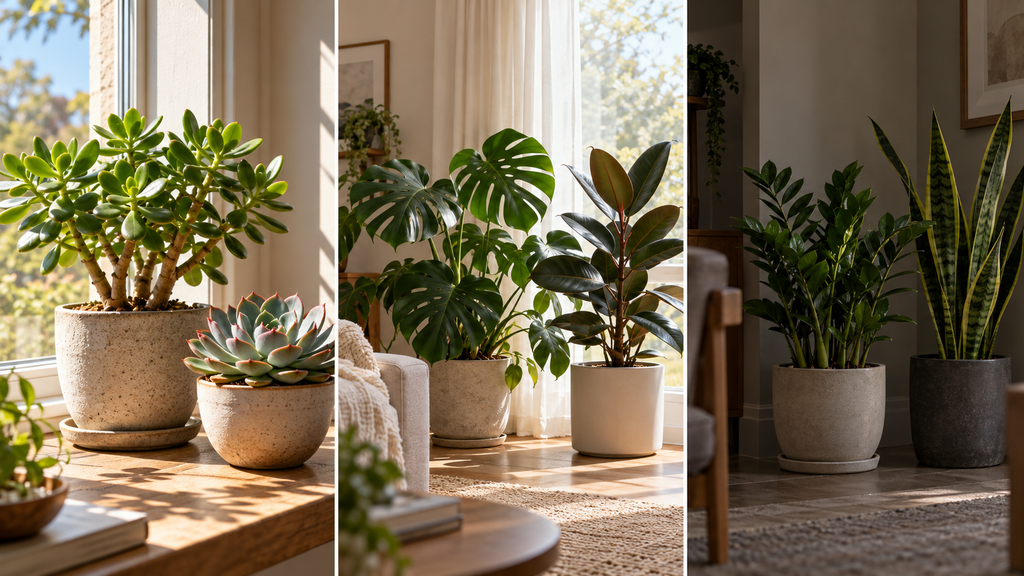
Place plants according to usable daylight, temperature, humidity, and space, not simply an empty corner’s appearance. Windows, curtains, neighboring buildings, and seasonal changes all affect the amount of light reaching leaves. In the Northern Hemisphere, south-facing windows generally receive stronger sun; the pattern broadly reverses in the Southern Hemisphere.
Which plants suit different light levels?
| Light conditions | Examples | Suitable display |
|---|---|---|
| Direct sunlight | Jade, many cacti | Sunny windowsill |
| Bright indirect | Monstera, rubber plant | Near filtered daylight |
| Medium indirect | Spider plant, peperomia | Bright shelf or table |
| Lower daylight | ZZ plant, snake plant | Shaded but daylit location |
How do you check whether a location has enough light?
Assess the exact position where the foliage will grow rather than judging the overall room. A light meter provides more consistent readings than your eyes; phone lux apps can offer rough comparisons but vary in accuracy.
The University of Maryland Extension’s lighting guide groups indoor illuminance into these broad categories:
| Light intensity | General category | Example plants |
|---|---|---|
| 25–100 foot-candles | Low | ZZ plant, snake plant |
| 100–500 foot-candles | Medium-bright | Rubber plant, Chinese evergreen |
| 500–1,000 foot-candles | High | Jade plant, hoya |
| Above 1,000 foot-candles | Direct indoor sunlight | Many cacti, succulents |
Check the location morning, midday, and afternoon at approximately leaf height. Note direct sunlight and repeat when seasons change. These ranges are references, not precise requirements for every cultivar. Stretched stems can suggest insufficient light; bleached patches may indicate excessive sun.
Best decision: If the location is unsuitable, move the display or improve illumination instead of altering watering or fertilizer to compensate.
How Do You Style Plants in Low Light?
In dim rooms, use fewer appropriately tolerant plants and position them near the best available daylight. ZZ plants and snake plants may tolerate low light, but slow growth and lower water use are normal.
What if a corner has no window?
Use a suitable horticultural grow light, following the manufacturer’s coverage, positioning, and electrical guidance. Ordinary decorative lighting may not provide adequate plant-growing illumination.
- Some usable daylight: choose a tolerant species.
- A brighter position nearby: move the container toward it.
- No adequate light: add grow lighting or choose artificial greenery.
A healthy plant near a window can visually connect with a dark reading corner through coordinated planters without being placed in unsuitable shade.
How Should You Arrange Indoor Plants?
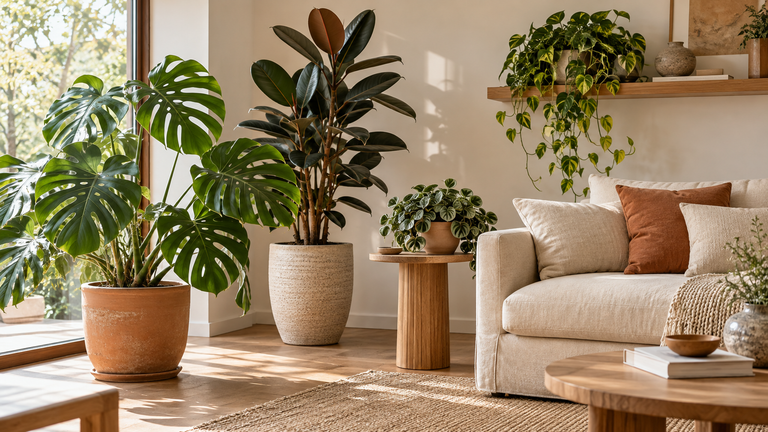
Build an arrangement around a clear focal point, then introduce smaller foliage at other heights. A floor plant, tabletop specimen, and trailing shelf plant create visual layers while preserving floor space. Keep every plant visible and accessible.
How does a triangular arrangement work?
Place the tallest plant behind the others, the medium plant to one side, and the shortest toward the front. Their tops form a loose triangle; it needn’t be symmetrical.
Leave negative space around broad foliage. If leaves overlap heavily or small plants disappear, remove or reposition a container. Check the grouping from the doorway and your usual seat, not only close up.
What Plant Size Fits Your Room?
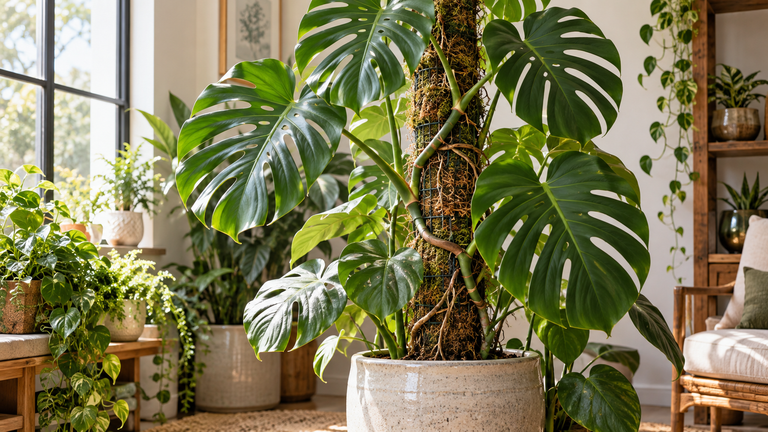
Choose by mature foliage spread and the available floor area, not just the nursery pot. A young monstera might eventually obstruct seating, while a narrow dragon tree can provide height with less horizontal spread.
How can you tell whether a plant will outgrow its position?
Measure three things before purchasing:
- Width: Where mature leaves can spread without blocking furniture.
- Height: Room for plant, container, stand, and future growth.
- Access: Space to water, clean, and inspect the specimen.
Mark the estimated canopy width using a measuring tape. A corner with 60 cm of usable width, for example, calls for a plant that fits that particular constraint; 60 cm is not a universal spacing rule. Choose a substantial plant for a focal point or smaller plants when flexibility matters.
What Is the 3-5-7 Rule?
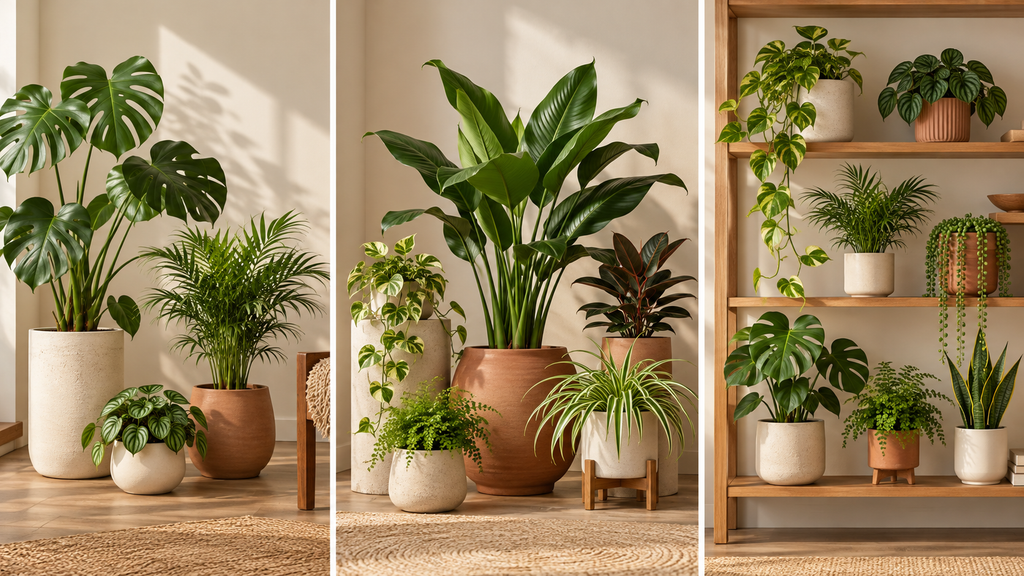
The 3-5-7 rule is an optional decorating guideline for grouping objects in odd numbers. Different heights and foliage shapes create visual rhythm, but one statement plant or two matching containers can work equally well.
| Group | Suitable area | Composition |
|---|---|---|
| Three | Small corner | Tall, medium, short |
| Five | Wide console | Focal plant plus smaller groups |
| Seven | Large shelving area | Several spaced levels |
A plant, vase, and book stack can also form a group of three; you needn’t buy more greenery to follow the rule. Seven crowded pots are less effective than three healthy plants with sufficient growing space.
How Do You Style Living Room Plants?
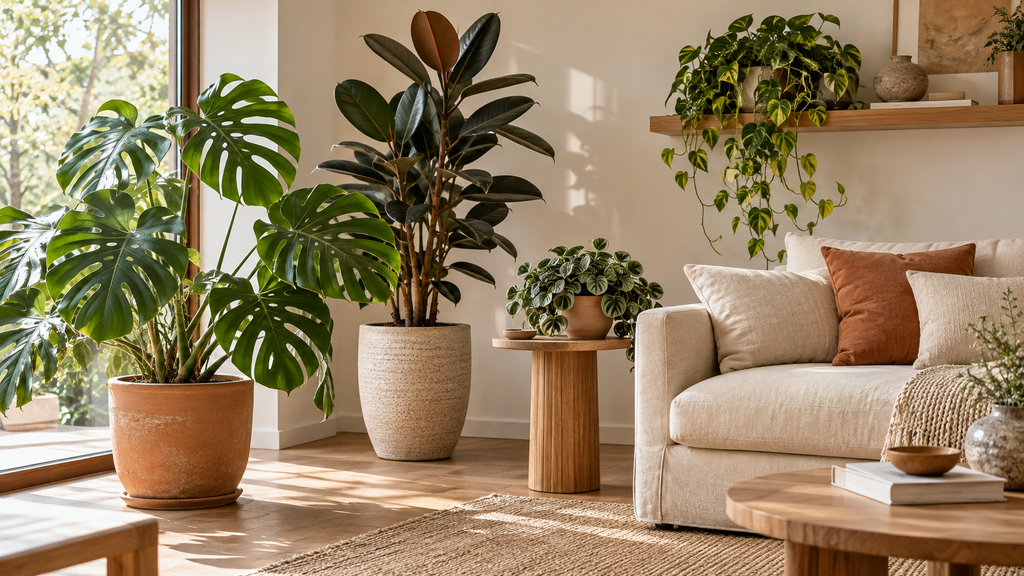
Use furniture and natural light to guide the layout. A floor plant beside a sofa adds height, a compact tabletop plant provides detail, and trailing foliage softens hard shelf edges. Preserve seating, sightlines, and circulation.
What works around living room furniture?
- Sofa: Rubber plant or parlor palm where light and width permit.
- Coffee table: Small peperomia in a protected container, below sightlines.
- Bookshelf: Trailing philodendron on a sufficiently bright shelf.
- Reading chair: A soft palm silhouette without blocking access.
Repeat finishes already present—cream ceramic, natural wood, or terracotta. One main grouping with a small supporting accent generally looks more intentional than unrelated pots on every surface. For further species choices, see Plantsaholic’s living room plant guide.
What Plant Layouts Can You Copy?
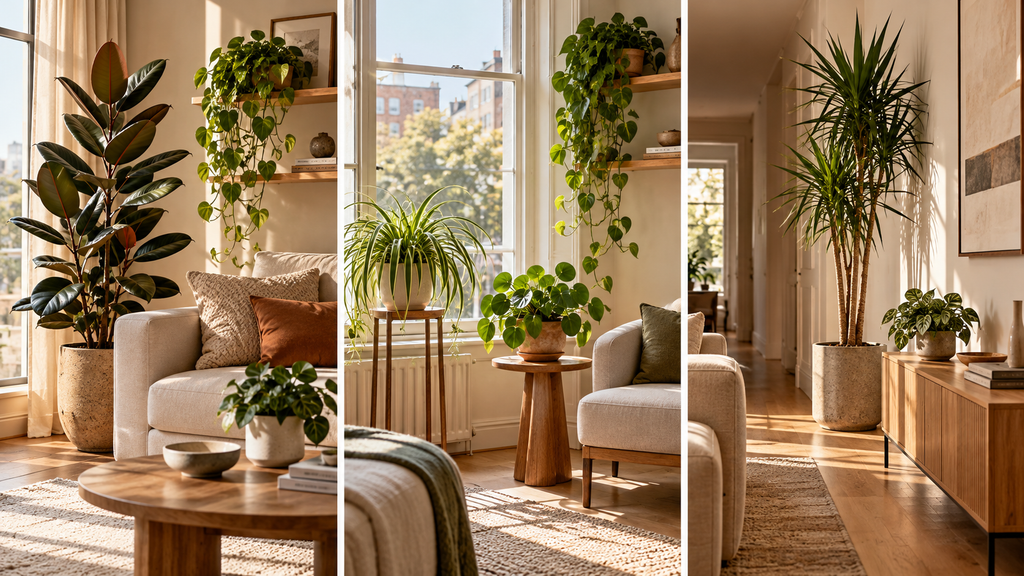
Three useful layouts are a bright sofa corner, a compact apartment window display, and a narrow wall arrangement. They are illustrative templates, not documented Plantsaholic installations. Adapt the species and planter sizes to actual light, space, and pet safety.
Layout 1: Bright sofa corner
Set a rubber plant (Ficus elastica) on the floor near filtered daylight. Add a compact peperomia on a side table and heartleaf philodendron on a bright nearby shelf. Coordinated neutral planters connect the three levels. Avoid this arrangement where foliage will block seating or accessible toxic leaves pose a pet risk.
Layout 2: Small apartment window
Use a spider plant on a narrow stable stand, Chinese money plant on a bright table, and a compact trailing plant on a secure shelf. Keep the window accessible.
Layout 3: Narrow living room wall
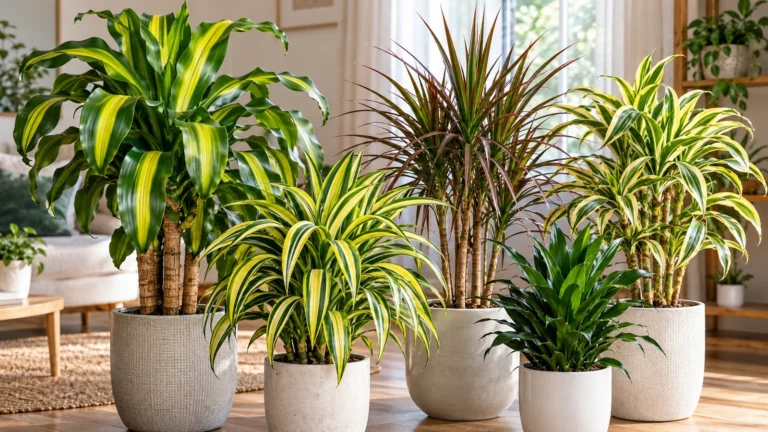
Choose a narrow upright dragon tree or appropriately sized snake plant where there is suitable light. Pair it with one compact plant on a slim console. Avoid foliage protruding into walkways; snake plants are toxic if pets chew them.
Which layout should you choose?
| Room condition | Starting layout | Key check |
|---|---|---|
| Bright sofa area | Corner grouping | Furniture clearance |
| Compact apartment | Window display | Floor and window access |
| Narrow wall | Upright plant + console | Mature canopy width |
| Dim room | Modified layout | Adequate light first |
Best decision: Choose by the location’s growing conditions before purchasing the illustrated species.
Which Plants Suit Living Room Corners?
Bright corners can support layered tropical foliage; shaded corners need more selective choices. Check daylight inside the corner rather than assuming it matches the nearby window.
- Bright, open corner: Monstera with a smaller philodendron in separate pots.
- Shaded but daylit corner: One ZZ plant or snake plant.
- Reading nook: Parlor palm and tabletop peperomia.
- Limited floor area: Secure vertical shelf with compact species.
Allow enough space for leaves to grow and avoid cold drafts, heater outlets, and stands obstructing furniture. If the corner is persistently dark, add suitable lighting or choose an artificial plant.
How Do You Style Plants in Small Spaces?
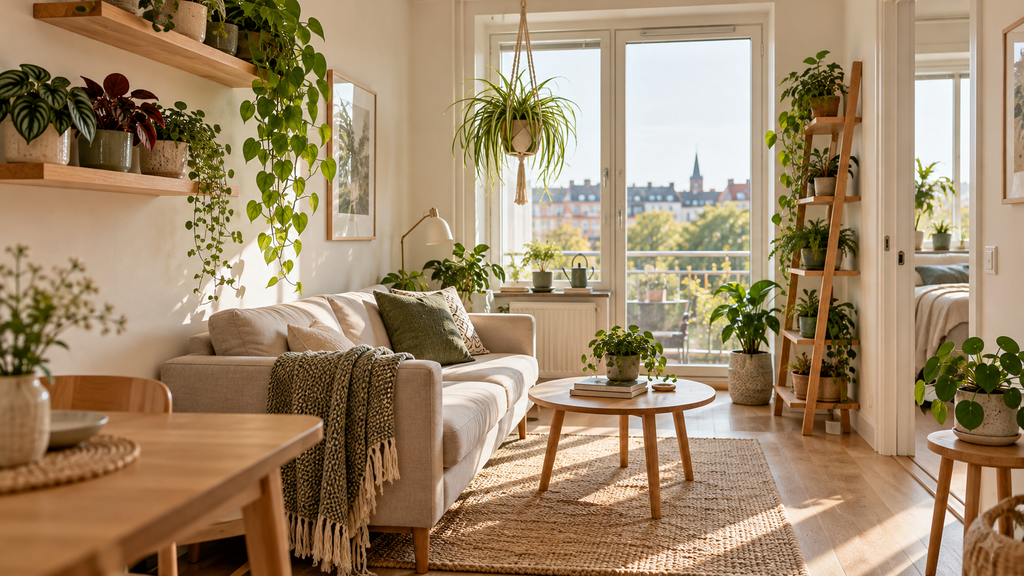
Small apartments benefit from compact plants, vertical displays, and one concentrated area of greenery near useful daylight. Mature growth matters: a plant that starts small can eventually occupy an entire shelf.
| Space issue | Arrangement idea |
|---|---|
| Tiny desk | Compact peperomia |
| Narrow corner | Upright plant |
| Limited floor space | Rated wall shelf or stand |
| Bright window ledge | Suitable small plants |
| Long bookshelf | One trailing specimen |
Keep walking routes clear and check shelf weight limits with wet pots included. Protect wood, books, and electronics from spills. See Plantsaholic’s indoor plant shelf ideas for more display inspiration.
How Do You Style Hanging Plants?
Hanging greenery brings movement to small rooms. Spider plants, trailing peperomias, pothos, heartleaf philodendrons, and string of hearts provide different cascading shapes, but their light and pet-safety needs differ.
Can renters style hanging plants without drilling?
Use a sturdy freestanding ladder shelf, tiered stand, or properly rated tension-supported system. Never assume adhesive hooks can bear heavy watered pots. Ensure the display remains reachable for inspection and watering.
Remove containers for watering when practical, empty trapped water, and keep planters away from electrical equipment.
Which Indoor Plants Look Good Together?
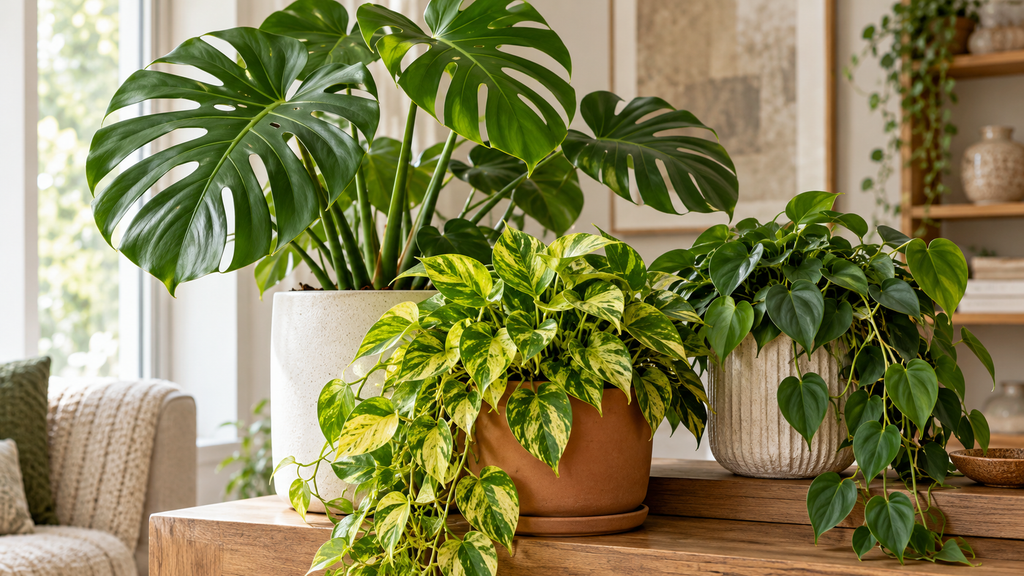
Pair contrasting foliage with compatible growing requirements. Broad monstera leaves complement trailing heart-shaped leaves, while fine palm fronds contrast with a compact peperomia. Individual pots simplify watering, even when plants share one decorative group.
| Display | Possible species | Important condition |
|---|---|---|
| Tropical | Monstera, pothos, philodendron | Indirect light; ingestion hazards |
| Pet-conscious | Parlor palm, spider plant, baby rubber plant | Verify botanical names |
| Humid foliage | Prayer plant, bird’s nest fern, fittonia | Consistent humidity and light |
| Sunny | Jade, compatible cacti, echeveria | Bright light and suitable drainage |
Pet-safety distinction: Baby rubber plant (Peperomia obtusifolia) is not the common rubber plant (Ficus elastica). The ASPCA plant database can help verify species. Even non-toxic plants can upset a pet’s stomach if eaten.
How Do You Choose Pots and Stands?
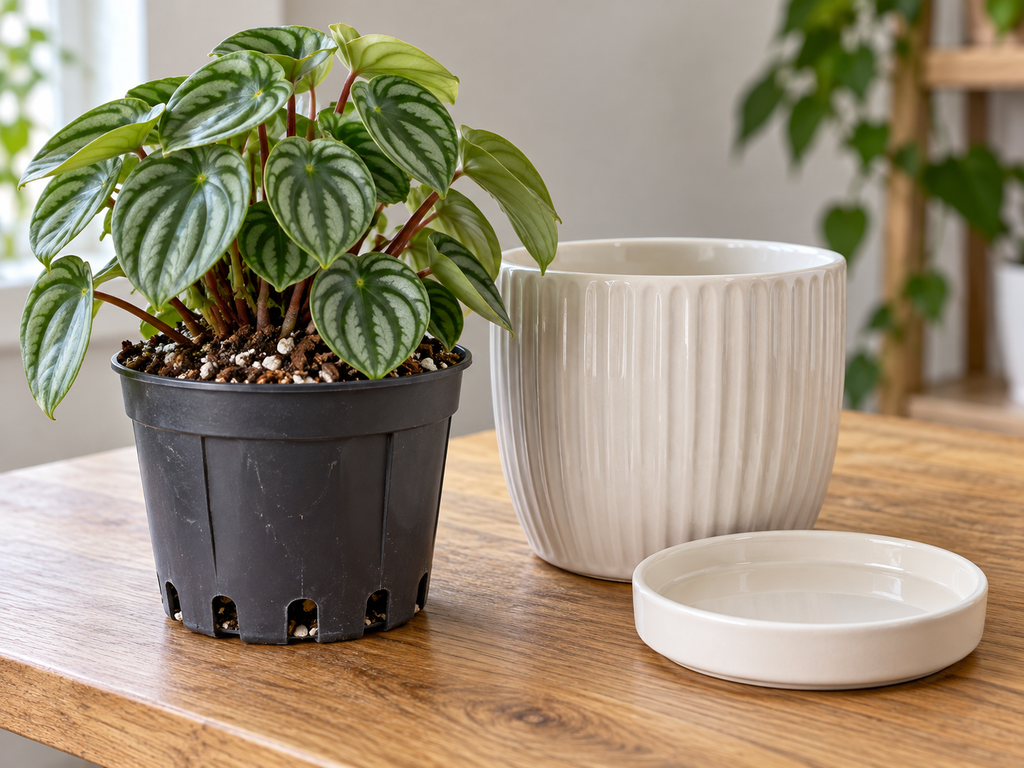
Choose containers that support drainage and complement the room. Most conventional houseplants benefit from draining inner pots; decorative cachepots can conceal them if you empty water collected after watering.
- Terracotta: Porous, warm-toned, suited to earthy interiors.
- Ceramic: Polished finish; often heavier.
- Woven basket: Natural texture with waterproof protection.
- Plastic: Lightweight for suitable elevated displays.
- Metal: Architectural finish; monitor heat and corrosion.
Repeat two or three finishes rather than matching every pot. Select stands by stability, footprint, and total wet-container weight. A large decorative outer pot can provide scale without placing a small root system into an oversized growing container.
How Can You Style Plants on a Budget?
First rearrange what you have. A healthy plant elevated on a suitable stool may look more deliberate than several new pots placed randomly. Reuse clean containers, coordinate colors, and propagate healthy plants where appropriate.
Where should you spend first?
- No purchase: Adjust grouping, height, and spacing.
- One purchase: Add a suitable plant or stable stand that solves a clear problem.
- Flexible budget: Invest in a healthy focal plant and durable planters.
Check actual local prices rather than relying on global cost estimates. Prioritize plant suitability, proper drainage, and stability before decorative extras.
How Do You Style Plants in Different Rooms?
Adjust the arrangement to the room’s function. Bedrooms need clear bedside surfaces; kitchens require protection from heat and spills; offices need safe separation from electronics.
| Room | Styling approach | Main caution |
|---|---|---|
| Bedroom | One compact daylight-suited plant | Clutter |
| Kitchen | Bright windowsill display | Heat and food-prep areas |
| Bathroom | Suitable fern near a window | Inadequate daylight |
| Office | Small shelf plant | Water near equipment |
| Entryway | Narrow upright specimen | Drafts and blocked access |
A humid but windowless bathroom still needs grow lighting for live plants.
How Do You Match Plants to Your Decor?
Connect plant forms and planters to the interior’s existing colors, materials, and furniture shapes. Upright structural leaves suit restrained modern rooms; feathery palms and trailing foliage soften harder lines.
- Minimalist: One rubber plant in a simple ceramic container.
- Bohemian: Layered foliage, woven baskets, and terracotta.
- Scandinavian: Light wood, neutral pots, soft palm fronds.
- Colorful room: One variegated accent among solid green plants.
Warm white walls and oak furniture often work well with green foliage and terracotta. Repeat one material for continuity, and avoid using too many competing patterned plants. Style follows growing conditions, not the other way around.
What Are the Houseplant Trends for 2026?
Industry forecasts for 2026 highlight statement foliage, distinctive patterns, and curated personal collections. Garden Media Group’s houseplant outlook, informed by Costa Farms, names variegated monsteras, Pink Princess philodendrons, Alocasia ‘Silver Dragon’, and Chinese money plants. These are reported trend directions, not proven worldwide popularity rankings.
| Trend | Best for | Check first |
|---|---|---|
| Statement foliage | Bright spacious interiors | Mature dimensions |
| Variegated plants | Experienced growers | Cultivar-specific care |
| Curated plant shelf | Dedicated bright area | Light and watering access |
| Reused containers | Budget-conscious design | Drainage and stability |
A healthy common plant can make a stronger decorative statement than an expensive collectible struggling in unsuitable conditions.
What Are the 7 Lucky Indoor Plants?
Seven plants commonly associated with prosperity or harmony are money tree (Pachira aquatica), jade (Crassula ovata), lucky bamboo (Dracaena sanderiana), Chinese money plant (Pilea peperomioides), golden pothos (Epipremnum aureum), peace lily (Spathiphyllum), and rubber plant (Ficus elastica).
These are cultural associations, not scientifically demonstrated effects. Money trees can provide a bright-room focal point; Chinese money plants suit smaller surfaces, and jade plants need stronger illumination. Jade, pothos, peace lily, and rubber plant pose ingestion risks to pets.
Which plants symbolize money or bad luck?
Money tree and jade are traditional prosperity symbols. Some feng shui interpretations discourage spiny cacti near entrances or associate neglected plants with unfavorable energy. Interpretations vary; a healthy cactus can still suit a sunny room. Choose placements for light, safety, and personal meaning rather than symbolic direction alone.
How Do You Keep Indoor Plants Healthy?
Healthy styling depends on individual watering, drainage, adequate light, humidity, and pest checks. Don’t water every pot automatically on the same weekday. Check growing-medium moisture and empty standing water from decorative containers.
- Weekly: Inspect leaves, soil moisture, and water collection.
- Monthly: Clean appropriate leaves; check stands and pest signs.
- Seasonally: Reassess daylight, drafts, growth, and watering frequency.
Grouping compatible tropical plants can modestly affect local humidity but won’t replace a humidifier where one is truly required. Ordinary houseplant collections also aren’t substitutes for effective ventilation or air filtration.
What Plant Styling Mistakes Should You Avoid?
Common mistakes include choosing plants for appearance alone, using inadequate light, crowding leaves, and trapping water in decorative pots.
| Problem | Possible cause | Practical response |
|---|---|---|
| Flat-looking collection | Similar plant heights | Elevate one specimen |
| Crowded corner | Too many pots | Redistribute greenery |
| Weak stretched growth | Insufficient light possible | Reassess location |
| Persistently wet medium | Watering or drainage issue | Inspect roots and pot |
| Furniture stains | Unprotected water | Use saucers and cachepots |
Yellow leaves have several possible causes; investigate conditions before assuming fertilizer is needed. Correct growth problems first, then refine spacing and decorative finishes.
How Can You Arrange Plants in 30 Minutes?
You can refresh an arrangement in half an hour if plants and containers are already available. The goal is a usable, attractive display—not a complete repotting project.
| Time | Action |
|---|---|
| 0–5 minutes | Check light and clear the area |
| 5–10 | Set focal plant |
| 10–15 | Add companions |
| 15–20 | Refine elevations and spacing |
| 20–25 | Coordinate containers |
| 25–30 | Check access, drainage, and safety |
How do you know whether the arrangement works?
Review the display after the initial styling session instead of judging it only in a photograph.
| When | Check |
|---|---|
| Day one | Light, accessibility, stable pots |
| After one week | Moisture, leaf condition, ease of watering |
| After 3–4 weeks | Growth, stretching, leaf damage, crowding |
| Seasonally | Shifting daylight and plant size |
Take before-and-after photographs from the same angle. Record species, approximate space, actual costs, and observations if sharing the results. Move plants that outgrow their position or show signs of unsuitable light. This is a proposed monitoring method, not a claimed Plantsaholic experiment.
Frequently Asked Questions About Indoor Plants
How can I style plants without clutter?
Use one focal plant, different heights, and coordinated pots. Leave negative space around leaves and furniture.
Where should living room plants go?
Near suitable daylight, sofas, side tables, or shelves, provided plants remain accessible and don’t obstruct movement.
How many plants belong in one room?
There’s no fixed number. Start with one to three and expand only when light and space allow.
How do I arrange three plants?
Use tall, medium, and short specimens in a loose triangle with compatible growing conditions.
What is the 3-5-7 rule?
It’s an optional odd-number grouping guideline. Use it only when available space supports the plants.
What plants look good together?
Monstera, pothos, and philodendron contrast attractively but are toxic if ingested by pets.
What’s best for a small living room?
Try compact peperomia or a modest parlor palm in suitable light and space.
How do I decorate a small apartment?
Use one bright grouping, secure vertical shelving, and plants with manageable mature sizes.
Can plants live in windowless corners?
Only with sufficient supplemental lighting; low-light tolerance does not mean complete darkness.
Which houseplants are beginner-friendly?
Spider plants, some peperomias, ZZ plants, and snake plants can be manageable; check pet toxicity.
Should plants be grouped?
Yes, when conditions match. Separate containers allow individual watering.
Can I hang plants without drilling?
Use a freestanding stand or appropriately rated support capable of holding wet pots.
Do decorative pots need drainage?
Inner growing pots generally should drain; empty collected water from outer cachepots.
How can I protect furniture?
Use protective saucers, waterproof containers, and careful watering away from sensitive surfaces.
How do I style plants cheaply?
Rearrange existing specimens, repeat container finishes, and use stable furniture for height.
Can real and artificial plants mix?
Yes. Put real plants in suitable light and artificial foliage where living plants cannot thrive.
Which plants symbolize luck?
Money tree, jade, lucky bamboo, Chinese money plant, and pothos have traditional associations, not proven effects.
Can these styling ideas work outdoors?
Yes, but choose outdoor plants for local sun, wind, rain, and temperature conditions.
What houseplants are trending in 2026?
Industry forecasts highlight statement leaves, variegated varieties, and personalized collections.
Which plants are considered unlucky?
Some traditions discourage spiny or neglected plants in certain areas; these are beliefs, not scientific facts.
Final Thoughts
Effective indoor plant styling starts with the environment, not a shopping list. Find suitable light, choose a focal plant, add compatible companions, and keep the arrangement easy to maintain. Use odd-number groupings and coordinated planters when they help the room, not as strict rules. A few healthy, well-positioned plants can offer more lasting visual impact than a crowded collection.
Myra is the founder and lead writer of Plantsaholic. She shares practical, research-backed advice on indoor plants, outdoor gardening, flowers, herbs, succulents, and everyday plant care. Her goal is to help gardeners of all experience levels grow healthier plants through simple, easy-to-follow gardening guides.