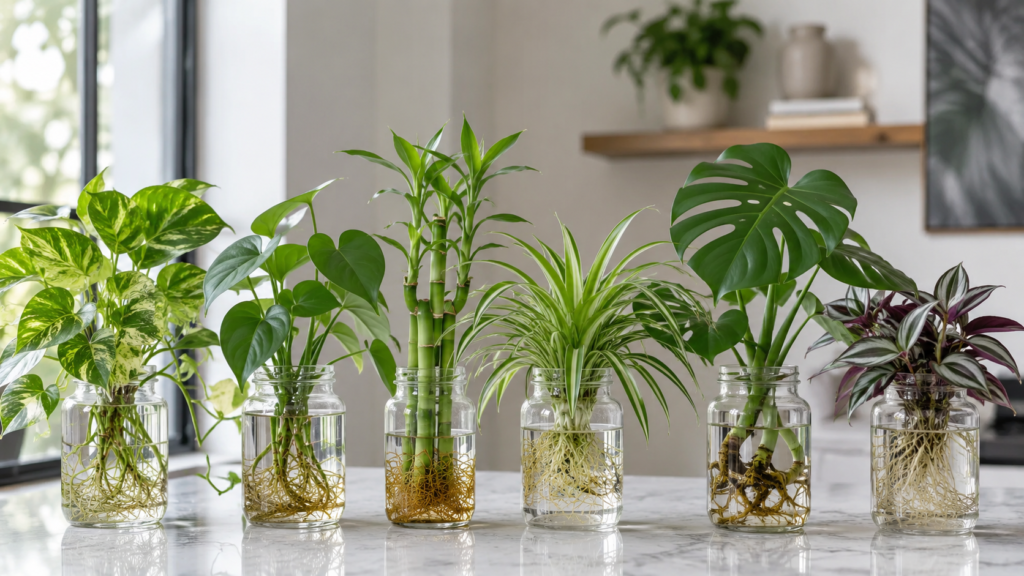
Indoor plants that grow in water include pothos, heartleaf philodendron, lucky bamboo, spider plant, arrowhead vine, Chinese evergreen and tradescantia. They can develop roots without conventional potting soil, making them suitable for glass jars, decorative vases and simple passive hydroponic displays.
Pothos is the best overall choice because it roots reliably, tolerates different indoor conditions and can remain in water long term with suitable care. Lucky bamboo works well in lower light, tradescantia roots quickly, monstera creates a bold focal point and mint offers an edible option for a bright kitchen.
The important distinction is that rooting a cutting in plain water is not the same as maintaining a mature plant permanently. Fresh cuttings initially use stored energy. Established plants require suitable light, clean water, root-zone oxygen and diluted nutrients to continue producing healthy growth.
Which Water-Growing Plant Should You Choose?
- Best overall: Pothos
- Best for lower light: Lucky bamboo
- Fastest rooting: Tradescantia
- Best trailing plant: Heartleaf philodendron
- Best pet-conscious option: Spider plant
- Best colourful foliage: Coleus
- Best statement plant: Monstera
- Best edible option: Mint
Match the plant to the room. Mint and coleus need brighter light, while pothos, lucky bamboo and Chinese evergreen tolerate moderately lower light. Monstera and peace lily need heavier containers and more root space than small vine cuttings.
What Does Growing in Water Mean?
Water propagation is a temporary method in which a cutting develops roots before moving into soil or another growing medium. Passive water culture keeps a plant in water long term with regular cleaning, diluted nutrients and adequate light.
Semi-hydroponics uses an inert material such as expanded clay to support the plant while its roots access a reservoir. More advanced hydroponic systems may use aeration or circulation, but most indoor houseplant setups are passive.
A plant is established in water when it produces healthy new growth and maintains firm roots rather than relying entirely on energy stored in the original cutting.
Best Indoor Plants That Grow in Water
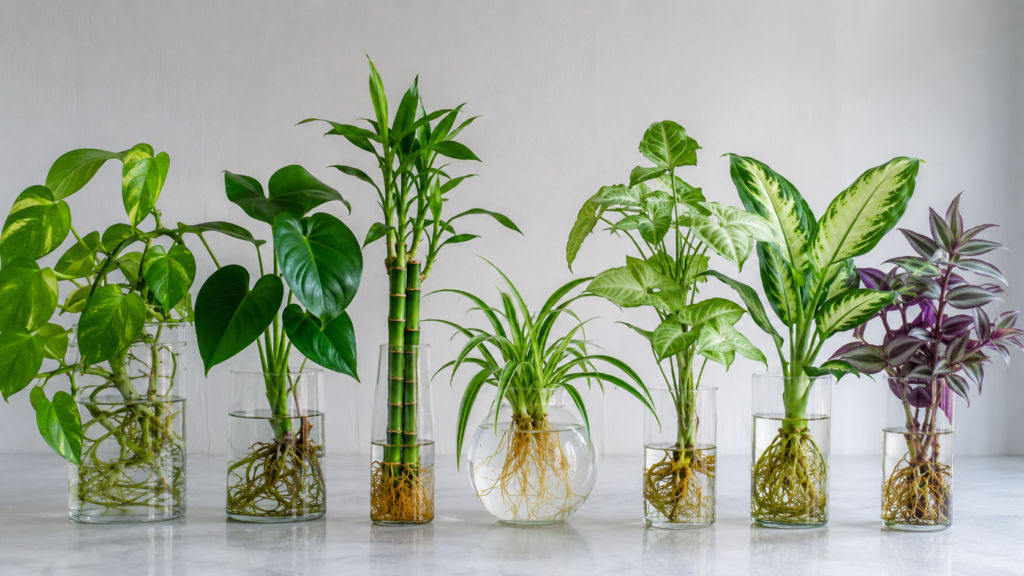
Plants that produce roots from nodes, plantlets, offsets or existing root systems adapt most easily. Tropical vines are particularly suitable because many naturally form roots along their stems.
Not every plant that roots in water should stay there permanently.
- Excellent long term: Pothos, heartleaf philodendron, lucky bamboo and arrowhead vine
- Good long term: Spider plant, tradescantia and Chinese evergreen
- Good with additional support: Monstera and peace lily
- More demanding: Coleus, mint and sweet potato vine
- Better for propagation: English ivy, prayer plant, Chinese money plant and begonia
A strong long-term candidate should tolerate constant root moisture, receive enough light and keep its foliage and crown above the waterline.
1. Pothos
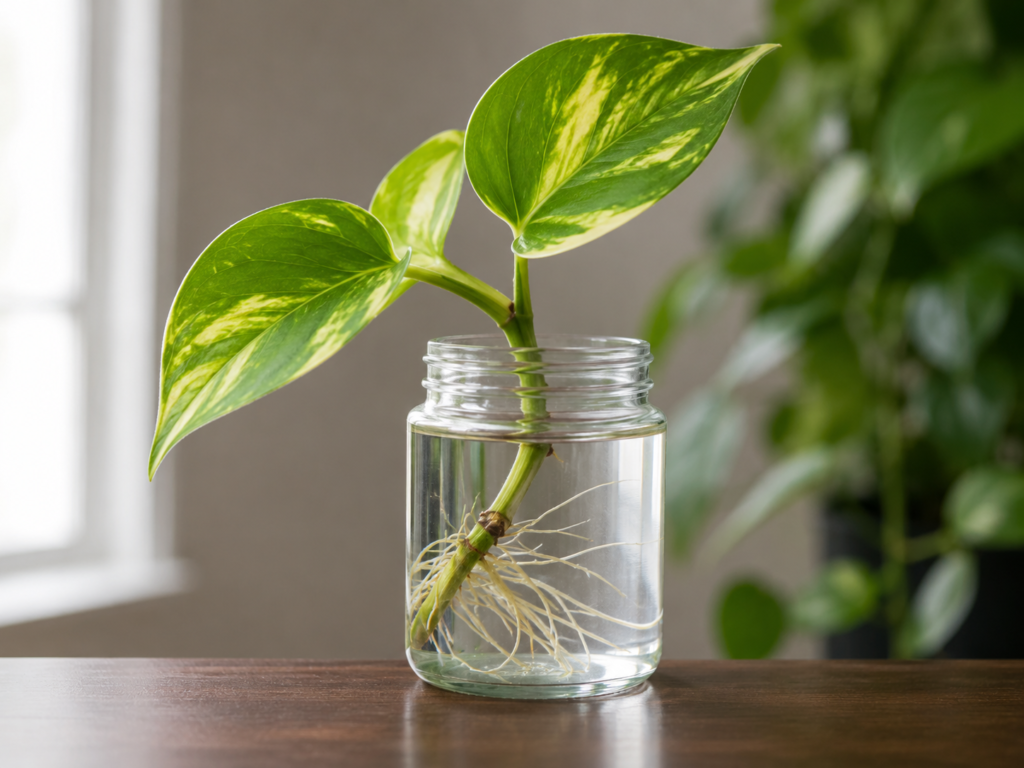
Water-culture status: Excellent
Pothos is the easiest indoor plant to grow in water. Its stems have clear nodes that produce roots reliably, making it ideal for beginners.
Cut a healthy vine just below a node, remove the lowest leaf and place the exposed node underwater. Keep the remaining leaves dry.
Bright indirect light encourages faster rooting, although pothos tolerates moderately low light. Once several roots and new leaves develop, begin using a weak hydroponic nutrient.
Pothos is the strongest choice when you want an attractive trailing plant with minimal difficulty.
2. Heartleaf Philodendron
Water-culture status: Excellent
Heartleaf philodendron produces soft trailing vines with dark green, heart-shaped leaves. It roots readily from stem nodes and works well in bottles, wall-mounted propagation tubes and grouped displays.
Use a cutting with at least one healthy node and two leaves. Keep the node underwater and all foliage above the surface.
Several short cuttings create a fuller plant than one long vine. Brighter filtered light also reduces the wide gaps between leaves that can develop in dim rooms.
Choose heartleaf philodendron when you want dense green trailing foliage.
3. Lucky Bamboo
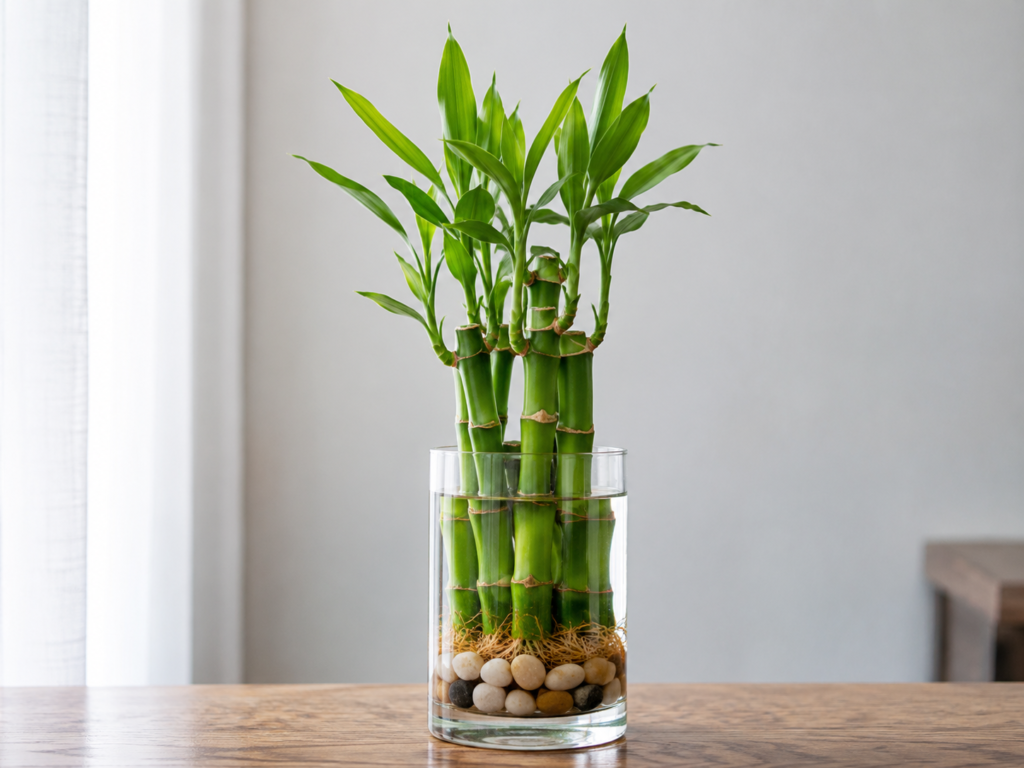
Water-culture status: Excellent
Lucky bamboo is a dracaena rather than a true bamboo. It is commonly sold with established roots supported by stones, making it one of the easiest plants to display in water immediately.
Keep only the roots and lowest portion of the stalk submerged. Too much water around the cane may soften the stem and encourage rot.
Lucky bamboo tolerates lower light but not complete darkness. Brown tips may result from mineral buildup, excessive feeding or dry air.
It is best suited to desks, bathrooms and compact upright displays.
4. Spider Plant
Water-culture status: Good
Spider plants produce small plantlets on long runners. These plantlets often have visible root nubs before they are separated, so they establish quickly.
Place only the base of the plantlet in water and keep the crown dry. A narrow-neck bottle can support the plant without submerging too much tissue.
Spider plant roots become thick over time, so established plants may need a larger vessel. It is also a more pet-conscious choice than many tropical vines.
5. Chinese Evergreen
Water-culture status: Good
Chinese evergreen offers broad patterned foliage in green, silver, cream, pink or red. It also tolerates lower light better than many colourful houseplants.
Start it from a stem cutting or transfer it from soil after washing all potting mix from the roots. Keep the crown above water.
Warmth and clean water are important because cold, stagnant conditions may lead to root or stem decline.
Choose Chinese evergreen for patterned foliage in moderately lit rooms.
6. Arrowhead Vine
Water-culture status: Excellent
Arrowhead vine roots quickly from nodes and continues growing strongly in water. Young leaves have a clear arrow shape, while mature leaves may become more divided.
Take a cutting with one or two nodes, remove the lowest leaf and submerge the lower node.
The plant grows quickly, so regular pruning keeps it compact. Low light can cause stretched stems, while crowded roots may eventually need a larger container.
Arrowhead vine is a strong option for fast leafy growth.
7. Monstera
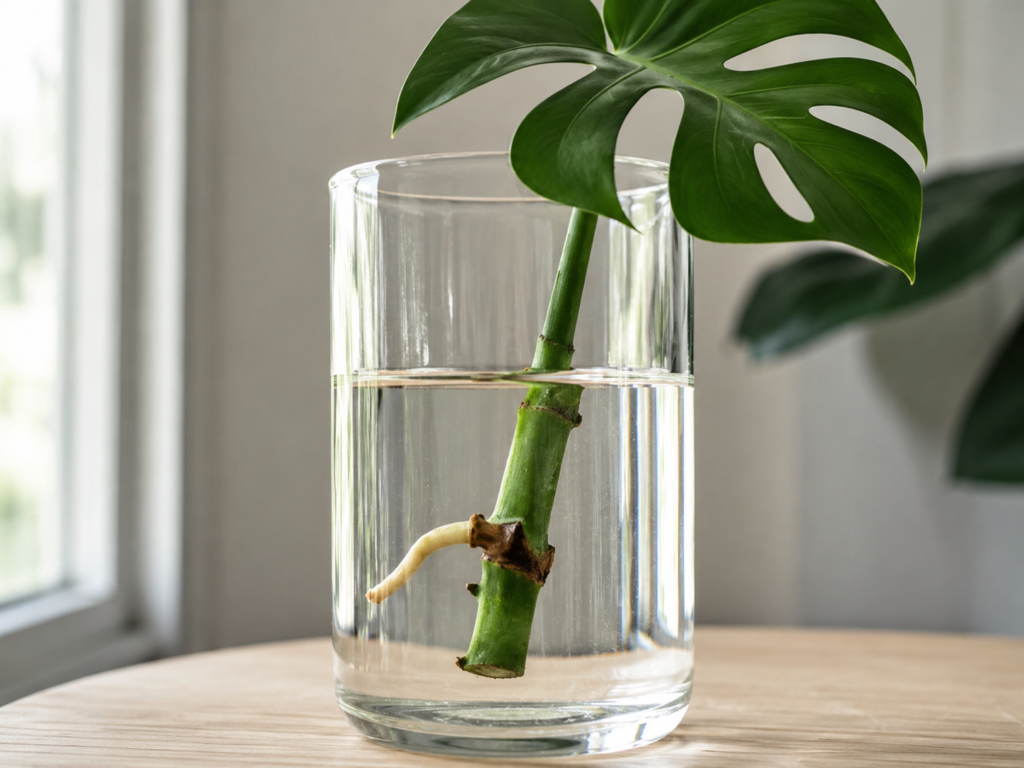
Water-culture status: Good with support
A monstera cutting must contain a viable stem node. A detached leaf may remain green for a while but cannot produce a complete new plant.
Use a juvenile cutting with one or two leaves and place it in a stable, heavy container. Keep the node and roots underwater while the petioles and leaves remain dry.
Bright indirect light supports stronger growth. Monstera also needs more room than smaller vines because both its roots and foliage become large.
Choose monstera when you want a bold statement display.
8. Peace Lily
Water-culture status: Good after transition
Peace lily is usually transferred from soil rather than grown from a stem cutting. Remove the plant from its pot, wash away all soil and trim damaged roots.
Only the roots should remain underwater. The crown must stay above the waterline to prevent rot.
Some wilting may occur while water-adapted roots form. Wait for new growth before introducing nutrients.
Peace lily suits larger upright displays but is less beginner-friendly than pothos or spider plant.
9. Tradescantia
Water-culture status: Good
Tradescantia is one of the fastest indoor plants to root in water. Its closely spaced nodes can produce several roots quickly.
Use several short cuttings in one container for a fuller display. Bright indirect light helps maintain purple, silver or striped foliage.
Tradescantia grows rapidly and needs regular pinching. Older bare stems are often best replaced with fresh cuttings.
Choose it when fast rooting and colourful foliage are your priorities.
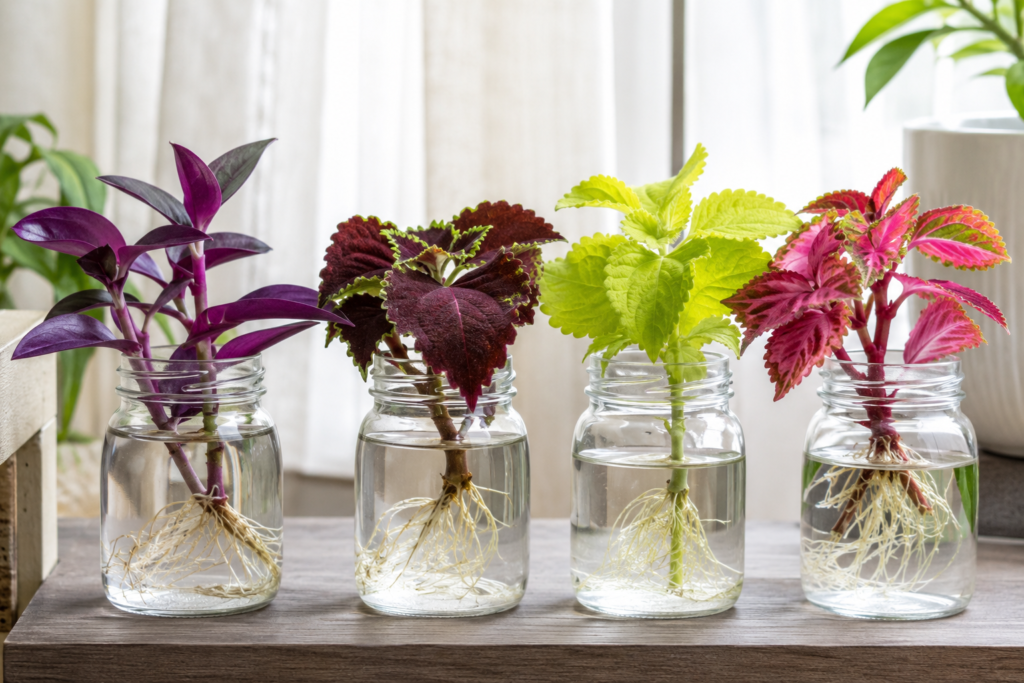
10. Coleus
Water-culture status: Good but demanding
Coleus offers vivid foliage in lime, burgundy, pink, cream and purple. Its soft stems root easily in water.
Choose a healthy non-flowering shoot, cut below a node and remove the lower leaves. Keep it in bright indirect light.
Pinch the tips and remove flower spikes to maintain compact growth. Too little light causes faded colour, while harsh direct sun may scorch the foliage and overheat the water.
11. English Ivy
Water-culture status: Better for propagation
English ivy can root from young flexible stems, but it is less tolerant of warm, stagnant indoor conditions than pothos.
Use a cutting with several nodes and keep the lowest node underwater. Inspect the foliage regularly for spider mites.
English ivy often performs better after rooting when transferred into an airy potting mixture.
Use it mainly for propagation rather than permanent water culture.
12. Prayer Plant
Water-culture status: Better for propagation
Prayer plant is valued for patterned leaves that move between day and night.
Take a cutting below a node and keep the node underwater. Warmth, medium indirect light and stable humidity are important.
Brown edges may result from water quality, low humidity or excessive nutrients.
Prayer plant can root in water, but it requires closer monitoring than pothos or Chinese evergreen.
13. Aluminium Plant
Water-culture status: Suitable with monitoring
Aluminium plant has compact green leaves marked with silver. It works well in small jars and desktop displays.
Take a soft stem-tip cutting, remove the lower leaves and place one node underwater.
Bright indirect light helps prevent thin, stretched growth. Pinch the tips after rooting to encourage branching and maintain a compact shape.
14. Chinese Money Plant
Water-culture status: Better for propagation
Chinese money plant is best propagated from offsets or stem sections containing an active growing point.
Separate a healthy offset and place its root area in water while keeping the crown dry.
A detached leaf may form roots without producing a complete new plant. Use an offset rather than a leaf-only cutting when the goal is successful propagation.
15. Begonia
Water-culture status: Better for propagation
Many cane, wax and fibrous begonias can root from stem cuttings, but their soft stems are more vulnerable to rot.
Choose a non-flowering stem, cut below a node and remove flowers, buds and any leaves that would sit underwater.
Replace cloudy water promptly. Once strong roots develop, most begonias perform better in an airy potting mixture.
16. Sweet Potato Vine
Water-culture status: Good but vigorous
Sweet potato vine develops roots and shoots rapidly from stem cuttings or a partly submerged tuber.
For a stem cutting, place one or two lower nodes in water. When using a sweet potato, keep only the lower section submerged.
The plant grows quickly, outgrows small jars and needs frequent pruning.
Choose it when rapid dramatic growth is more important than compact size.
17. Mint
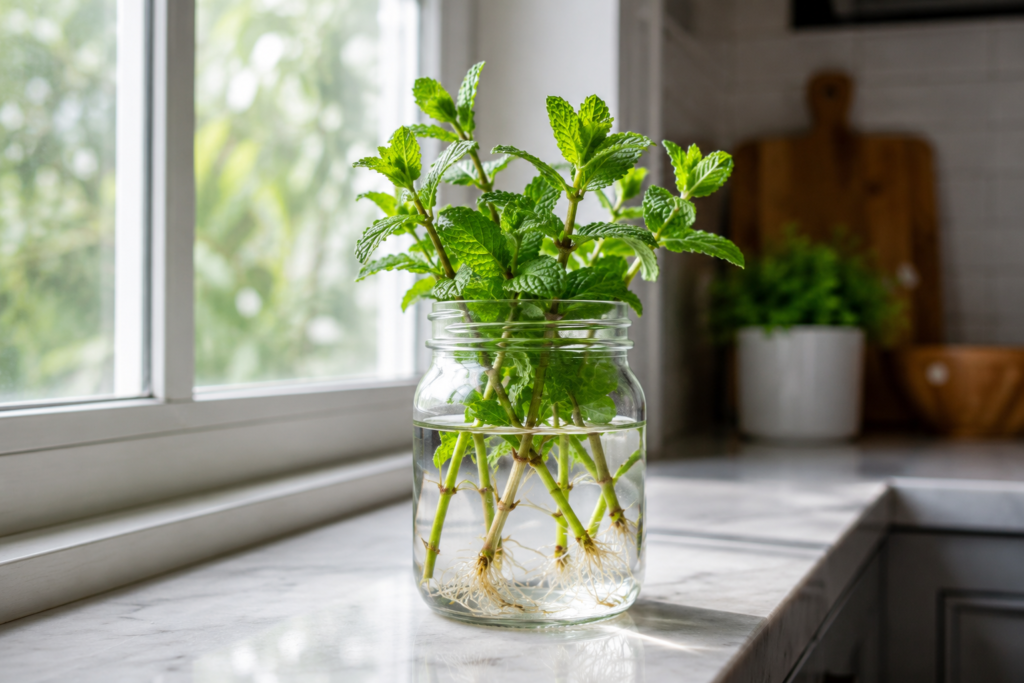
Water-culture status: Good with nutrients
Mint is the best edible option in this guide. It roots easily from 10–15 centimetre stem cuttings.
Remove the lower leaves and place one or two nodes in water. Strong light is necessary for compact growth and good flavour.
Plain water can produce roots, but continued harvesting requires a complete hydroponic nutrient solution.
Mint is best suited to bright kitchen windows or a grow-light setup.
Best Plant to Grow in Water
Pothos is the best overall plant to grow in water because it combines reliable rooting, attractive foliage and tolerance of ordinary indoor conditions.
Choose:
- Lucky bamboo for lower-light rooms
- Heartleaf philodendron for trailing foliage
- Tradescantia for fast rooting
- Coleus for colourful leaves
- Monstera for a statement display
- Spider plant for easy plantlets
- Mint for edible growth
For beginners, pothos, philodendron, tradescantia and spider plant are the safest choices.
How to Grow Indoor Plants in Water
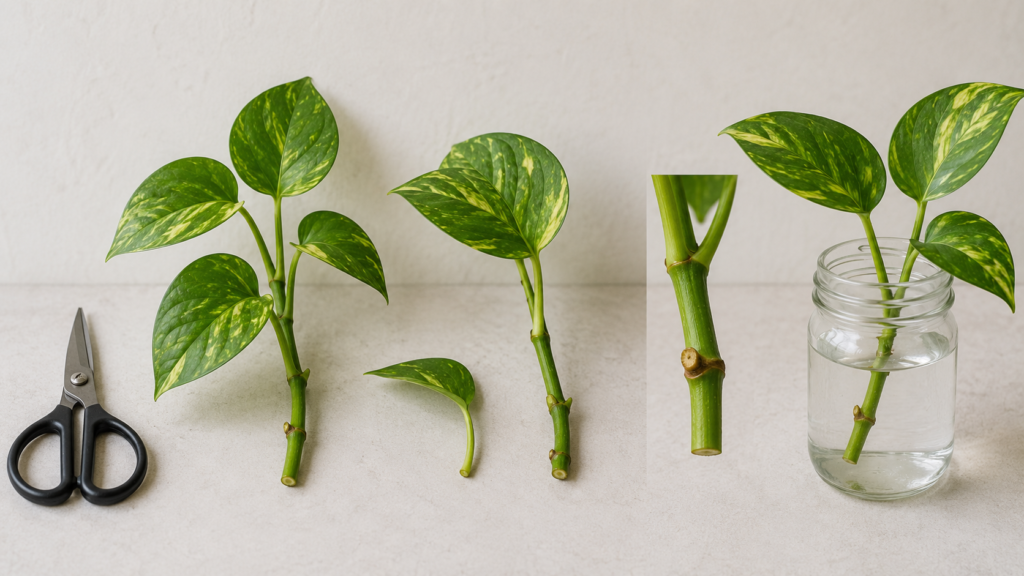
- Choose healthy, pest-free plant material.
- Cut below a viable node or separate a healthy offset.
- Remove leaves that would sit underwater.
- Use a clean jar or vase.
- Add room-temperature drinking-quality water.
- Submerge only the node or roots.
- Keep leaves and crowns dry.
- Place the container in bright indirect light.
- Replace cloudy or unpleasant-smelling water.
- Add weak nutrients after roots and new growth appear.
Most failures occur because the cutting lacks a node, too much stem tissue is submerged or the plant receives insufficient light.
Which Plant Part Goes in Water?
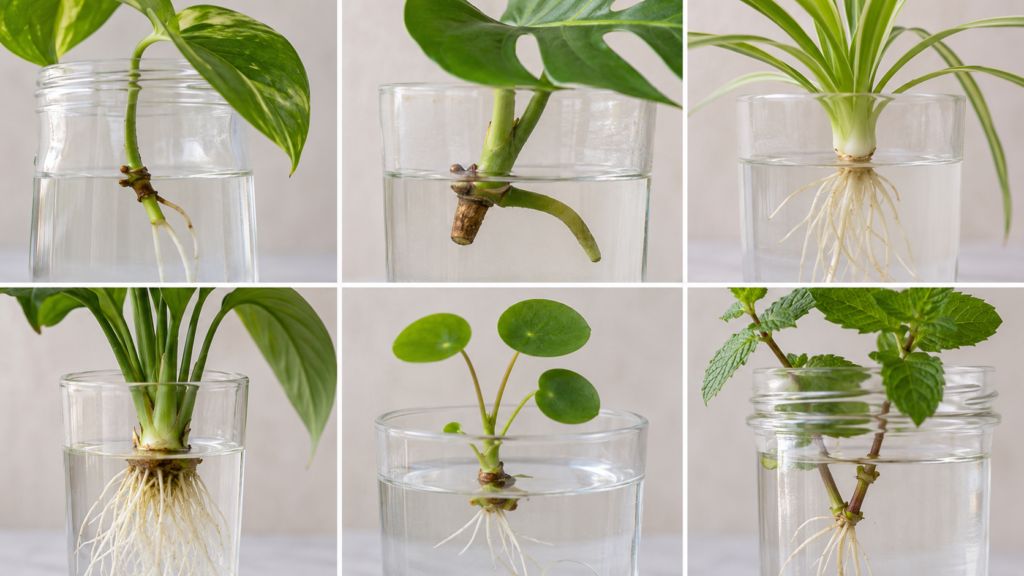
- Pothos, philodendron and tradescantia: One healthy node
- Monstera: A viable stem node
- Spider plant: The plantlet base
- Peace lily: Clean roots with the crown dry
- Chinese evergreen: Clean roots or a stem node
- Chinese money plant: An offset with a growing point
- Coleus, begonia and mint: One or two lower nodes
- Sweet potato: Only the lower section
Submerge the rooting structure rather than the foliage or crown.
Water Propagation vs Water Culture
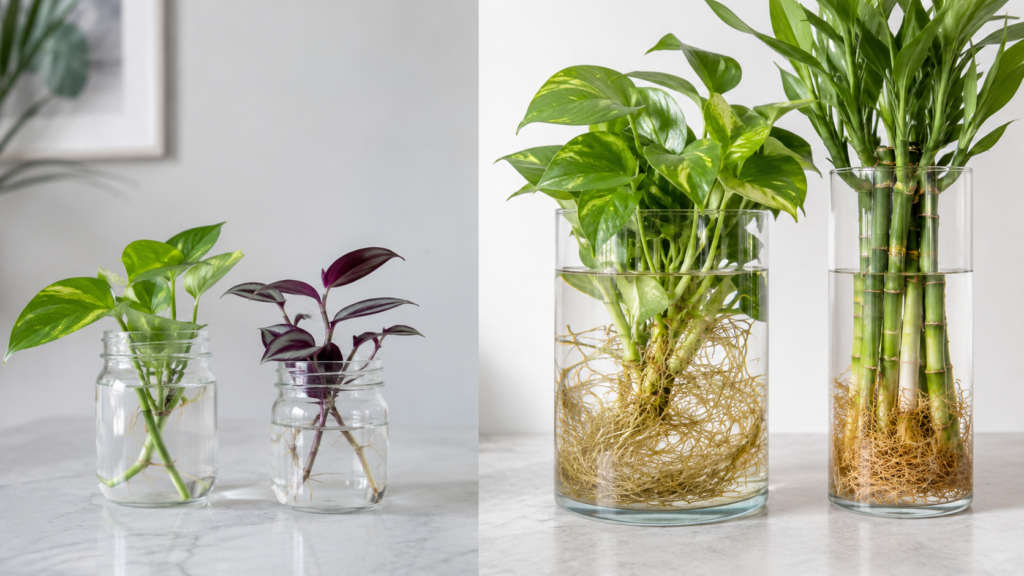
Water propagation is temporary. A cutting remains in water until roots form, then it may be moved into soil.
Long-term water culture requires nutrients, oxygen, regular cleaning and enough room for mature roots. Use plain water during early rooting and introduce diluted hydroponic nutrients after several roots and new leaves develop.
Move a cutting to soil when it has several firm, branching roots, often around 5–10 centimetres long. Use a small pot and airy, pre-moistened potting mix.
Moving Plants From Soil to Water
Remove the plant from its pot, wash all soil from the roots and trim soft or hollow tissue.
Place only healthy roots underwater and keep the crown above the surface. Use plain water during the adjustment period and add nutrients only after new root or leaf growth appears.
For pothos and philodendron, taking a fresh cutting is often easier than transferring an entire soil-grown root system.
Water, Nutrients and Maintenance
Drinking-quality tap water works for most plants. Use filtered water when sensitive species repeatedly develop brown tips, and avoid salt-softened water because sodium may damage roots.
Change the water when it becomes cloudy, smells unpleasant or develops algae. Every one to two weeks is a practical starting point. During a full change:
- Rinse the roots
- Remove dead tissue
- Wash the container
- Refill with room-temperature water
- Return the plant to the same depth
Established plants need weak hydroponic nutrients. Too little nutrition can cause pale leaves and slow growth. Too much may cause brown tips, mineral deposits, algae and root damage.
Roots also need oxygen. Avoid overcrowding, overheating and decaying plant material.
Why Water-Grown Plants Rot
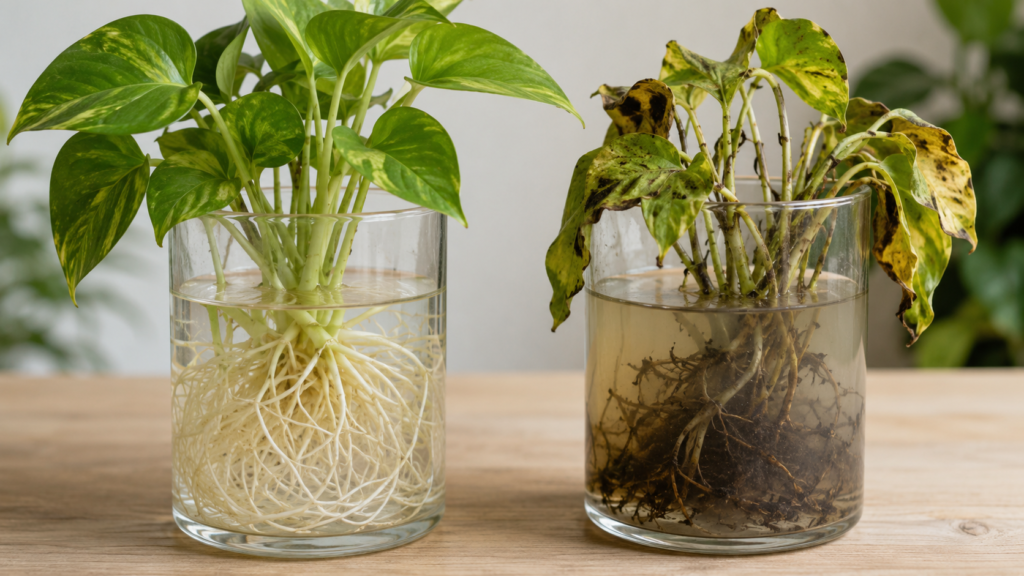
Root rot develops in dirty, warm or poorly oxygenated water.
Warning signs include:
- Soft black roots
- Slimy stems
- Cloudy water
- Bad odours
- Yellowing foliage
- Collapsing tissue
Healthy roots remain firm and odour-free. Remove damaged tissue immediately, clean the vessel and restart from healthy material if the stem base has become soft.
How to Prevent Algae
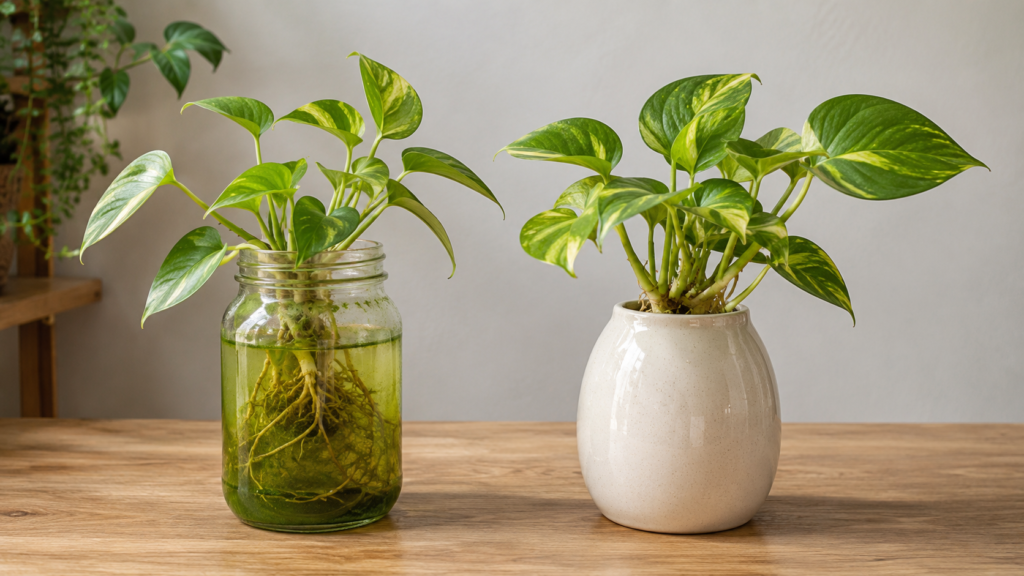
Algae develops when water, light and nutrients are available.
Reduce it by:
- Keeping jars out of direct sun
- Using opaque containers
- Avoiding excessive nutrients
- Cleaning regularly
- Removing dead leaves
- Replacing old nutrient solution
Clear jars are useful for observing new roots. Opaque containers are easier to manage for permanent water culture.
Plants You Should Not Grow in Water
Most cacti and succulents are poor permanent water-culture choices because their roots are adapted to dry, aerated conditions.
Avoid permanently submerging:
- Jade plants
- Aloe
- Echeveria
- Most cacti
- Many snake plants
- Dry-climate bulbous plants
Water culture is better suited to tropical foliage plants and moisture-tolerant herbs.
Water-Grown Plants vs Soil-Grown Plants
Water culture makes roots visible, removes loose potting mix and reduces fungus-gnat breeding areas. It works well for propagation, decorative displays and adaptable tropical vines.
However, it requires manual feeding, regular cleaning, algae control and greater attention to water quality. Large plants may also need more support than a jar can provide.
Choose soil for succulents, large specimens and plants that require regular drying periods.
Best Containers and Placement
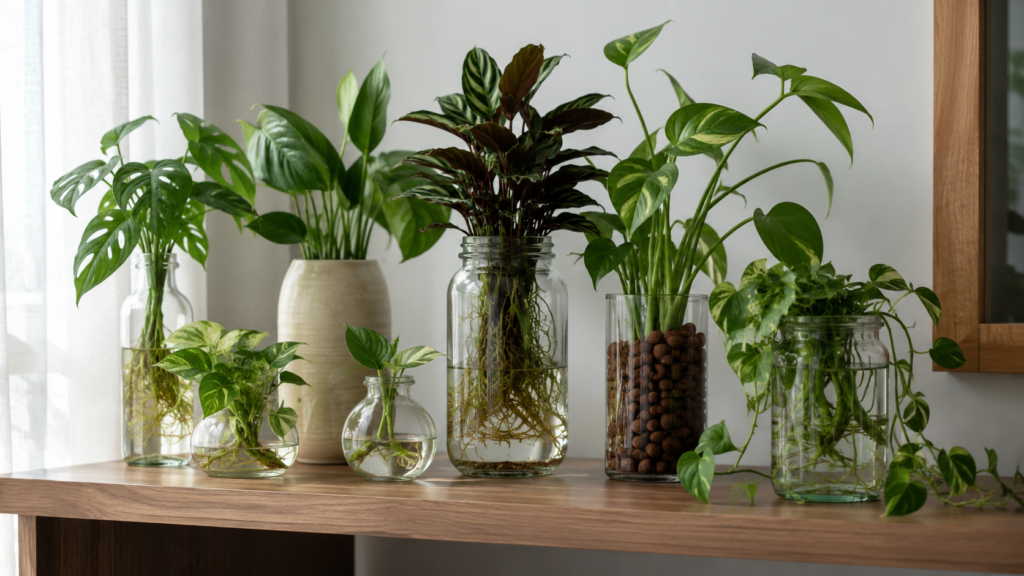
Narrow-neck bottles suit small cuttings, wide jars accommodate grouped stems and opaque vases reduce algae.
Heavy ceramic containers or semi-hydroponic systems are better for monstera, peace lily and other large plants.
Most water-grown plants perform best in bright indirect light. Place them near an east-facing window, behind a sheer curtain or beneath a grow light.
Avoid radiators, cold draughts and strong direct sunlight, which can overheat the water and encourage algae.
During bright warm months, check water levels more frequently. Reduce feeding during darker periods when growth slows.
Are Water-Grown Plants Pet-Safe?
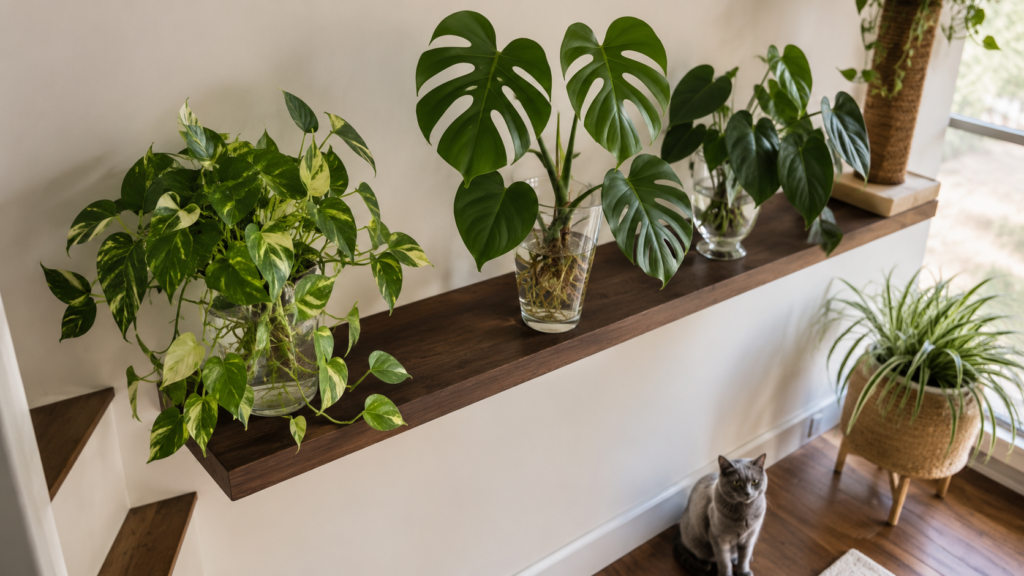
Plant safety depends on the species rather than the growing method.
Pothos, philodendron, monstera, peace lily and Chinese evergreen remain unsafe for pets to chew. Growing them in water does not remove their irritating compounds.
Spider plant is a more pet-conscious option. Keep toxic plants and fallen leaves inaccessible, and contact a veterinarian after suspected ingestion.
Indoor Plants That Grow in Water FAQs
What is the easiest indoor plant to grow in water?
Pothos is the easiest because it roots reliably, tolerates varied conditions and adapts well to long-term water culture.
Can plants live permanently in water?
Yes. Suitable plants can remain in water for years when they receive clean water, light, oxygen, nutrients and enough root space.
Can cuttings root in plain water?
Yes. Plain water is usually sufficient during early rooting, but established plants eventually need nutrients.
How long does rooting take?
Fast-rooting plants may show roots within one to three weeks. Slower species can take four weeks or longer.
Can tap water be used?
Yes. Drinking-quality tap water works for most plants, although filtered water may help sensitive species.
Why are roots turning brown?
Firm tan roots may still be healthy. Soft, slimy or foul-smelling roots indicate rot.
Why are leaves turning yellow?
Common causes include damaged roots, poor light, excessive nutrients, transfer stress or natural ageing.
Can plants grow in a windowless room?
Only with artificial lighting. Even plants described as low-light tolerant require usable light.
Do water-grown plants attract mosquitoes?
Clean, regularly changed water is less likely to attract mosquitoes than stagnant water containing debris.
Are water-grown plants safe for pets?
It depends on the species. Pothos, philodendron, monstera, peace lily and Chinese evergreen remain toxic to pets.
How long can pothos live in water?
Pothos can remain in water for years with suitable nutrients, light, root space and regular cleaning.
Can several plants share one container?
Yes, when the container provides enough root space and the plants have similar light and nutrient requirements.
Final Recommendation
Pothos is the strongest starting choice because it combines easy rooting, attractive foliage and tolerance of ordinary indoor conditions.
Choose lucky bamboo for lower light, heartleaf philodendron for trailing foliage, tradescantia for rapid rooting, monstera for a statement display and mint for edible growth.
Successful water culture depends on five essentials:
- Healthy plant material
- Clean water
- Root-zone oxygen
- Suitable light
- Complete nutrition
Start with one healthy cutting, keep its foliage above the waterline and introduce weak nutrients only after the roots establish.
Sources and Plant References
Support technical claims with reliable horticultural, university-extension and recognised plant-safety sources.
Add a visible publication date, genuine review date and named author profile. Do not claim original testing or professional review unless it has genuinely taken place.
Myra is the founder and lead writer of Plantsaholic. She shares practical, research-backed advice on indoor plants, outdoor gardening, flowers, herbs, succulents, and everyday plant care. Her goal is to help gardeners of all experience levels grow healthier plants through simple, easy-to-follow gardening guides.